How to Properly Use Metal Shears on Sheet Metal
Match the shears to the cut: straight-cut snips for lines, left or right aviation snips for curves, and a bench or electric shear for long or repeated cuts. Support the sheet, wear gloves and eye protection, and cut with the middle of the blades in long, steady strokes without closing them completely. Smooth the edge with a file afterward, because cut sheet metal is very sharp.
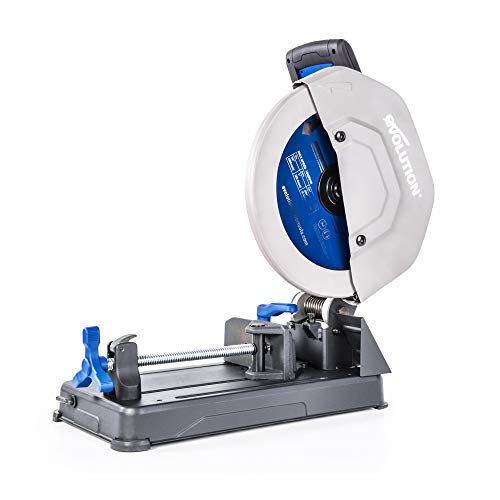 EVOLUTION S355CPSLBest overall
 EVOLUTION S14CPS
 EVOLUTION S14MCSBest for fabrication shops
Pick the right shears for the cut
Most sheet metal mistakes start with the wrong tool. Shears cut by pinching the metal between two blades, so each design works best in a certain direction and thickness. Using a tool outside that range leads to ragged edges, bent stock and sore hands.
Hand snips are color coded by cut direction. Yellow handles are for straight cuts, red for curves to the left, and green for curves to the right. The color tells you which way the cut-off waste curls away from the blade. Check the maker's label for the thickness and metal types each model is rated for, and stay within it. Stainless steel is harder than mild steel and aluminum, so it needs shears marked for it.
| Tool | Best for | Watch out for |
|---|---|---|
| Straight-cut snips | Straight lines and gentle curves in thin sheet | Can distort the metal on long cuts |
| Left or right aviation snips | Curves, circles and inside cuts | Pick the direction that suits your cut |
| Bench or throatless shear | Repeated cuts and tighter curves in larger sheets | Needs a solid mounting point |
| Electric shears or nibbler | Long cuts and corrugated panels | Cord, sparks and heavy vibration |
Prepare the sheet and your safety gear
Sheet metal edges cut skin easily, and small slivers can fly off during a cut. Put on cut-resistant gloves and safety glasses before you touch the sheet. If you use powered shears, add hearing protection and keep the cord clear of the blade path. Unplug electric shears before you change blades or clear a jam.
Then set up the work so it cannot move or whip around as you cut.
- Mark the cut line with a fine permanent marker or a scribe, and use a straightedge for straight lines.
- Clamp the sheet to a stable bench with the cut line just past the edge, or support both sides of the cut.
- Keep your free hand well behind the blades and away from the offcut.
- Wear long sleeves and closed shoes, since falling offcuts are sharp.
- Remove any protective film only after you have marked the line, if it helps you see the mark.
Make a straight cut step by step
Good technique matters more than force. Start by opening the jaws wide and sliding the sheet deep into them so the cut happens near the pivot, where you have the most leverage. Closing the blades only at the tips is hard work and tends to tear the metal.
Squeeze the handles in a smooth motion and stop before the blades close completely. Fully closing them leaves a small nick at the end of each stroke, and those nicks show up as a stepped edge. Slide the shears forward and cut again, so each stroke starts where the last one ended.
- Align the blade with the outside edge of your marked line, leaving the line on the waste side if you need a tight fit.
- Open the jaws fully and insert the sheet to the back of the blades.
- Squeeze to cut, stopping just short of the blade tips meeting.
- Open, slide forward and repeat with overlapping strokes.
- Let the offcut curl away to the side the snips are designed for.
- Support the offcut as it separates so it does not twist and tear the last part of the cut.
Cut curves and inside shapes
For a curve, use left or right aviation snips and take short strokes. Cut slightly inside the line on tight curves, then trim back to it. Turning the sheet rather than forcing the shears around the bend gives a smoother result.
For an inside cut, such as a round hole or a square opening, drill or punch a starter hole first, then insert the snips and work outward to the line. Cut the corners of square openings first with a couple of relief cuts. Sharp inside corners can crack the metal, so a small drilled hole at each corner helps it stay intact.
Finish the edge and avoid common problems
Freshly cut metal leaves a burr, a thin raised lip that can slice a finger or snag a seal. Run a flat file along the edge at a slight angle, pushing away from your body in one direction, or use a deburring tool. Wipe the dust off before painting or joining.
If the cut is rough, the cause is usually one of a few things. A bent sheet means the offcut was not supported. Jagged steps come from closing the blades fully. Metal that grabs or twists suggests the shears are being asked to cut something too thick or too hard for them. A loose pivot bolt can also let the blades gap, so tighten it according to the maker's instructions and keep the blades clean and lightly oiled.
When shears are the wrong tool
Shears are best for thin sheet. When you move to thick plate, tube, bar or angle iron, a saw gives straighter and safer results than muscling through with snips. Our best metal cutting tool comparison puts several metal chop saws on one spec sheet, with blade size, speed, cut capacity, blade life and weight side by side.
Blade diameter sets the thickness you can cut. For example, the 14 in Evolution S355CPSL lists a 130.2 mm round cut capacity, the largest on that page, while the 7-1/4 in VEVOR J1G-ZB-205-1 is a compact 14.44 lb saw for smaller stock. If you are deciding between hand shears and a powered saw for a project, the metal chop saw comparison is a useful place to check capacity before you buy.
Saws bring their own safety needs. Clamp the work in the vise, wear eye and hearing protection, let the blade reach full speed before it touches the metal, and keep hands clear of the blade path.
Frequently asked questions
Why do my snips leave a rough, stepped edge?
Usually the blades are closing fully on each stroke. Stop just short of closing and make overlapping strokes, and check that the pivot bolt is snug.
Can I cut stainless steel with regular tin snips?
Only if the snips are rated for it. Stainless is harder than mild steel, so use shears marked for stainless and keep to the thickness limit on the label.
Which hand should hold the shears?
Either works, but the snips cut best in the direction they were designed for. Pick left, right or straight-cut snips to suit the cut rather than switching hands.
How do I cut sheet metal without a power tool?
Use hand snips for most cuts. For long straight lines, you can also score the metal repeatedly with a utility knife or scribe against a straightedge, then bend it back and forth along the line until it separates, on thin soft sheet only.