How to Pressure Test a Radiator Without a Pressure Tester
You can find many radiator and cooling system leaks without a pressure tester by letting the engine's own heat build pressure, then inspecting closely for drips, residue and coolant loss. For a bench test of a removed radiator, you can plug the openings and apply very low, regulated air pressure while the radiator sits in water. A homemade setup cannot match the control and accuracy of a real tester, so treat these methods as a way to find leaks, not to prove the system is sound.
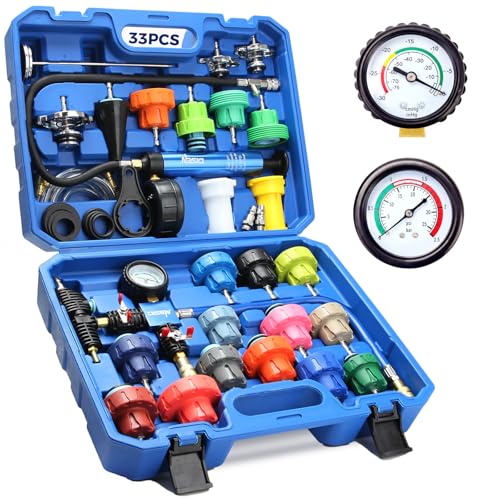 DISEN DS-33LQYZKJZTJBest overall
 Orion Motor Tech RCPDual-scale 35 psi gauge
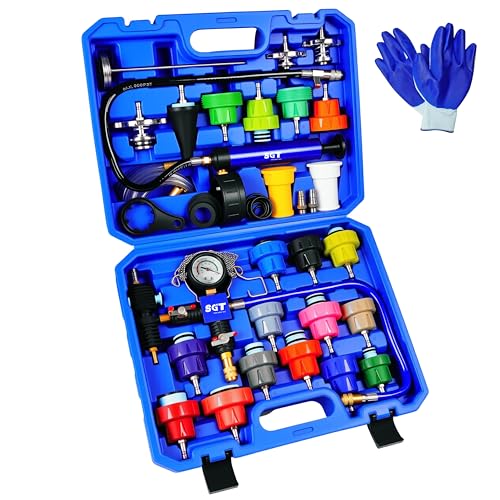 SGT SUPER GARAGE TOOLS SGT-Q295-BLUEListed pressure and vacuum ranges
What you can and can't do without a tester
A pressure tester does one job well. It pumps a known, limited amount of pressure into a cold system and shows you on a gauge whether that pressure holds. Without one, you lose the gauge and the control, so you work with substitutes.
The good news is that a running engine already pressurizes its own cooling system. The cap holds pressure as the coolant heats up, and leaks tend to show themselves under those conditions. The limit is that small seeps, internal leaks and leaks that only show under pressure can hide from a quick look.
Before you start, find the pressure rating printed on your radiator cap or listed in your owner's manual. Every method below should stay at or below that number.
Safety first
Cooling systems are hot, pressurized and full of moving parts. Take these precautions every time:
- Never open a radiator cap or reservoir cap on a hot engine. Scalding coolant can spray out without warning. Let the engine cool completely first.
- Wear safety glasses and gloves when working near coolant or compressed air.
- Keep hands, hair and loose clothing away from the fan and belts, and remember an electric fan can start on its own even with the engine off.
- Coolant is toxic to pets and people. Wipe up spills and dispose of used coolant properly.
- Never connect shop air straight to a radiator. Use a regulator and stay at very low pressure, since a radiator can burst or split a seam if overloaded.
Method 1: Inspect the cold system
Start with the simplest check. With the engine cold and parked on level ground, look over every part of the cooling system with a bright flashlight.
Look at the radiator core and seams, the hoses and clamps, the water pump, the thermostat housing, the heater hose connections and the expansion tank. Leaking coolant often leaves dried crusty residue in white, green, pink or orange, depending on the coolant type.
Check the coolant level at the reservoir and mark it with a strip of tape or a pen. A level that keeps dropping with no visible puddle can point to a slow external leak or an internal one.
Method 2: Use heat to build pressure
With the cap on and the coolant topped off, start the engine and let it reach normal operating temperature. As coolant expands, pressure rises to the cap's rating, which is the same condition that makes many leaks appear.
Shut the engine off and check the same spots again, this time looking for wet spots, drips and steam. Squeeze the upper hose carefully once the system is warm. It should feel firm, not soft or collapsed.
Let the engine cool fully, then check the coolant level again against your mark. Cardboard under the engine overnight shows slow drips well, and it helps you pinpoint where the leak is coming from.
If you suspect an internal leak, watch for white exhaust smoke, a sweet smell, oil on the dipstick that looks milky, or coolant that disappears with no external trace. Those signs point to a head gasket or similar problem, which a visual check alone cannot confirm.
Method 3: Bench test a removed radiator
If the radiator is already out of the car, you can test it off the vehicle. Plug the inlet and outlet with rubber stoppers or caps, and fit a fitting on the overflow or filler neck so you can feed in air.
Use a regulator and a gauge, and apply only a small amount of pressure, well under the cap rating. Lower the radiator into a tub of water and watch for a steady stream of bubbles. The spot where the bubbles start is your leak.
Some people build a simple pump setup from a hand pump, a hose and a fitting. That can work for a bench test, but a pump without a reliable gauge makes it easy to overshoot. If you can't measure the pressure, don't add more air.
Never test a radiator that is still full of coolant with air. Drain it first and dry the area you will be working around.
Which method fits which problem
Each approach finds different kinds of leaks. This table shows where each one helps and where it falls short.
| Method | Good for | Limits |
|---|---|---|
| Cold visual check | Seeps, dried residue, loose clamps | Misses leaks that only open under pressure |
| Heat-cycle check | Hose, core and gasket leaks that appear when hot | Needs patience and a safe place to run the engine |
| Level and cardboard check | Slow external leaks | Does not locate the leak precisely |
| Bench test in water | Pinpointing core and tank leaks on a removed radiator | Needs the radiator out and careful low-pressure air |
When a real tester is worth having
If you work on cooling systems more than once in a while, a proper tester saves guesswork. It lets you load the system to a known pressure on a cold engine and watch the gauge for a drop.
On our best cooling system pressure tester page, three of the five ranked kits list a 35 psi maximum test pressure. The other two do not publish a figure. Even with a 35 psi tester, you should only apply the pressure shown on your cap or in your manual.
Adapters matter as much as the gauge. Some kits on that page list 23 adapters, while others list only 3, so check that the kit fits the filler necks on your vehicles. Our comparison of cooling system pressure testers also shows which kits include a vacuum refill tool, which helps you refill coolant without trapped air after a repair.
Frequently asked questions
Can I use a bicycle pump to test a radiator?
Some DIY guides do, but it is risky because a basic pump gives you no reliable way to limit pressure. If you try it, add a working gauge and stay under the rating on your cap.
How long should pressure hold in a healthy system?
Specifications vary by vehicle, so check your service manual. As a general rule, the gauge should hold steady with no visible drop while you inspect for leaks.
Will a bad radiator cap look like a leak?
Yes. A weak cap can let coolant escape through the overflow and make the level drop. Many auto parts stores can check a cap, or you can replace it with one that matches your cap's rated pressure.
What if I find no leak but the coolant keeps disappearing?
That can point to an internal leak, such as a head gasket problem. A combustion gas test or a professional pressure test is the next step.