How to Organize Kitchen Cabinets in Any Size Kitchen
Organize kitchen cabinets by zones: store each item where you first use it, keep daily things between knee and shoulder height, and push rarely used things to the highest and lowest spots. This works the same in a tiny galley or a large kitchen. Only the number of zones and the amount of storage change.
 Quicklock Cabinets QLRTABBest overall
 Quicklock Cabinets QLRTA-KSSMost cabinets in one set
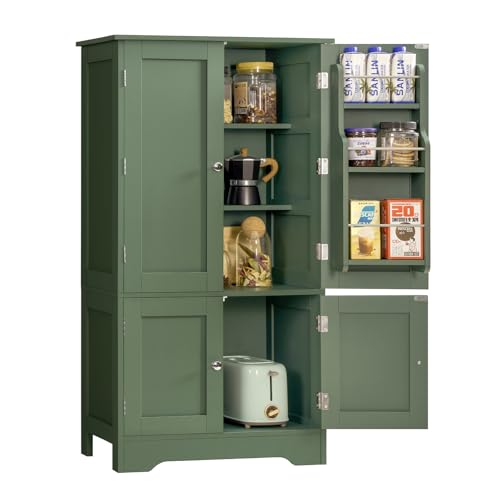 TEENFON Storage CabinetShallowest pantry storage
Start with zones, not containers
The most common beginner mistake is buying bins before deciding what goes where. Empty one cabinet at a time, wipe it out, and sort the contents into what you use daily, weekly and rarely. Anything you have not touched in a year can leave the kitchen.
Then give each group a home near the place where the task happens. That is the whole system. Everything else in this guide is a way to apply it.
- Cooking zone, near the stove: pots, pans, lids, oils, spices, spatulas and tongs.
- Prep zone, near the main counter space: cutting boards, knives, mixing bowls, measuring cups.
- Cleanup zone, near the sink and dishwasher: dish soap, sponges, trash bags, food storage containers.
- Serving zone, near the dishwasher or table: plates, bowls, glasses, flatware.
- Food zone, near the fridge: dry goods, snacks, baking supplies.
Decide where each item goes
Height matters as much as location. The shelves and drawers between knee and shoulder height are the easiest to reach, so give them to daily items. Use the lowest shelves for heavy things and the highest shelves for light or seasonal things.
This table is a good starting point. Adjust it to how you actually cook.
| Item | Best spot | Why |
|---|---|---|
| Everyday plates, bowls and glasses | Upper cabinet or drawer near the dishwasher | Short walk when unloading |
| Pots, pans and lids | Lower cabinet or deep drawer next to the stove | Heavy, and used at the stove |
| Spices and oils | Cabinet beside the stove, not above it | Heat and steam can spoil them |
| Knives and utensils | Top drawer near the prep area | Needed all the time, and drawers keep blades out of sight |
| Small appliances | Lowest shelf or a pantry unit | Heavy, used only now and then |
| Baking sheets and cutting boards | Vertical slot or narrow cabinet | Stand on edge so they do not stack |
| Seasonal serving pieces | Highest shelf | Rarely needed |
Use shelf height and depth well
Most cabinet space is wasted in the air above short items. Adjustable shelves fix that, and our best kitchen cabinet page notes which listings include them. Set one shelf to fit your tallest bottles, then bring the others closer together for plates, cans and jars.
Depth is the other trap. Base cabinets on our comparison page are 24 in deep, so items at the back get lost. Keep one row of similar things per shelf, or use a pull-out tray, so you can see everything without moving anything. Wall cabinets are shallower. The 18 in ONESTOCK wall cabinet on our page is 12 in deep and 30 in tall, with 2 adjustable shelves, so it suits plates, glasses and cans better than big pots.
Check weight limits when you load shelves. One base cabinet on our page lists an adjustable shelf rated for 80 lb. That is enough for most cookware, but a stack of cast iron adds up fast, so keep the heaviest pieces on the bottom of the cabinet.
Organizing a small kitchen
In a small kitchen, every cabinet has to do two jobs. Combine zones where you must, such as keeping prep tools and cooking tools in the same drawer bank. Be strict about what you own. Duplicates, single-use gadgets and mismatched lids take up the space you need.
A few habits help most:
- Stack only items of the same size, and use shelf risers so two layers can sit in one cabinet.
- Store lids upright in a rack or divider instead of in a pile.
- Use drawers for pots when you can. A drawer shows you everything from above, while a deep cabinet hides the back.
- Hang mugs or utensils on the inside of a door or on a rail if the doors have room.
- Keep a narrow cabinet for tall, thin items. A 9 in wide base on our page is a reminder that even a slim box can hold trays and boards on edge.
Organizing a larger kitchen
A larger kitchen has the opposite problem. There is room for everything, so things get scattered. Set up stations and stay loyal to them: a baking station with flour, sugar, bowls and sheet pans in one place, and a coffee station with mugs and supplies together.
Large kitchens also tend to have long walks between zones. Put the items you grab several times a day in the cabinets closest to the stove, sink and fridge, and send occasional items to the far ends. If you are adding storage, a freestanding pantry unit can take dry goods and appliances. The TEENFON pantry cabinet on our list is 23.6 in wide and 11.8 in deep, with 4 doors and drawers and adjustable shelves. It is not a built-in cabinet, and it comes with an anti-tip kit, which you should use.
Handles also affect how easy cabinets are to use daily. If you are updating the look, see our best hardware for white kitchen cabinets page for pulls that are comfortable to grip.
Arranging utensils without cabinets
If you rent, have few cabinets, or simply want tools within reach, move storage onto the counter, the wall and the inside of doors. Keep it limited to what you use daily, or the counter will look crowded.
Put your most-used utensils in a heavy crock near the stove so they cannot tip. Mount a rail on the wall for ladles and whisks, and add a magnetic strip for knives, high enough that children cannot reach it. Use drawer dividers for flatware and small tools, and a single shelf or freestanding unit for pots and dry goods.
Wall storage needs solid fixing, so screw into studs rather than drywall alone, in the same way wall cabinets need secure screws into studs.
Keep it working and keep it safe
Do a quick reset once a week. Return things to their zone, check for expired food, and wipe up spills before they reach the shelf liner. If your cabinets are looking worn, our best paint for kitchen cabinets page covers finishes that can handle regular cleaning.
A few safety notes. Use a stable step stool for high shelves, never a chair or the counter. Keep heavy items low so nothing falls on you when you open a door. Store knives in a block, drawer insert or magnetic strip, never loose. Keep cleaning products in a separate, labeled spot away from food, and use child locks if small children live with you. Secure any tall freestanding unit to the wall using its anti-tip hardware.
Frequently asked questions
How often should I reorganize my kitchen cabinets?
A full reset once or twice a year is plenty if you keep the zones consistent. A five-minute tidy each week keeps things from drifting.
Should I take everything out before I start?
Yes, one cabinet at a time. Emptying it lets you clean the shelves, sort what you own and judge the space before you put anything back.
Are drawers better than cabinets for pots and pans?
Often, yes. A deep drawer lets you see and reach everything from above, and heavy pots stay at a comfortable height. A cabinet works if you add a pull-out tray.
What should I never store above the stove?
Avoid spices, oils and anything heat-sensitive. Steam and warmth can shorten their life. Use that space for items that do not mind heat, like serving platters.