How to Organize Garage Storage Cabinets for Easy Use
Organize a garage cabinet by zones and reach height. Put heavy, frequently used items between knee and shoulder level, light or rarely used things up high, and chemicals behind locked doors. Anchor tall cabinets to the wall, then label every shelf so each item has one home.
 Letaya 01Best overall
 Yizosh 72HLC-1850Top shelf rating, tied
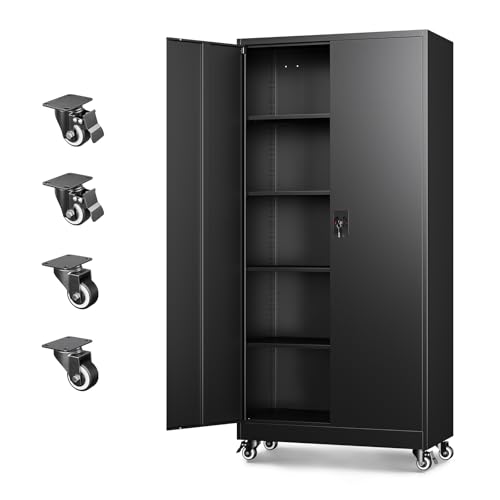 Letaya R694Rolling with wall mounting
Start with a clear-out and a sort
Before you fill any shelf, empty the area and sort everything into piles. A cabinet only works if it holds things you actually use, so this step matters more than the cabinet itself.
Use four piles: keep in the cabinet, keep elsewhere in the garage, donate or sell, and dispose of. Old paint, dried-out sealants and expired chemicals belong in the last pile. Check your local hazardous waste rules, since many of these cannot go in household trash.
Wipe down the inside of the cabinet and let it dry before loading. If it is still in the box, assemble it where it will stand and follow the instructions, since a fully loaded cabinet is very hard to move.
Place and secure the cabinet first
Position matters before organization does. Pick a wall with a clear floor in front, enough room for the doors to swing open, and enough depth left for your vehicle. Cabinets on our best garage storage cabinets page run from 25.59 in to 130 in wide, so measure your wall and the door swing before you decide where it goes.
Tall cabinets can tip when the top shelves are loaded or a door is pulled open. Safety note: anchor any tall cabinet to a wall stud. Several models, such as the Letaya 72 in cabinet, list pre-drilled holes or wall mounting on their spec sheets. If your cabinet has adjustable feet, level it first so the doors close squarely and the load sits evenly.
If you chose a rolling cabinet, treat wall anchoring and wheels as separate questions. Wheels are handy for moving a cabinet to sweep behind it, but a loaded rolling unit can shift. Lock any brakes when it is parked, and keep the heaviest items on the lowest shelf.
Match each shelf to its load
Shelf ratings differ a lot between models. On our comparison page, the models that list a rating run from 40 lb to 180 lb per shelf. The Letaya 72 in model lists 120 lb per shelf, while the Yizosh 72 in model lists 180 lb. Check your own cabinet's published rating and stay well under it.
Heavy items are easier and safer to handle at waist height, and they keep the cabinet stable when they sit low. Light, bulky items go up top.
Use zones so everything has a home
Group items by task, not by size. When all the car-care supplies live together, you grab one bin and go. Here is a simple zone layout for a typical tall cabinet.
The table below shows where each zone usually fits.
| Shelf level | Best for | Why |
|---|---|---|
| Top shelf | Seasonal décor, camping gear, rarely used items | Light and rarely needed, so awkward reach is fine |
| Upper-middle (eye level) | Everyday tools, tape, fasteners, work gloves | Easy to see and grab without bending |
| Middle (waist level) | Power tool cases, cleaning supplies, car-care kits | Heavy things are easiest to lift from here |
| Bottom shelf | Heavy bins, bags of fertilizer, paint cans, tool batteries | Low center of gravity keeps the cabinet steady |
| Inside doors or pegboard | Small hand tools, measuring tapes, cords | Frees shelf space and keeps small items visible |
What to store in garage cabinets (and what to leave out)
Garage cabinets suit anything you want protected from dust, light and curious hands. Good candidates include:
- Hand tools and power tools, ideally in cases or labeled bins
- Fasteners, tape, glue and other small supplies sorted into clear containers
- Car-care products such as wax, polish and microfiber cloths
- Garden chemicals and paint, kept on a low shelf behind locking doors
- Sports and camping gear that you pull out by season
Safety rules for chemicals, tools and fuel
A locking cabinet helps keep tools and chemicals away from children. Several models on our comparison page list locking doors, and some use a multi-point lock. Keep the key somewhere you can find it but others cannot.
Do not treat an ordinary steel cabinet as a fuel or flammables cabinet. Gasoline and similar liquids should stay in approved containers, stored away from the water heater, furnace and any spark or flame source. If you need to store a larger amount of flammable liquid, look for a cabinet made and labeled for that purpose.
Store blades, saws and sharp bits with covers or in cases. Keep safety glasses and hearing protection in the cabinet near the door so you reach for them before you pick up a power tool. Never climb a shelf to reach the top. Use a stable step stool instead, and keep the top shelf for light items you rarely need.
Also keep batteries and chargers away from oils and solvents, and unplug chargers when a battery is full.
Label, maintain and adjust
Labels turn a tidy cabinet into one that stays tidy. Use a label maker or masking tape and a marker on the shelf edge and the bin front. Clear bins let you see contents at a glance, and matching bins stack neatly.
Adjustable shelves let you refine the layout as your needs change. If you keep reshuffling items, move a shelf up or down rather than stacking things on top of each other. Cabinets with five adjustable shelves, like the Letaya and Yizosh 72 in models on our list, give you more room to fine-tune spacing.
Once a season, do a five-minute reset. Return stray items, check that the doors still close and the anchors are tight, and move seasonal gear forward. If you keep running out of room, our garage cabinet comparison shows which models offer more width, more shelves or a full-wall system with a workbench.
Frequently asked questions
How often should I reorganize my garage cabinets?
A quick reset each season is usually enough. Do a deeper sort once a year, when you can rotate seasonal gear and remove anything you no longer use.
Should I use bins inside the cabinet?
Yes, in most cases. Bins keep small items together, make it easy to pull a whole category off the shelf, and protect against spills. Clear bins with labels work best.
Is it okay to store paint in a garage cabinet?
Many people do, if the garage does not get extremely hot or cold. Keep lids sealed, store cans low and behind locked doors, and check the paint maker's storage guidance.
Do I need to anchor a short cabinet?
Tall units are the main tipping risk, so anchor those first. A short cabinet is less likely to tip, but anchoring is still a good idea if children or pets are around.