How to Organize Garage Shelves for Easy Access
Sort your garage items into zones by how often you use them, then place the most-used things between knee and shoulder height and the heavy things low. Use labeled bins on adjustable shelves so every category has a home you can find at a glance. Anchor tall units to the wall and keep chemicals and fuel in a safe spot.
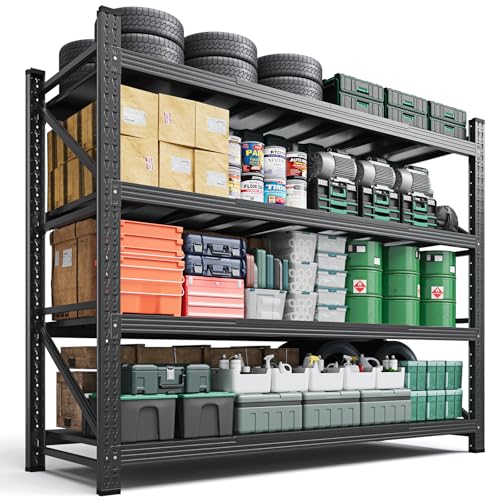
 CCIOBTE storage shelvesBest overall
 SISESOL YSZXEHHJTallest at 79 in
 Letaya 1Steel panel shelf surface
What garage organization really means
Garage organization is the habit of giving every item a fixed place, grouped with similar things and stored where you can reach it. Garage storage is the gear that makes that possible: shelves, bins, hooks, cabinets and overhead racks. Shelving does most of the heavy lifting, because it turns floor clutter into stacked, visible storage.
The goal is not a picture-perfect garage. It is being able to find the jumper cables, the paint, or the holiday lights in under a minute, without moving three other boxes first.
Start by sorting and grouping
Pull everything off the floor and out of the old shelves before you place a single bin. It feels like a step backward, but you cannot plan a layout around things you have not seen. Make three piles: keep, donate or sell, and throw away. Anything broken, expired or unused for years should leave.
Then sort the keepers into categories. Most garages end up with some version of this:
- Car care: oil, washer fluid, wax, towels, jumper cables
- Tools and hardware: hand tools, power tool batteries, screws and fasteners
- Yard and garden: fertilizer, hand tools, hoses, sprinklers
- Paint and home repair: paint cans, caulk, brushes, tape
- Sports and outdoor gear: balls, camping supplies, helmets
- Seasonal items: holiday decor, winter gear, patio cushions
- Bulk household goods: paper products, pet food, cleaning supplies
Match each zone to the right shelf height
Easy access mostly comes down to height. Your waist-to-shoulder range is the prime real estate, so use it for the things you grab weekly. Put heavy items low so you are lifting from close to the floor, and put light, rarely used items up high.
Here is a simple layout you can adapt to your own shelves:
| Shelf level | Best for | Why |
|---|---|---|
| Floor to knee | Tires, bags of soil, water jugs, heavy toolboxes | Heavy loads stay low, which keeps the unit stable and your back safe |
| Knee to waist | Paint cans, car care supplies, bulk goods | Easy to slide out and still fairly heavy |
| Waist to shoulder | Everyday tools, gloves, cleaners, frequently used bins | Reachable without bending or stretching |
| Above shoulder | Seasonal decor, camping gear, light empty boxes | Used rarely and light enough to handle safely overhead |
Use bins, labels and open space wisely
Bins keep small items from becoming a pile. Use the same size and style where you can, since uniform bins stack neatly and waste less shelf space. Clear bins let you see inside. Opaque ones look tidier, so pair them with large labels on the front, where you will see them while standing in front of the shelf.
Leave a little breathing room above each bin so you can lift it straight out. If you have to tilt and wrestle every container, you will stop putting things back.
A few habits make the setup easier to live with:
- Label the front of every bin, not the lid
- Store like with like, so you never check three places for one item
- Keep a small bin or tray for items in daily use, such as gloves and a flashlight
- Hang long-handled tools on wall hooks to free shelf space
- Leave one empty shelf or a few gaps for things you will add later
Pick shelving that supports your layout
Your layout works best on shelves you can reconfigure. Adjustable shelf heights let you fit tall items like jugs and coolers without wasting the space above short ones. For example, the CCIOBTE 4-Tier unit on our comparison page lists adjustable shelves, locking pins, and detachable panels that open up vertical space for ladders or pipe.
Capacity matters most for the bottom shelves, where your heaviest items live. Total capacity is shared across all shelves, so check the per-shelf number when the maker lists one. That CCIOBTE model lists 1500 lb per shelf and 6000 lb total, while a tool-free wire rack on the same page lists 640 lb per shelf. You can see how the options stack up in our guide to the best garage shelving.
Size is the other half of the decision. The CCIOBTE unit measures 79 in wide, 24 in deep and 73 in tall, which suits bulky items like tires and lawn gear. If your garage is tight, a narrower model may fit better. Our garage shelving comparison lists widths, depths and heights side by side, including a 14 in wide rack for slim spaces. Also check the shelf surface. Wire shelves are open and light, but small items can slip through, while solid steel panels give a flat base for little boxes.
Safety notes before you load the shelves
Heavy shelving can tip or shift if it is loaded badly. Keep these points in mind:
- Anchor tall units to a wall stud with anti-tip hardware when it is included or available, and never climb the shelves
- Load heavy items on the lowest shelves first, and stay within the per-shelf rating
- Use a stable step stool or ladder for high shelves, and ask for help with awkward or heavy boxes, since some units weigh around 100 lb to move
- Wear safety glasses and gloves when assembling steel frames, because edges can be sharp
- Store gasoline, propane and solvents in approved containers, away from the water heater, furnace and other ignition sources, and out of reach of children
- Wear hearing protection if you drill into masonry or use power tools while mounting anchors
Keep it easy to maintain
A system only stays organized if it is simple to follow. Spend ten minutes at the end of each season returning strays to their zones and checking that nothing is leaning, leaking or overloaded.
Garages bring moisture and oil, so wipe down shelves now and then and keep an eye out for rust, especially on models without a protective coating. A rust-resistant powder coat, which several units on our comparison page list, helps the frame hold up in damp conditions. If your needs grow, modular units that connect side by side let you extend the wall instead of starting over.
Frequently asked questions
How far apart should I space garage shelves?
Measure your tallest bin or item in each category and add a few inches for lifting clearance. Adjustable shelves make this easy, since you can move them as your storage changes.
Is it better to use open shelves or cabinets?
Open shelves are faster to access and let you see everything at once. Cabinets hide clutter and keep dust off, so some people use both: open shelves for bins and cabinets for chemicals or small parts.
Where should I store tires?
Store them on a low shelf that can handle the weight, or on a dedicated rack. Check the per-shelf capacity first, and stack or stand them so they cannot roll off.
How often should I reorganize my garage shelves?
A quick reset each season is usually enough. Do a full sort only when categories stop fitting their shelves or you notice you cannot find things easily.