How to Organize a Tool Chest Like a Pro
Empty the chest, sort every tool by the job it does, and give each group a fixed home. Put heavy tools in the lower drawers, daily tools in the top drawers, and small parts in dividers or trays. The same method works for a small tool box, you just sort more strictly because there is less room.
 HAUTMEC HT0428-TCBest overall
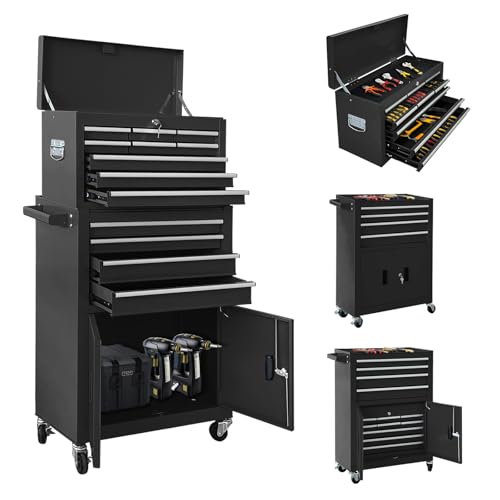 Sormols No.1Many drawers, small footprint
 TUFFIOM 8DToolChest87-redChest plus bottom cabinet
Start by emptying and sorting everything
The fastest way to a tidy chest is to take everything out. Lay your tools on a bench or a tarp so you can see what you own. Wipe out the drawers, then check each tool for rust, cracks or missing parts.
Next, make three piles: tools you use often, tools you use now and then, and tools you rarely touch. Anything that is broken, duplicated or never used can go to a different shelf or out the door. A chest works best when it holds only what you need within arm's reach.
Group tools by job, not by size
Pros sort by task. Wrenches and sockets go together, as do screwdrivers and pliers, and measuring and marking tools. When you start a repair, you open one drawer and find everything for that step.
Sorting by size alone sounds neat, but it scatters related tools across the chest. Use size only inside a group, such as lining up sockets from small to large.
Plan the drawers from top to bottom
Think of the chest as a ladder of access. The top drawers are the easiest to reach, so they hold what you grab most. Heavy items sit low, which keeps the chest stable and saves your back.
This layout is a good starting point. Adjust it to your own work.
| Position | What to store | Why |
|---|---|---|
| Top tray or top drawer | Screwdrivers, pliers, tape measure, marker | Used on almost every job |
| Upper drawers | Wrenches, sockets, hex keys | Frequent, but not constant |
| Middle drawers | Hand saws, files, chisels, specialty tools | Occasional use, medium weight |
| Bottom drawers or cabinet | Hammers, pry bars, power tools, bulky cases | Heavy or awkward items |
Respect weight limits and drawer depth
Every drawer has a limit, and it is usually lower than the limit for the whole chest. For example, the HAUTMEC 72-inch chest lists up to 1,600 lb overall but 44 lb per drawer. Spreading a heavy set across several drawers keeps slides working smoothly.
Many makers do not publish a load rating at all. Our best tool chest page notes that only 11 of the 32 products list one. If yours has no rating, load drawers lightly, and check that they still glide when full.
Drawer depth matters too. Shallow drawers suit small hand tools and bits. Tall items such as a hammer or a drill case belong in a bottom cabinet or a deeper drawer.
Add liners, dividers and labels
Liners stop tools from sliding and scratching each other. They also cut the clatter when you roll the chest across a floor. Several chests we compare, including the Sormols and TUFFIOM models, list drawer liners in their features.
Dividers keep each group in its own space. Use these simple tools:
- Foam cutouts or shadow outlines so you can see at a glance when something is missing
- Small bins or trays for screws, bits and fuses
- Magnetic strips on the inside of a drawer or on a side panel for steel tools
- Side hooks, where the chest has them, for wrenches and other hanging tools
- Labels on the front of each drawer, so you never open three drawers to find a file
How to organize a small tool box
A small box forces good habits. A portable unit such as the LARBANKE 4-drawer box lists drawers that are 11.5 in deep, with the first three only 1.37 in tall and the fourth 3.1 in tall. That tells you what fits: flat items in the shallow drawers, bulkier items in the deeper one.
Put flat tools like pliers, screwdrivers and bits in the shallow drawers, and keep small parts in a bin or tray, such as a removable tray. Use the tallest drawer for items like a tape measure or a small hammer.
Keep only a core kit in a small box. If something has not been used in months, store it somewhere else. When you outgrow the box, a larger unit may be the better move, and our best tool chest comparison lays out drawer counts and sizes side by side.
Safety and upkeep
A loaded chest is heavy, so treat it with care. Empty weights in our comparison reach 405.6 lb for the largest unit, and a full chest is heavier still.
Follow these basics:
- Lock casters before you open a drawer, and open only one drawer at a time on a tall chest to avoid tipping.
- Lock the drawers or use any locking bars before you move the chest.
- Do not lift a loaded top chest or portable box alone. Take out the heavy tools first.
- Store sharp blades with guards or in a slot, and keep fingers clear when you close drawers.
- Do not leave oily rags in a drawer. Wipe tools clean before you store them.
- Keep safety glasses and ear protection in the top drawer so they are the first things you reach for.
Keep it organized
Return each tool to its spot at the end of every job. Once a month, glance through the drawers and fix anything that has drifted. Wipe the slides, and check that locks and casters still work.
If a drawer keeps overflowing, that is a sign to split the group or move rarely used items elsewhere. A chest stays tidy when every tool has one clear home.
Frequently asked questions
Should I keep a tool chest locked?
Yes, if tools could be stolen or if children are around. Locking also keeps drawers closed when you roll the chest. Check that your model includes a key or padlock, since not every product does.
How often should I reorganize?
A quick tidy after each job and a fuller check every few months is usually enough. Reorganize sooner if you buy a new set of tools.
What is the best way to keep small parts from mixing?
Use small bins, trays or labeled containers inside a drawer. Keep one type of fastener per bin and mark the label on the front.
Do I need ball bearing slides to stay organized?
They are not required, but they help loaded drawers open smoothly. That makes it easier to reach tools and less likely that you will leave drawers half open.