How to Oil a Chainsaw Bar and Chain Correctly
Fill the saw's oil reservoir with dedicated bar and chain oil every time you fuel up, and let the saw's automatic oiler feed the bar while you cut. Before you start, check that oil actually reaches the chain by running the saw briefly and looking for a thin line of oil flung off the tip. Do not use chainsaw oil on a bike chain, because it is made for a very different job.
 KAKEI 18" 3/8"LP .050" 62DL- German Steel *3Best overall
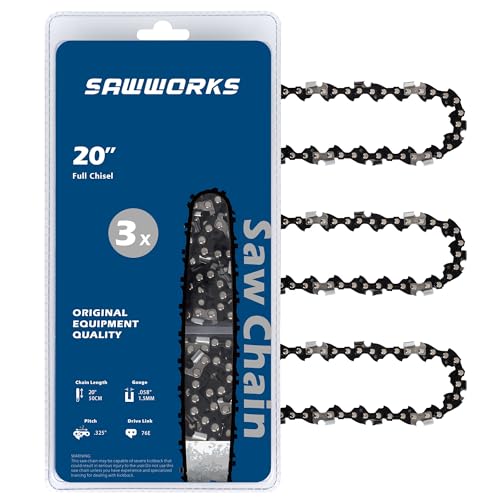 SawWorks 20" 76DL .325" .058"-GermanSteel *3PcsBest for big saws
 GSSHBR 18Inch 3/8 050 62 5PackBest 18 in value pack
How chainsaw oiling works
Most saws oil themselves. A small pump moves oil from a reservoir to a hole on the guide bar, and the oil travels around the bar groove and coats the chain as it spins. Your job is to keep the reservoir full, keep the oil path clear, and make sure the chain and bar are in good shape to receive it.
Without oil, a chain runs dry, heats up and stretches. The bar rails wear faster and the chain can bind or break. Oil also carries away fine sawdust that would otherwise pack into the bar groove.
Many cheap saws burn through oil faster than you would expect, and that is normal. A saw that uses no oil at all is the one to worry about.
Which oil to use
Use oil sold as bar and chain oil. It is made to be sticky, so it clings to a chain moving at high speed instead of flying off in a fine mist. Check your owner's manual for any specific recommendation, especially if you cut in very cold or very hot weather.
Here is how common options compare:
| Oil type | Good for chainsaw? | Notes |
|---|---|---|
| Bar and chain oil | Yes | Made for the job and sticks to the chain. The standard choice. |
| Biodegradable bar oil | Yes, if the manual allows | Often plant based. Can gum up if a saw sits unused for a long time. |
| Fresh motor oil | Only in a pinch | Thinner and flings off more easily, so use it sparingly and refill with proper oil soon. |
| Used or dirty oil | No | Grit and contaminants wear the bar, chain and oil pump. |
| Cooking oil | No | Can turn gummy and clog the oil passages. |
Step-by-step: oiling the bar and chain
Work with the saw switched off, the engine or battery fully stopped and the saw on a flat, stable surface. For a gas saw, let it cool first. For a battery or electric saw, remove the battery or unplug it before touching the chain.
Wear cut-resistant gloves when you handle the chain, since the cutters stay sharp even when the saw is off.
- Wipe the area around the oil cap so dirt does not fall into the tank.
- Open the oil cap and fill the reservoir with bar and chain oil. Stop just below the top and wipe up any spills.
- Check the bar for the small oil outlet hole near the base and the groove that runs around the edge. Clear any packed sawdust with a thin flat tool.
- Check chain tension. The chain should sit snug against the bar but still pull around by hand. A chain that is too tight starves the bar of oil and heats up.
- Close the cap firmly, then do a quick oiler test (see below) before you start cutting.
Test that the oiler is working
Put on eye and hearing protection. Start the saw on firm ground, using your normal safe stance, and point the tip of the bar toward a clean piece of light-colored scrap wood or paper, a few inches away and not touching it. Run it at moderate speed for a few seconds.
A thin line of oil should appear on the surface. If you see nothing, stop, shut the saw off and check for a blocked outlet hole, a clogged groove, an empty tank or a vent that is blocked. If the problem remains, have the oil pump or its adjustment checked rather than cutting dry.
Keep your hands, legs and body clear of the chain throughout, and never hold the saw above shoulder height while testing.
Oiling a new chain
A new chain should be oiled before you mount it. Some chains arrive coated in protective oil to resist corrosion. For example, the KAKEI 18 in semi-chisel chain and the JINFFR 10 in semi-chisel chain both state that they ship with protective oil. That coating guards the chain in storage, but it is not a substitute for running oil in the saw.
Soak a new chain in bar and chain oil for a while before fitting it, so the rivets and drive links are lubricated from the first cut. Then check tension again after a minute or two of use, since new chains tend to stretch a little.
If you are shopping for a replacement, remember to match the four numbers stamped on your bar: length, pitch, gauge and drive link count. The KAKEI 18 in chain, for instance, is listed as 3/8 LP pitch, .050 in gauge and 62 drive links. Our best chainsaw chain page puts those specs side by side so you can compare options for your saw.
Keep the bar and oiling system clean
Oiling only works if the path is clear. After a day of cutting, wipe the bar, clean out the groove and check that the outlet hole is open. If the bar rails look blue, burnt or badly worn, that often means the chain ran too dry or too tight.
Flip the bar over now and then so it wears evenly. This also helps oil distribution, because the oil outlet and groove stay in better shape on both sides.
A dull chain also pulls the saw harder and heats the bar faster, so it pays to keep cutters sharp. If a chain is past sharpening, a swap is quicker. Packs that include several chains, which we cover in our guide to the best chainsaw chain, make it easy to keep a spare ready.
Can you use chainsaw oil on a bike chain?
It is not a good idea. Bar and chain oil is deliberately tacky so it stays on a fast-moving saw chain. On a bike, that stickiness grabs dust, dirt and grit and builds up into a gritty paste that wears the chain, cassette and chainring.
Use a lubricant made for bicycle chains instead. Those are designed to penetrate the rollers and then stay clean. The reverse also holds: do not use light bike lube in your saw, because it is thinner and will fling off the chain much faster.
Frequently asked questions
How often should I check the oil level?
Check it every time you refuel a gas saw or swap a battery on a cordless saw. Many saws are designed to run out of oil and fuel at around the same time, but you should not rely on that.
Why is my saw leaking oil when it sits?
A small amount of seepage after the saw has been sitting is common, especially if the tank was filled right to the top or the saw was stored on its side. Store it upright and consider emptying the tank for long storage. Heavy leaking should be checked.
Do I oil an electric or battery chainsaw the same way?
Yes. The reservoir is filled with the same type of bar and chain oil. The only difference is safety: always remove the battery or unplug the saw before filling or handling the chain.
What happens if I run out of bar oil mid-cut?
Stop cutting, shut the saw off and refill. Running a chain dry for even a short time can cause smoke, heat and rapid wear on the bar and chain.