How to Load Heavy Duty Staples in a Stapler
Unplug nothing, but do unload any pressure: set the stapler on a flat surface, open the staple channel (usually by sliding out a magazine at the back or lifting a top cover), drop in a strip of heavy duty staples with the legs pointing down toward the anvil, then close it until it clicks. The exact release differs by model, so check the markings on your stapler. The staple size matters as much as the loading steps, because heavy duty staplers only work properly with the staples they were designed for.
 Swihauk NN0652ABest everyday desk stapler
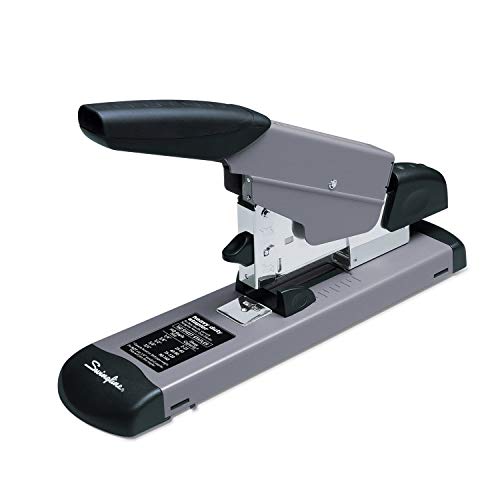 Swingline S7039005ABest Swingline
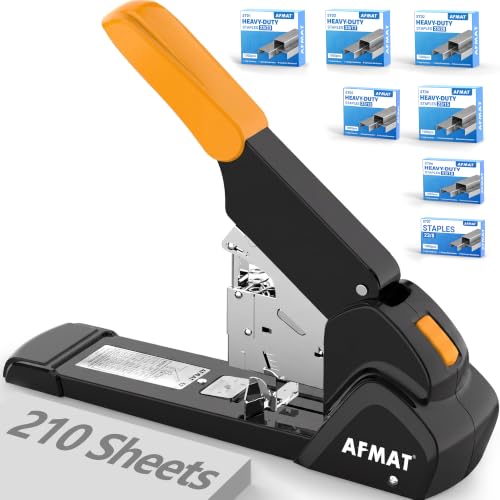 AFMAT ES15ORHighest capacity
The basic steps that work on most models
Heavy duty staplers look different, but the loading routine is nearly the same. You open the staple channel, drop in a strip of staples, and close it again. Most of the confusion comes from finding the release, not from the loading itself.
Follow these steps in order:
- Place the stapler on a flat, stable surface with nothing under the jaws.
- Find the release. On many desk models you push in and up at the back until the staple slide pops out. On others you lift a hinged top cover or press a reload button.
- Remove any leftover staples or loose fragments so the new strip sits cleanly.
- Set a strip of heavy duty staples into the channel with the legs pointing down (toward the anvil) and the flat crown on top.
- Slide the magazine back in or press the cover down until you hear or feel it lock.
- Staple a test page or two on scrap paper to confirm the staples fire and fold cleanly.
Check the staple size before you load
The most common reason a freshly loaded stapler jams is the wrong staple. Heavy duty staplers are built around specific staple types, and longer legs are needed for thicker stacks. Our best heavy duty stapler comparison lists the accepted staple sizes for each model, which is a good place to confirm what yours takes.
Here is what the published specs say for several models we compare:
| Model | Staples it accepts | Loading note from the listing |
|---|---|---|
| Amazon Basics E0485 | 15/16 in heavy-duty staples | Must be used with heavy duty staples or it will not work properly |
| Swingline S7039005A | Swingline Heavy Duty, 1/4 in to 3/4 in leg | Pick the leg length by how many sheets you staple |
| AFMAT ES15 | 23/8 through 23/23 sizes | Reload button for one-touch loading |
| Bostitch Titan B615-BLK-VP | 1/4 in standard, 5/16 in extended | Standard for 2 to 25 sheets, extended for 26 to 50 |
| Bostitch 0-2245 plier | B8 PowerCrown, 1/4 in and 3/8 in leg | Drop-in top loading |
| Swihauk NN0652A | 1/4 in and 5/16 in | Holds a full strip of 210 standard staples, with a low-staple indicator |
Match the staple length to your stack
A staple that is too short will not pass through a thick stack, and one that is too long can fold badly or jam. Swingline's listing for its 160-sheet model is a good example: it says the stapler performs well only with certain staples based on sheet capacity, and it names 25-sheet, 60-sheet, 90-sheet and 160-sheet staple strips.
The Amazon Basics listing says its 15/16 in staples are used for 160 to 210 sheets. If you staple mixed stack sizes, keep two or three lengths on hand and swap the strip when the job changes.
A simple rule: use the shortest staple that fully passes through the stack and folds flat on the back. If the legs poke out and stand up, go shorter. If the staple stops partway, go longer.
Loading different stapler designs
Rear-slide desk staplers are the classic heavy duty design. You release the magazine from the back, slide it out, drop the strip in and push it home. Swingline models are typically handled this way, but look for an arrow or label near the release if yours does not pop out on the first try.
Top-load staplers open from above. The Bostitch plier stapler listing describes drop-in top loading, so you lift the cover, set the strip in and press the cover down until it latches.
Models with a reload button, such as the AFMAT ES15, release the channel when you press the button. Load the strip, close the channel and you are done. Its staple viewing window also lets you check how many staples remain before you start a big job.
If you use a model with a low-staple indicator, such as the Swihauk, reload when the indicator shows the strip is nearly empty. Reloading early avoids dry-firing, which can mark paper without fastening it.
If it still jams or misfires after loading
A few quick checks fix most problems after a reload.
First, confirm the strip sits all the way forward and the channel is fully latched. A strip that is not seated can feed unevenly. Second, make sure the staples are the right size and not bent or glued together from a damaged strip. Third, check the anvil setting if your model has a reversible or convertible anvil, since the wrong position changes how the legs fold.
Several models in our comparison have front jam clearing, which lets you release a stuck staple without opening the whole mechanism. If your stapler has it, use it rather than prying at the jaws. Keep staples in a dry place too, because rusty or damaged strips are more likely to catch.
Safety notes
Heavy duty staplers store a lot of spring tension, and the staples are sharp. Take a few precautions each time you load or clear a jam.
Keep your fingers out from under the head and away from the staple exit. Never point the stapler at your face or another person while opening it. Do not press the head down while the channel is open. Wear safety glasses if you are clearing a jam or working with a bent or damaged strip, since a staple can spring out. Keep loose staples away from children and pets.
When loading keeps being a problem
If you find yourself reloading all the time or fighting jams, the stapler may be a poor match for your workload. A model with a larger staple supply or a clear viewing window can cut the interruptions. If you staple thick stacks often, a higher capacity model may also be worth a look. You can compare capacity, staple size and jam-clearing features side by side on our heavy duty stapler page.
Frequently asked questions
Which way do the staples face when I load them?
The legs point down toward the anvil and the flat crown sits on top. Most channels are shaped so the strip only fits one way.
Can I use regular desk staples in a heavy duty stapler?
Usually not. The Amazon Basics listing says its stapler has to be used with heavy duty staples or it will not work properly. Always match the size to what your stapler lists.
Why does my stapler fire but not push staples through?
The staple is often too short for the stack, or the strip is not seated fully. Try a longer staple or reseat the strip.
Should I load a partly used strip?
You can, as long as the strip is straight and undamaged. Remove any bent staples first.