How to Lift an Engine Without a Hoist
Yes, you can remove an engine without a hoist, but it takes more planning and carries more risk. The most common home method is to raise the car high on jack stands and lower the engine out the bottom onto a dolly. If you can get a hoist, even a borrowed or rented one, that is the safer way to do it.
 Garvee bGc-OaKS-Gnv75Tn3-XOiBest overall
 Maxsa Innovations bxt-zZ9Zfp9tz6J8R1c-P-sVYbkDuLightest hoist
 Maxsa Innovations YellowHeaviest-built frame option
Why a hoist is the normal tool
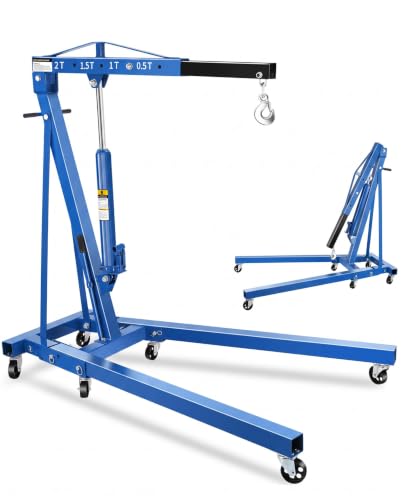
An engine hoist, also called a shop crane or cherry picker, does two jobs at once. It carries the weight of the engine, and it lets you raise, lower and roll the load in small, controlled steps. Most home garages use a 2 ton folding hoist, which fits most car and light truck engines and folds away when the job is done.
Going without one means you have to supply those two things yourself: a way to support a heavy, awkward load, and a way to move it slowly. Both are possible. Neither is forgiving if something slips.
An engine can weigh several hundred pounds, and it is top heavy and covered in oil. A sudden drop can crush a hand, a foot or the car itself. Treat every no-hoist method as a serious lifting job.
Method 1: Drop the engine out the bottom
On many front-wheel-drive cars and some trucks, the engine and transmission can come out through the bottom of the vehicle. You raise the body, then lower the engine onto a dolly or a sturdy board with wheels and roll it out from underneath.
This works best when you can lift the body high enough to give real working room, and when the subframe or cradle can be unbolted with the engine attached. Check a service manual for your exact vehicle first. Some engines can only come out the top, and forcing the issue can damage the body or the engine.
- Disconnect the battery, drain fluids, and label every hose, wire and connector.
- Raise the body and support it on rated jack stands on solid, level ground. Never rely on a jack alone.
- Support the engine from below with a transmission jack or a floor jack and a wood block.
- Unbolt the mounts, then lower the engine in small steps, checking for anything still attached.
- Roll the engine out on a dolly, keeping your body clear of the path it could fall along.
Method 2: Overhead beam with a chain hoist or come-along
Some people hang a chain hoist or lever hoist from a strong overhead beam, such as a steel beam in a purpose-built shop. This can lift an engine straight up, but only if the beam, its supports and every piece of hardware are rated for the load.
A garage rafter, a tree limb or a ceiling joist is not a safe anchor point. Wood framing is not built to take a hanging engine load, and a failure drops the engine with no warning. If you cannot confirm the rating of the beam and its supports, do not use this method.
You also need rated chains or slings, and bolts of the right grade at the engine's lift points. Use the lift points on the engine itself rather than wrapping chain around random parts.
Method 3: A-frame or gantry
A portable gantry or A-frame is the closest thing to a hoist that is not a hoist. It uses a beam on two legs, usually with wheels, and a chain hoist or lever hoist hangs from the beam. It can roll the engine once lifted.
The same rule applies: the frame and the hoist must each carry a clear rated capacity, and the combination is only as strong as its weakest part. Look for a marked rating, check every pin and weld, and keep the legs on flat, hard ground.
At that point you are buying or borrowing a lifting device anyway. Comparing the options in our best engine hoist guide may show that a folding hoist takes up less room than a gantry.
Comparing the methods
Each option trades convenience for risk. This table sums up the differences in general terms.
| Method | Best for | Main risk | What you need |
|---|---|---|---|
| Drop out the bottom | Vehicles built for bottom removal | Car falling off supports, engine tipping | Jack stands, transmission or floor jack, dolly |
| Overhead beam and chain hoist | Shops with a rated structural beam | Anchor failure, dropped load | Rated beam, hoist, chains, slings |
| A-frame or gantry | Garages with open, level floors | Frame tipping, overloaded hardware | Rated gantry and chain hoist |
| Borrowed or rented hoist | Most home jobs | Overloading or reaching too far | A hoist rated for the engine |
Safety rules for any method
Lifting an engine is one of the riskier jobs in a home garage. A few habits cut the risk a lot.
Never put any part of your body under a load that is held only by a jack, a chain or a hoist. Back up every lift with stands, blocks or cribbing, and keep your head and hands out of the drop zone.
Wear safety glasses, because oil and debris fall when an engine moves. Wear gloves and steel-toe boots as well. If you use an impact wrench or cut bolts with a grinder, add hearing protection.
Drain fuel and fluids and disconnect the battery before you start. Work in a ventilated space and keep a fire extinguisher nearby when you are around fuel lines.
Work with a helper. A second person can spot a snagged hose or a shifting load that you cannot see from where you stand.
When a hoist is worth getting
If you plan to pull more than one engine, or you just want a margin of safety, a hoist is the better tool. It keeps the load under control from the first inch of lift to the last.
On a hoist, capacity changes with the boom position. The hoists on our best engine hoist page list four boom positions rated for 0.5, 1, 1.5 and 2 tons. The highest rating applies with the boom retracted, so check the rating at the reach you need rather than only the headline number.
Storage matters in a home garage too. The folded lengths on that page range from 51.18 to 64.17 in. An engine leveler is also useful, because it tilts the engine as it comes out. The Garvee model and one Maxsa model on that page include one.
If you cannot buy a hoist, ask whether a local friend, a shop or a rental business can lend one for a day. That is usually safer than building a lift from scraps.
Frequently asked questions
Can you pull an engine with a floor jack alone?
A floor jack can support an engine from below during a bottom removal, but it is not a lifting device for pulling an engine up and out. Use it only to hold and lower the engine, with the car supported on jack stands.
Can I hang an engine from a tree or a garage rafter?
No. Tree limbs and wood framing are not rated for this load, and they can fail without warning. Only use a structure with a clear, confirmed rating.
What should I do about the engine leveler if I do not have a hoist?
A leveler is a hoist accessory that tilts the engine for a better angle. Without one, you can adjust the chain length or use a second lifting point, but only with rated hardware and a helper.
Is it ever better to remove the transmission first?
Often yes. Pulling the transmission separately makes each piece lighter and easier to handle. Check the service manual for your vehicle, since some are designed to come out as one unit.