How to Keep a Dog From Getting Out Through the Gate
Most gate escapes come from three things: a latch that does not lock by itself, gaps at the sides or bottom, and a dog that has learned to dash through when the gate opens. Fix them in that order. Start with a self-latching, padlockable latch, close any gap your dog can squeeze or dig through, and train a simple wait command at the gate.
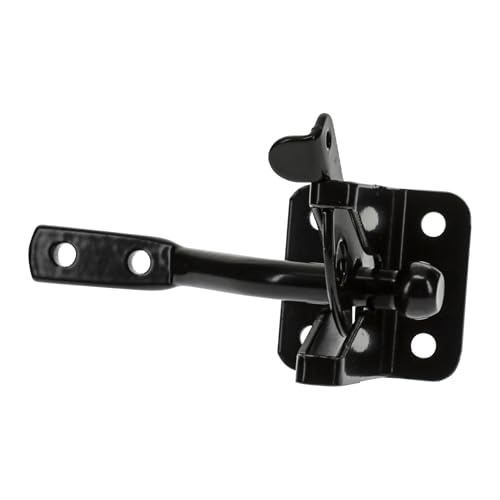 National Hardware N184-861Best overall
 SANKINS Pet-safety gravity latch
 HILLMASTER 3830Long body, pull string
Start With the Latch
A latch that needs a hand to close will eventually be left open. That is why a self-latching latch is the first fix. It locks when the gate swings shut, so nobody has to remember anything. Gravity latches drop a lever into place, and spring latches use tension. Either works, as long as it also has a fingertip or pull release that is easy for you to use.
Some dogs learn to nudge or lift a latch with their nose. If yours does, pick a latch that takes a padlock or pin. The padlock works as a second barrier. Padlocks are not included with the latches we compare, so you will need to supply your own. Keep the key somewhere you can reach quickly, and make sure everyone in the household knows where it is.
Our best gate latch for dogs page puts several models on one spec sheet so you can compare weight, length, swing direction and what comes in the box.
Match the Latch to Your Gate
Before you buy, check which way your gate swings. Some latches only work on gates that swing outward. For example, the National Hardware N184-861 is listed as outswing only, weighs 0.35 lb, and is padlockable. If your gate swings into the yard, you need a model that lists inward and outward use.
The SANKINS gravity latch and the HILLMASTER 3830 both list inward and outward swinging gates. The SANKINS weighs 2.16 lb and comes with 12 mounting screws. The HILLMASTER 3830 weighs 1.47 lb, is 10 in long, and can be operated with a pull string. Its listing mentions 6 mounting screws, so check the count before you order. The HILLMASTER 612 is a spring latch at 0.75 lb and 4.7 in long, but swing direction is not published for it.
Also check your gate material. Wood, vinyl, metal and aluminum gates can need different screws than the ones in the box. Both listings that mention aluminum or metal gates suggest swapping in harder screws. Treat any spec a maker leaves out as unknown, not as good news.
Close the Gaps at the Sides and Bottom
Small and medium dogs can slip through gaps you would not expect. Look at the hinge side, the latch side and the space under the gate. If your dog can get a head through, the body often follows.
Pick the fix that matches the gap. Here is a quick comparison.
| Problem | Fix | Good to know |
|---|---|---|
| Gap at the hinge or latch side | Add a wood batten strip or a flexible rubber gap strip | Adjusting the hinges can also reduce the spacing |
| Wide pickets or bars | Attach metal or mesh infill panels | Choose smooth edges and cover any cut ends |
| Space under the gate | Fill with a board, a kick plate or mesh | Leave enough room for the gate to swing freely |
| Digging under the gate or fence | Add a buried footer, large pavers or rocks | Dig only after you know where utility lines run |
What to Put Under the Gate
If your dog goes under, the answer depends on whether the dog squeezes or digs. For squeezing, a solid board, plastic kick plate or rigid mesh attached to the bottom of the gate closes the gap. For digging, you need something the dog cannot move or tunnel past.
Common choices for diggers are a row of pavers or flat stones along the ground, a strip of concrete under the gate path, or wire mesh buried below the surface and bent outward in an L shape. Dogs usually dig right at the base, so the barrier needs to go below that spot.
Pick a material that will not rust into sharp edges or leave gaps as the soil settles. Check the area after heavy rain, since soil can shift and open a new gap.
Train the Gate Routine
Hardware stops most escapes, but training covers the rest. Many dogs that bolt do it at the moment the gate opens, not because the latch failed. The goal is a dog that waits calmly while you come and go.
Try this simple routine:
- Teach a solid sit and stay away from the gate first.
- Practice with the gate closed. Reward your dog for staying back while you touch the latch.
- Open the gate a few inches, then close it again. Reward calm behavior only.
- Slowly open it wider and step through. Release your dog with a cue like "okay" before it moves.
- Use a leash or a second person at first when visitors, deliveries or other dogs are around.
- Keep a baby gate or exercise pen at the doorway between the house and the yard for dogs that dash.
Make It Easy for People Too
A gate that is hard to open from the outside tends to get propped open, which defeats the whole setup. If you use a pool-style or gravity latch, look for a release you can reach from either side, or add a pull string or an outside handle.
If your family, neighbors or delivery drivers need to open the gate from outside, our guide to the best gate latch to open from both sides compares options that work from each direction. Make sure any outside release is placed where a dog cannot reach it, and add a padlock if your dog is a clever one.
Safety Notes
Wear safety glasses when drilling, sawing or driving screws, and use gloves when handling mesh or cut metal. If you use a power drill or saw, wear hearing protection and follow the tool's instructions. Use a stable ladder if the gate is tall, and ask someone to hold it.
Before digging a footer, call 811 in the US so buried utility lines are marked. Keep fingers clear of hinges and latch springs, since a closing gate can pinch. Finally, make sure any padlock or pin does not trap a person or pet in an emergency, and never leave a dog in a yard with a locked gate and no way to reach shelter or water.
Frequently asked questions
Should I get a spring latch or a gravity latch?
Both self-latch. Gravity latches drop a lever into place, while spring latches use tension. Pick based on your gate swing, material and whether you want a pull string or fingertip release.
Will a taller gate stop a dog that jumps?
Extra height helps with jumpers, but latch and gap fixes still matter. Some dogs climb, so a smooth surface with no footholds on the gate is better than a taller gate alone.
Can I use a padlock with any latch?
No. Some listings do not state padlock support, so confirm it first. Padlocks are not included, so you will need to buy your own.
Why does my dog still escape when the gate is latched?
Check for a latch that is loose or misaligned, a gate that sags, hinge-side gaps, and digging spots. Also watch whether the dog is lifting the latch with its nose.
Do I need special screws for a metal or aluminum gate?
Often yes. Some listings recommend replacing the included screws with harder ones for aluminum or metal gates, so check before you start.