How to Install or Replace Air Compressor Hose Fittings
To replace an air hose fitting, release all air pressure, hold the hose-end fitting with one wrench, unscrew the old coupler or plug with a second wrench, then wrap the new fitting's male threads with thread tape and snug it in. Match the thread (1/4 in NPT is the common size) and the coupler profile first, so the new part seals and mates with your plugs. Finish with a leak check at working pressure.
 Ailbiuko aircoupler_plug-iron-45pcsBest overall
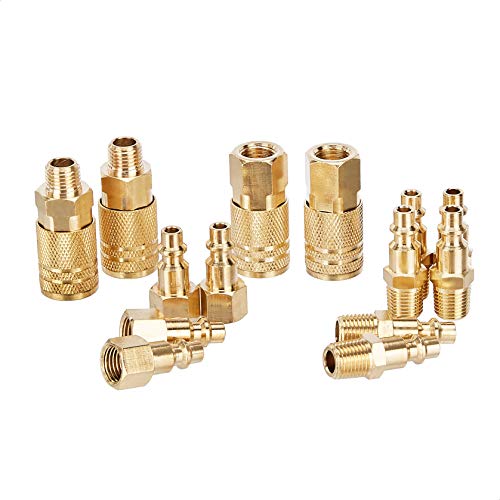 Amazon Basics A140001Brass starter set
 SOKOSEY 20SMmutou2packsReplacement M/D couplers
Start with safety and the right parts
Air under pressure can push a loose fitting or hose end out with real force. Before you touch anything, turn the compressor off, unplug it, and open the drain or release valve until the gauge reads zero. Then disconnect the hose from the compressor and from any tool.
Wear safety glasses for the whole job. Old fittings can have grit or corrosion on them, and a fitting that is not fully seated can spit out debris when you test it. If your compressor is loud, hearing protection is a good idea for the final pressure test.
Gather what you need before you begin:
- Two adjustable or open-end wrenches
- Thread seal tape (PTFE tape), unless your kit includes it
- The new coupler, plug or fitting set
- A hose cutter or sharp utility knife if you will shorten the hose
- Clean rags and a bucket of soapy water for leak checking
Match the thread and the coupler profile
Two things must match for a fitting to work. The first is the thread. Most home compressors, hoses and tools use 1/4 in NPT, and every top-ranked kit on our best air compressor fittings page lists that thread. If your hardware uses a different thread, these fittings will not seal, so check the markings or the manual before you buy.
The second is the coupler profile. A plug only locks into a coupler of the same profile. Most kits we compare list Industrial (M/D), which is meant to interchange across makers. Some listings do not state a profile, so look at the plugs you already own before ordering a new coupler.
Also remember that couplers and plugs come as a pair. The coupler goes on one side of a connection and the plug goes on the other. The table below shows how some published kit contents differ.
| Kit (published specs) | Couplers | Plugs | Thread tape listed |
|---|---|---|---|
| Ailbiuko 45-piece kit | 8 | 28 | Yes |
| Amazon Basics 14-piece brass kit | 4 | 10 | No |
| WORKPRO 16-piece kit with case | 2 | 8 | Yes |
| T TANYA HARDWARE plug pack | 0 | 10 | No |
Remove the old fitting
Look at how the old fitting is attached. On most hoses, a threaded fitting is crimped onto the hose end, and the coupler or plug screws into that. You only need to unscrew the coupler or plug from the crimped end, not cut the hose.
Put one wrench on the crimped hose-end fitting to hold it still. Put the second wrench on the old coupler or plug and turn it counterclockwise. Holding the hose end matters because twisting the hose itself can damage it or loosen the crimp.
If the old part is stuck, a few minutes of patience works better than force. Work the wrench back and forth in small movements. Once it is off, clean the female threads with a rag and check them for burrs, cracks or flattened ridges.
Install the new fitting
Taper-sealed NPT threads seal by wedging together, with tape filling the tiny gaps. Follow these steps:
- Wipe the male threads clean and dry.
- Wrap thread tape around the male threads in the direction the fitting will tighten, so the tape does not unwind. Keep it off the very first thread so no scraps fall into the airway.
- Start the fitting by hand and turn it until it is snug.
- Hold the hose-end fitting with one wrench and tighten the new fitting with the other, about one to two turns past hand tight.
- Stop there. Overtightening can crack brass or distort the threads, which causes the leaks you are trying to fix.
How to shorten an air compressor hose
If your hose is too long, you can cut it and add a new fitting. Many fittings for this job are barbed and clamped on, so check what style your hose end uses. A crimped factory end generally cannot be reused, so plan on a clamp-on or similar replacement style.
Cut the hose square with a hose cutter or a sharp knife, since an angled cut gives a poor seal. Push the barbed end of the new fitting fully into the hose, then secure it with the clamp the fitting calls for. Then thread your coupler or plug onto the new end as described above.
Make sure the hose and any clamp-on parts are rated for at least the pressure your compressor can deliver. A cheap clamp or an underrated hose is a common failure point. If you often coil and move long hoses, a best air hose reel can reduce kinks and wear at the ends.
Connect and use attachments
Attachments such as blow guns, tire inflators and nailers connect through the same coupler and plug system. Fit a plug (male end) to the tool, and use the coupler on the hose. Then push the plug into the coupler. With a standard sleeve coupler you pull the sleeve back first, insert the plug, and release the sleeve until it clicks. Push-to-connect styles, such as the RNSXYAT kit that lists a push-in design with 6 locking balls, let you insert the plug without pulling the sleeve.
Always connect tools with the compressor valve closed or the regulator turned down, then bring pressure up slowly. Keep the tool pointed away from people, and never aim a blow gun at skin. If you are choosing a compressor to go with these accessories, our guides to the best air compressor for home garage and best air compressor for home shop list outlet and thread details.
Check for leaks and fix common problems
Bring the system up to working pressure and brush soapy water on each joint. Bubbles mean air is escaping. Release pressure fully before you tighten or re-tape anything.
Common causes of leaks are too little tape, tape that unwound while threading, mismatched profiles, and cracked or worn threads. A worn coupler with a flat or chipped locking area can also leak at the plug, so replace it rather than tightening harder. Several listed kits show a 300 psi rating, but some makers do not publish one. If you cannot find a rating for a part, keep it away from the highest-pressure parts of your setup.
Frequently asked questions
Can I mix brass and steel fittings?
Yes, mixing is common as long as the thread and profile match. Brass resists corrosion well, while plated steel is also used in some kits. Check that each part has the same 1/4 in NPT thread.
Do I need thread tape on quick-connect plugs?
Tape goes on the tapered male NPT threads that screw into a female thread, such as a plug's threaded base. The plug's body that pushes into the coupler does not need tape.
How tight should the fitting be?
Start by hand, then add about one to two turns with a wrench while holding the hose end still. If it still leaks, remove it and re-tape instead of tightening more.
Can I use the same fittings for an automotive shop setup?
Often yes, if the thread and profile match. For heavier shop use, see our guide to the best air compressor for automotive shop.