How to Hammer a Nail into a Wall in Tight Spaces
In a tight space, choke up on a short hammer, start the nail with light taps, and drive it with short, controlled swings from your wrist. If you can't swing at all, tap a nail set or the nail itself with the hammer held close to the head, or use a hook or screw instead. Check behind the wall for wires and pipes before you start.
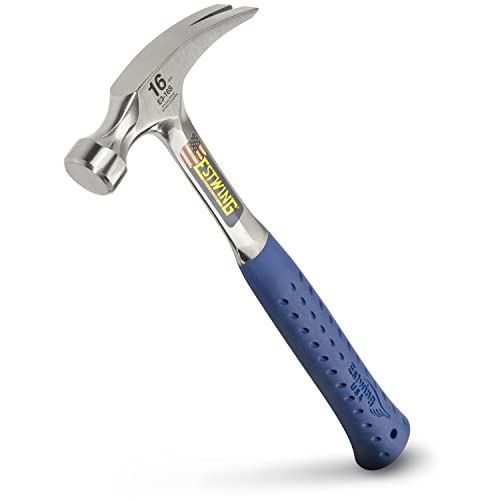 Estwing E3-16SBest overall
 Jorgensen 60102Magnetic starter, 20 oz head
 Estwing E3-16CCurved claw for prying
Why tight spaces make nailing harder
A normal swing needs room behind the hammer. In a closet corner, behind a shelf or between two cabinets, your elbow hits something before the head gets to speed. The result is glancing blows, bent nails and dented walls.
The fix is to shorten the swing and keep the hammer face square to the nail. Power matters less than accuracy here. A nail that goes in straight with many small taps beats one that is bent after two hard hits.
Pick a hammer that fits the space
Handle length decides how much room you need. A shorter hammer swings in a smaller arc, and a lighter head is easier to control close to the wall. Our best hammer page puts head weight, overall length, grip and claw type on one spec sheet, so you can compare these points side by side.
From the published specs, the CRAFTSMAN 16 oz fiberglass hammer is 12.75 in long, the Estwing 16 oz rip hammer is 13 in, and the Spec Ops 16 oz nailing hammer is 13.25 in. The Spec Ops 22 oz framing hammer and the 24 oz Estwing Hammertooth are both 16 in, which means a bigger arc and more weight to control.
| Option | What the specs say | Why it helps in tight spots |
|---|---|---|
| CRAFTSMAN 16 oz fiberglass | 12.75 in overall, curved claw, smooth face | Shortest handle in this group, so the arc is small |
| Estwing 16 oz rip hammer | 13 in overall, smooth face, shock reduction grip | Short and one-piece steel, with a grip that cuts sting |
| Spec Ops 16 oz nailing hammer | 13.25 in overall, magnetic nail starter, side nail puller, removable rubber mallet cap | Starter holds the nail so your fingers stay clear, and the side puller helps in confined spaces |
| Spec Ops 22 oz framing hammer | 16 in overall, 22 oz head | Longer and heavier, so it needs more clearance |
| Estwing Hammertooth 24 oz | 16 in overall, 24 oz head | Heaviest and longest in this group, better for open framing work |
Check the wall before you hammer
Tight spaces often sit near wiring, plumbing or other hidden hazards. Before you drive anything into a wall, take a minute to look.
Use a stud finder if you have one, and keep nails away from outlets, switches and the line straight above or below them. Cables and pipes often run vertically from those points. If you aren't sure what is behind a spot, move over a few inches or choose a different location.
- Turn off power at the breaker if you must work near an outlet or switch box.
- Avoid spots near water lines, especially in kitchens, bathrooms and laundry areas.
- Wear safety glasses, because nails and chips can fly or bounce back in a small space.
Step-by-step: drive the nail in a tight space
This method works for picture hangers, small brads and common nails in drywall or wood. Take your time on the first few taps, since that is when the nail is most likely to slip.
- Mark the spot with a pencil, and confirm there is room for the hammer face to meet the nail head square.
- Hold the nail near the top between your thumb and finger, or use a magnetic nail starter or a bit of tape or stiff cardboard to hold it. Keep your fingers well back.
- Choke up on the handle, close to the head, so the hammer swings in a smaller arc.
- Tap lightly two or three times to seat the nail. Let go of it once it stands on its own.
- Drive with short strokes, moving from your wrist and forearm rather than your shoulder. Keep your eyes on the nail head, not the hammer.
- Stop when the head is nearly flush. For finishing nails, tap the last bit with a nail set so the hammer face doesn't dent the wall.
Tricks when you can't swing at all
Sometimes there is no room even for a short arc. In that case, change the tool or the approach instead of forcing it.
Hold a nail set or a punch against the nail head and tap its end with the hammer. The set is thin and sits in the gap, and your hammer can strike from the side. You can also start the nail with a few light taps and then use the flat side of the hammer head, sliding it into the gap, to push the last bit in.
If the hammer still doesn't fit, a screw and a screwdriver, or an adhesive hook rated for the load, may be a better choice. For very light items, a small pin or a drywall hook needs far less force. A side nail puller, like the one listed on the Spec Ops nailing hammer, also helps if you bend a nail and need to pull it out in a cramped spot.
How to hammer quietly
Noise matters in apartments, nurseries and late evenings. Quiet nailing mostly comes down to using less force and absorbing the impact.
Drill a small pilot hole so you need fewer, lighter blows. A rubber mallet cap, like the removable one on the Spec Ops nailing hammer, softens the strike and is non-marring. A folded towel or cloth behind a board you are tapping can also dampen vibration.
Work in a few light taps instead of hard hits, and pick a time when neighbors are less likely to be disturbed. Shock reduction grips help comfort and control, but they don't make the strike itself silent.
Safety and finishing notes
Wear safety glasses every time. If you hammer for a long stretch in a small room, hearing protection is a good idea too, since sound bounces off close walls. If you work on a stepladder, make sure it is stable and don't overreach.
Keep your free hand clear of the strike zone. A magnetic starter, tape or a stiff card gives you a way to hold the nail without your fingers in the way. If the nail bends, stop, pull it out and start in a new spot instead of hitting it harder.
Frequently asked questions
Can I use a regular hammer in a tight space?
Yes, if you choke up on the handle and use short wrist-driven strokes. A shorter hammer with a lighter head is easier to control, though.
How do I keep from hitting my fingers?
Use a magnetic nail starter, or hold the nail with tape, a clothespin or stiff cardboard. Start with light taps and move your hand away as soon as the nail stands on its own.
What if the nail keeps bending?
Pull it out and check that the hammer face is square to the nail. A pilot hole in harder wood or a lighter strike often fixes it.
Do I need a different technique for drywall?
Use lighter blows, because hard hits can crush the surface. Stop once the head is nearly flush, and avoid the spots where studs or wires may sit behind the board.