How to Fold, Unfold and Assemble a Miter Saw Stand
To fold a miter saw stand, take the saw off first, clear the extensions and supports, release the leg locks, then collapse the frame and secure the latch. To unfold or assemble one, reverse that order: open the legs fully, confirm every lock has engaged, then mount the saw. Exact lever and pin locations differ by brand and model, so keep your manual nearby for the details.
 EVOLUTION 005-0002Best overall
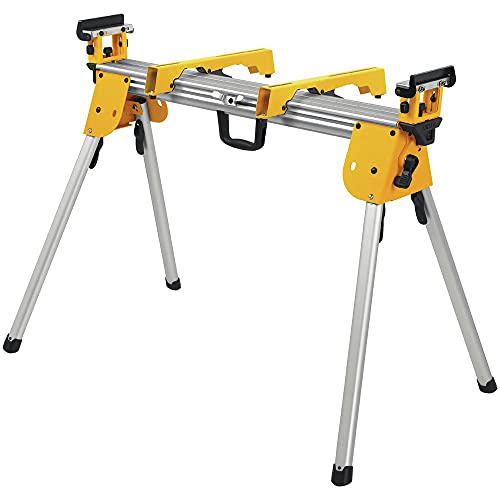 DEWALT DWX724500 lb aluminum stand
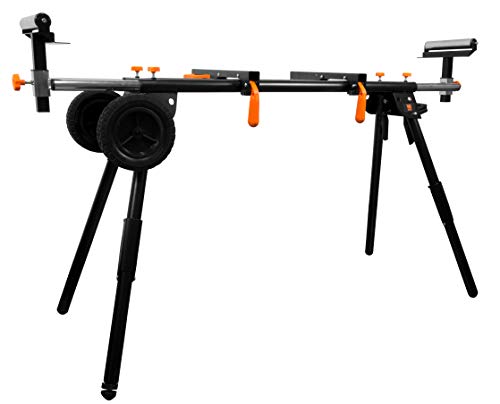 WEN MSA330Longest board support
Start with safety and a clear workspace
Most injuries with stands happen during setup and takedown, not while cutting. A miter saw is heavy and top-heavy, and a stand that is only half locked can tip or collapse under it.
Work on flat, solid ground with room to open the legs fully. Wear gloves when handling latches, because folding frames create pinch points for fingers. Unplug the saw before you lift it, and never carry a saw by its handle while the blade guard is loose.
- Unplug the saw and let the blade stop completely before moving it.
- Lock the saw head down and secure the sliding rails if your saw has them.
- Get a second person to help lift a heavy saw on or off the stand.
- Keep kids and pets away from the frame while it is open or collapsing.
Assemble a new stand out of the box
Whether it is a DeWalt, a Ridgid or another brand, a new stand usually comes with the legs, a central frame or rails, and a few loose parts such as wheels, pins or knobs. Lay everything out and match it to the parts list in the manual before you begin.
Read the manual start to finish first. Parts that look alike often go in specific positions, and fasteners installed in the wrong place can weaken the frame.
- Attach the leg assemblies to the main frame, keeping the stand upside down or on its side if the manual says so.
- Fit the wheels or foot pads to the correct end. Many stands have wheels on one side only so you can tip and roll it.
- Install the support arms or work rails and thread in any locking knobs by hand.
- Tighten bolts snugly with the supplied tools, then stand the frame upright and check that it does not rock.
- Add the material supports or extensions last, and set them at the same height as the saw table.
Unfold or open a stand that is already built
Folding stands are designed to open in a short sequence. Stand the frame on its feet, then release the transport latch or strap that holds it closed. Keep a hand on the frame, since the legs may drop or swing as the latch lets go.
Pull the legs apart until they stop. Most stands then have a locking lever, pin or sliding collar that must snap or clamp into place. If you open a Ridgid style stand, for example, check that each leg lock has fully engaged before you let go of the frame.
Do not trust the stand until you have tested it. Push down on the frame with your hands, then try to rock it side to side. Any movement means a lock is not seated.
Mount the saw and set it up
Place the saw on the stand with its base lined up to the mounting points. Use the brackets or clamps made for your stand, and tighten every fastener before you let go of the saw.
Check that the saw is level from side to side. Then adjust the extension arms or supports so the workpiece rests flat at the same height as the saw table. This is where a stand improves accuracy, because a piece that droops at the end cuts at a slightly different angle. For options that suit different saw sizes, see our best miter saw stand comparison.
If your saw is a large sliding model, check that the stand can carry its depth and weight. Our guide to the best 12 sliding compound miter saw options lists published specifications you can compare against the stand's rated capacity.
Fold and collapse the stand for storage
Folding is the part people rush, and it is the point where a saw is most likely to fall. The saw has to come off before any folding starts. A stand is not designed to fold with a saw attached, and many manuals say this clearly.
Follow these steps in order:
- Unplug the saw, lock the head down and remove it from the stand with help if needed.
- Remove any loose parts, such as stops, clamps, brackets or work supports that sit on the frame.
- Retract the extensions and slide them back into the frame.
- Release the leg locks one at a time while holding the frame steady.
- Fold the legs in, keeping hands clear of the hinge points.
- Close the transport latch or strap so the frame stays shut.
Lowering a stand and common problems
Some stands let you lower the working height, or tilt the frame down to roll it. If yours has height settings, adjust both sides evenly, and make sure any pins or collars seat fully before you load the saw. Never change the height with a saw on the stand unless the manual says it is allowed.
If the legs stick, look for dirt, sawdust or a bent hinge. Brush it clear and check that no lock is still engaged. If a stand will not lock or the frame looks bent, stop using it and contact the maker. A weak stand can fail under a running saw.
Sawdust is also a reason to clean the stand regularly. If dust is a concern in your shop, our guide to the best miter saw for dust collection explains what to look for.
Quick reference for each stage
Use this table as a checklist when you set up or put away the stand.
Always follow the manual for your exact model if it differs.
| Stage | What to do | What to check |
|---|---|---|
| Assemble | Attach legs, wheels and supports | All bolts snug, no rocking |
| Unfold | Release latch, open legs fully | Every lock engaged |
| Mount | Fasten saw to brackets | Saw level and secure |
| Collapse | Remove saw, retract extensions | Hands clear of hinges |
| Store | Fold and latch closed | Frame stays shut |
Frequently asked questions
Can I fold the stand with the saw still on it?
No. Take the saw off first. A stand that folds under load can drop the saw and cause injury or damage.
Why does my stand wobble after I open it?
A leg lock is usually not fully seated, or the floor is uneven. Reopen the legs, listen for the lock to click, and move the stand to flat ground.
Do I need a stand if I already have a workbench?
A bench can work, but a stand gives you roll-out mobility and adjustable supports for long boards. Choose based on how often you move the saw.
Which saw works well for a first stand setup?
A lighter saw is easier to lift on and off. Our best miter saw for beginners page compares options by published weight and features.