How to Fill and Maintain an Engine Hoist
Fill an engine hoist by lowering the ram fully, setting the hoist on level ground, opening the release valve, and adding clean hydraulic jack oil through the fill plug until the oil reaches the bottom of the opening. Then bleed it by pumping the handle with the release valve open to push out trapped air. After that, check for leaks, lubricate the moving parts, and store the hoist with the ram retracted.
 Garvee bGc-OaKS-Gnv75Tn3-XOiBest overall
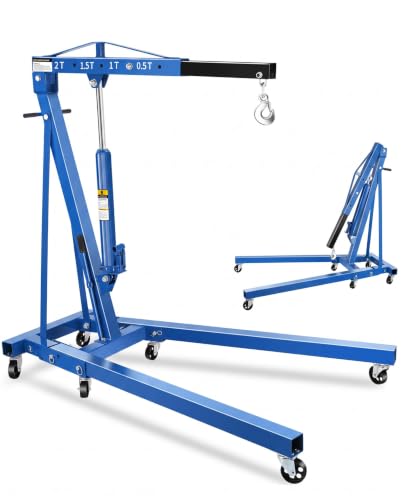 Maxsa Innovations bxt-zZ9Zfp9tz6J8R1c-P-sVYbkDuLightest hoist
 Maxsa Innovations YellowHeaviest-built frame option
Before you start: what you need and what to check
Most engine hoists lift with a small hydraulic jack built into the mast or boom. Some of the hoists we compare list an 8 ton hydraulic pump or cylinder, which is the jack unit that does the lifting. It has a sealed reservoir that holds oil, and that oil can run low over time or be lost if the hoist is stored on its side or leaks.
Read the owner's manual first. It tells you the correct oil type, the fill plug location, and the manufacturer's bleeding steps. If you do not have the manual, look up the brand and model name on its product listing or support page. The steps below are the general method that applies to most jack-style hoists.
Gather these items before you begin:
- Hydraulic jack oil that the manual approves (do not use brake fluid, motor oil or other substitutes unless the manual allows it)
- A small funnel or a squeeze bottle with a narrow spout
- Clean lint-free rags and a drip pan
- Safety glasses and nitrile gloves
- A flat head screwdriver or small pick to remove the fill plug
How to fill an engine hoist with oil
Park the hoist on a flat, level floor with no load on the hook. Oil level only reads correctly when the hoist is level and the ram is fully down. Wipe the area around the fill plug so dirt does not fall into the reservoir.
Open the release valve by turning it to the lowering direction, so the ram can drop all the way and any pressure is released. On the Oekaafvi listing, for example, turning the valve right raises the load and turning it left lowers it slowly, but valve direction can differ by brand, so confirm in your manual.
- Lower the boom and retract the ram completely, with nothing hanging from the hook.
- Open the release valve and let the ram settle.
- Clean the fill plug, then remove it with a screwdriver or pick. Work slowly because the plug is often a small rubber or metal piece.
- Insert the funnel and add oil in small amounts, pausing so it can settle.
- Stop when the oil reaches the bottom edge of the fill hole. Do not overfill, because the oil needs room to expand and the ram needs space to extend.
- Refit the plug firmly and wipe away any spilled oil.
How to bleed an engine hoist
Air in the hydraulic system makes the lift feel spongy. Common signs are a handle that pumps with no lift, a boom that rises slowly or in jerks, or a ram that sinks under light weight. Bleeding removes that trapped air so the pump can build pressure again.
Do this with the hook empty and the boom area clear of people and tools. Keep your face and hands away from the ram while it moves.
- With the ram fully retracted, open the release valve all the way.
- Pump the handle fully 10 to 15 times. This pushes air out of the pump chamber and back toward the reservoir.
- Close the release valve firmly, then pump to raise the ram a few inches.
- Open the valve and let the ram lower, then repeat the pump cycle two or three times.
- Remove the fill plug again and check the oil level. Top it off if it dropped.
- Test the lift with no load. If it rises smoothly and holds, bleeding worked. If it still feels spongy, repeat the cycle or check the manual for a model-specific bleed screw.
Routine maintenance that keeps it safe
A hoist holds a heavy engine over your head and your work area, so small problems matter. A quick inspection before each use catches most of them. Look over the welds, the boom pins, the hardware that joins the legs, and the hose or ram for any oil seepage.
Casters take a lot of abuse. Our listings show six-caster designs, and some note that only two of the casters lock. Spin each one by hand, clear out hair and debris, and add a drop of light oil to the swivel. A caster that sticks can cause the hoist to shift when you roll a loaded engine.
Use the schedule below as a general guide and adjust it to the manual.
| Task | When | What to look for |
|---|---|---|
| Visual inspection | Before every lift | Cracks, bent legs, loose bolts, oil on the ram |
| Check oil level | Every few months, or if lifting feels weak | Level at the bottom of the fill hole with the ram down |
| Lubricate pivots and casters | Every few months | Smooth swivel, no squeaks or sticking |
| Tighten hardware | After assembly and monthly during heavy use | Boom pins and leg bolts snug, nothing worn oval |
| Clean and wipe down | After each project | Remove grease and grit, check the paint or coating for rust |
Use the right boom position and store it properly
The most common cause of hoist trouble is overloading. Hoists are rated highest with the boom retracted, and extending it lowers capacity. The Garvee and Maxsa hoists we compare list four boom positions rated at 0.5, 1, 1.5 and 2 tons, so match the position to the engine weight and the reach you need. Our engine hoist comparison shows the capacity and boom reach of each model so you can check what fits your engine before you lift.
For storage, lower the ram completely so the piston rod is protected from rust and dirt. Fold the hoist if it is a folding model. Folded lengths on our page range from 51.18 to 64.17 in, so measure the wall or corner where it will sit. Keep it upright, since tipping a hoist onto its side can push air into the hydraulic system.
If you are still choosing a hoist, our best engine hoist page lets you compare weight, caster count and whether an engine leveler is included.
Safety notes
Never work under an engine that is held only by the hoist. Hydraulic systems can leak down, so support the load on an engine stand or solid blocks before you put any part of your body under it.
Wear safety glasses when you open the fill plug, because pressurized oil can spray. Keep the load low while you roll the hoist, and make sure the casters are locked while you work. Never exceed the rating for the boom position, and chain or strap the engine to lift points the vehicle maker approves.
Dispose of used hydraulic oil at a recycling or collection site, and clean spills right away because oil on a garage floor is a slip hazard.
Frequently asked questions
Can I use motor oil or brake fluid in my engine hoist?
Only if the manual says so. Hydraulic jack oil is made for these systems, while brake fluid can damage the seals and motor oil may not work well in the pump.
Why does my hoist raise slowly or drop under load?
The usual causes are low oil, trapped air, a release valve that is not fully closed, or worn seals. Check the oil, bleed the system, and close the valve firmly before you suspect the jack itself.
How often should I check the oil?
Check it every few months and any time lifting feels weak or spongy. Always check with the hoist level and the ram fully retracted.
Should the ram be up or down when I store the hoist?
Down. Keeping the ram retracted covers the rod and helps prevent rust that can tear the seals.