How to Drill a Hole in a 90 Degree Corner
The easiest way to drill into a 90 degree inside corner is with a right angle drill, because its chuck sits sideways to the body and fits where a standard drill cannot. Mark the spot, make a small starter dimple, and start slowly with a short bit held square to the surface. For an outside corner, a center punch or a simple guide block keeps the bit from walking off.
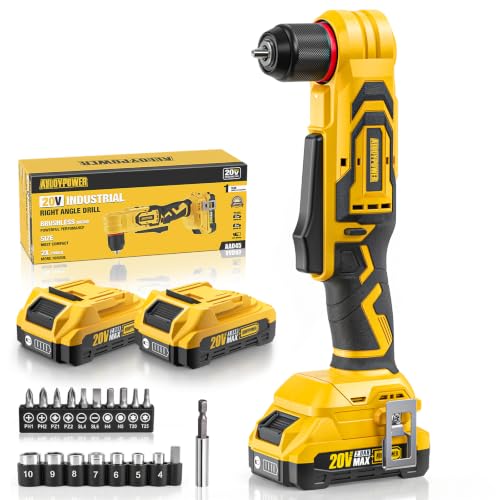 ALLOY POWER AP-ZJDZ-001Best overall
 Milwaukee 2415-20Lightest
 DEWALT DCD740BFastest
What do you mean by a 90 degree corner?
People use this phrase for three different jobs, and each one needs a slightly different method. Sorting out which one you have saves a lot of frustration and a few ruined boards.
An inside corner is where two surfaces meet, such as two walls, a cabinet side and its shelf, or the gap between joists. The problem there is access. An outside corner is the edge of a post, a board or a block, and the problem is that the bit wants to slide off the angled surface. The third job is a hole that turns a right angle inside the material, for example a wire channel or a dowel joint.
| Situation | Main problem | Best approach |
|---|---|---|
| Inside corner (walls, cabinets, joists) | The drill body does not fit | Right angle drill or short stubby bit |
| Outside corner (edge of a post or board) | The bit walks off the edge | Center punch, pilot hole or guide block |
| Hole that turns 90 degrees inside material | Two holes must meet | Drill from two faces and align with a marked depth |
Gather the right tools and bits
Good preparation matters more in a corner than on a flat surface, because there is little room to correct a mistake. A few small items make the job much easier.
- A pencil and a tape measure or square to mark the exact spot
- A center punch or a nail to make a starter dimple
- Short bits, such as stubby twist bits, or a short hex bit with a bit holder
- A drill with a chuck that fits the space, either a right angle drill or a compact standard drill
- Painter's tape or a depth stop collar to control hole depth
- Safety glasses, and hearing protection if you drill for more than a few minutes
Drilling into an inside corner step by step
Start by measuring the gap you have to work in. Check how much room there is beside the drill and behind it, because a tool that fits across the gap can still jam if its body is long.
Then follow the steps below. Slow and square beats fast and crooked in every corner.
- Mark the hole location with a pencil cross, then tap a small dimple with a center punch or nail.
- Fit a short bit and tighten the chuck firmly.
- Place the bit tip in the dimple and check that the drill is square to the surface, not tilted toward the corner.
- Start at low speed with light pressure until the bit has bitten in.
- Increase speed gradually and let the bit do the cutting. Back the bit out now and then to clear chips.
- Ease off the pressure as the bit breaks through, so it does not grab or splinter the far side.
Drilling an outside corner without the bit walking
On the edge of a post or board, the bit meets two angled surfaces and slides toward the flatter side. The fix is to give the tip something to grip before the drill does any real work.
Use a center punch to make a deep dimple on the exact line, or start with a very small pilot bit and step up in size. A scrap block clamped beside the work, or a V-shaped guide, also helps keep the bit aligned at 45 degrees to each face. Clamp the workpiece so it cannot spin or shift.
Start slowly and hold the drill steady. If the bit still skates, make a tiny notch with a knife or file first, then restart. Keep your free hand clear of the bit, and never hold small pieces by hand while drilling.
Making a hole that turns a right angle
A drill bit cannot bend, so a hole that turns 90 degrees is really two holes that meet. This is common for hidden wire channels in furniture or joints between two pieces of wood.
Mark both entry points and measure carefully so the two paths cross at the right depth. Use tape on each bit as a depth flag. Drill the first hole to the marked depth, then drill the second from the other face until it breaks into the first. Test the fit with a length of wire or a dowel before you assemble anything.
Dimensions need to be exact here, so use a square and a sharp pencil. If you drill into walls for this, check for electrical wires and plumbing first, and turn off power to nearby circuits.
When a right angle drill is worth using
A right angle drill puts the chuck at 90 degrees to the body, so it works between studs, inside cabinets and under sinks. If you do this often, see our best right angle drill comparison for the full spec sheet. If you only need an occasional general-purpose tool, our best drill page covers standard models.
The most important spec for corners is head length, because it decides how tight a space the tool can reach. Torque matters for larger holes. Here is how five models on our sheet compare, based on published specifications.
| Drill | Head size listed | Max torque (in-lb) | Weight (lb) |
|---|---|---|---|
| ALLOYPOWER 20V Brushless | 3.8 in | 400 | Not listed |
| Milwaukee M12 | Not listed | 100 | 2.25 |
| DEWALT DCD740B | 4.0 in front to back | Not listed | 3.4 |
| Bosch 12V kit | 5-position pivoting head | 115 | 2.75 |
| Makita XAD02Z 18V | 3-1/2 in angle head height | 120 | 3 |
Wood, metal and concrete, plus safety
Wood is the easiest material. Use a sharp twist or spade bit, and brace the work where you can. Metal needs a sharp bit made for metal, a center punch and a slower speed. Concrete is different: the right angle drills on our sheet do not list a hammer mode, so for masonry you generally need a hammer drill with a carbide masonry bit, and a short bit or an angle attachment rated for it.
Always wear safety glasses, because chips and dust fly in every direction in a corner. Use hearing protection with louder tools, and a dust mask for masonry or sanding. Before drilling into a wall, check for hidden wires and pipes. Unplug or remove the battery when changing bits. If you work on a ladder, keep both feet planted and avoid overreaching with the drill.
Frequently asked questions
Can you right angle drill holes in wood?
Yes. Wood is the most common material for these tools, including holes through studs and joists. Use a sharp bit, keep the drill square and clamp or brace the work. Higher torque helps with larger holes.
Can you right angle drill for concrete?
The drills on our sheet list no hammer mode, so they are not meant for concrete. Masonry work generally needs a carbide masonry bit and a hammer drill, plus eye and ear protection and a dust mask.
Why does my bit keep walking in a corner?
A smooth or angled surface gives the tip nothing to grip. Make a dimple with a center punch, start with a small pilot bit, and begin at low speed with light pressure.
Do I need a right angle drill, or will a short bit do?
If the gap is wide enough for a compact drill and a stubby bit, you may not need one. A right angle drill helps when the drill body will not fit, such as between joists or inside cabinets.