How to Cut Metal Without Tools: Options and Limits
Strictly speaking, you cannot cut metal with no tools at all, but you can cut thin metal with simple hand tools or household items. Thin sheet, foil, wire and small rod can be cut or snapped by hand with scissors, repeated bending, or a hacksaw. Thick pipe, bar and angle iron need a proper saw, and that is where a chop saw becomes the sensible choice.
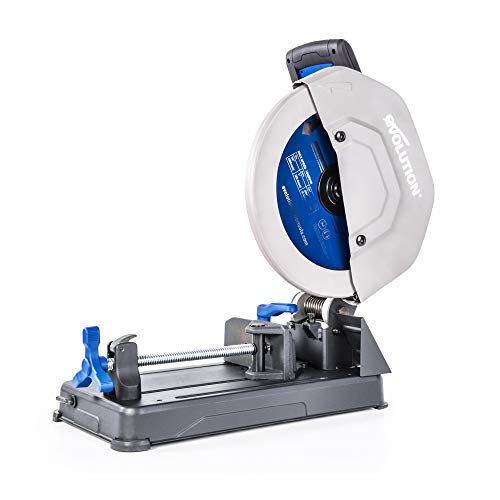 EVOLUTION S355CPSLBest overall
 EVOLUTION S14CPS
 EVOLUTION S14MCSBest for fabrication shops
What "without tools" really means
Most people asking this question fall into two groups. Some have no power tools and want to cut metal by hand. Others have nothing in the garage at all and are hoping a trick will work. The first group has good options. The second group has a short list, and it only works on thin material.
Metal is cut by removing material (sawing, filing, grinding) or by shearing it between two hard edges (snips, scissors, bolt cutters). A third method, bending a piece back and forth until it fatigues and breaks, needs nothing but your hands and a firm edge. That is the only true no-tool method, and it only suits thin, soft metal.
Methods that work with little or no equipment
Start with the thinnest material you have. The thinner the metal, the more options open up. Here are the methods in order from least gear to most.
Keep in mind that every one of these leaves a sharp edge. Metal edges cut skin easily, so file or sand them smooth when you are done.
- Bend fatigue: Fold thin aluminum sheet, strip or soft wire back and forth at the same line until it work-hardens and snaps. Wear gloves, because the fracture edge is sharp.
- Score and snap: Scratch a deep line with a hard edge, then bend the piece along a table edge. This works on thin sheet and flat strip, and the cut is rough.
- Household scissors or kitchen shears: These handle foil, soda can metal and very thin sheet. They will be damaged by anything heavier, so do not use your good pair.
- Tin snips: A cheap hand tool that shears sheet metal in straight or curved lines. Fine for roof flashing, ductwork and thin aluminum.
- Hacksaw: The classic hand saw for metal. It cuts pipe, rod, bar and tube if you are patient and use the right blade.
- Bolt cutters and wire cutters: These shear rod and wire cleanly with leverage. They are limited by the hardness and thickness of the metal.
Options and limits at a glance
This table shows what each approach handles and where it stops. Hardness matters as much as thickness, so hardened steel will defeat tools that cut mild steel without trouble.
| Method | Works on | Limit | Edge quality |
|---|---|---|---|
| Bend fatigue | Foil, thin aluminum, soft wire | Fails on steel or anything thick | Rough, sharp |
| Score and snap | Thin flat sheet and strip | Not for pipe or round bar | Rough |
| Scissors or shears | Foil, can metal, very thin sheet | Damaged by anything heavier | Fair |
| Tin snips | Thin sheet, flashing, ducting | Sheet only, not tube or bar | Fair, some curl |
| Hacksaw | Pipe, rod, bar, tube, angle | Slow, effort grows with size | Burred, needs filing |
| Bolt cutters | Rod, chain, wire, small bar | Hard steel and large diameters | Pinched end |
How to cut pipe and rod by hand
For pipe, the most reliable hand method is a hacksaw with a fine-tooth blade. Mark a line all the way around the pipe with tape or a marker so you can keep the cut square. Clamp the pipe firmly, because a loose pipe wanders and pinches the blade.
Rotate the pipe a quarter turn every few strokes. This keeps the cut even and stops the blade from binding in the wall. For rod, the same approach works, and small-diameter rod can often be shortened with bolt cutters in a single squeeze.
Follow these steps for a clean hand cut:
- Mark the cut line all the way around the piece.
- Clamp the work close to the line so it cannot vibrate.
- Use a blade with enough teeth that at least three are touching the metal at once.
- Use long, steady strokes with light pressure on the forward stroke.
- Add a drop of cutting oil on steel to reduce heat and wear.
- Deburr the edge with a file before handling or fitting the part.
Where hand methods stop working
Hand cutting gets harder fast as the metal gets thicker or harder. A single cut in thin steel tubing is a reasonable job for a hacksaw. A dozen cuts in thick bar or heavy pipe is a long afternoon, and the cuts tend to drift off square. Blades also dull and bend if you push too hard.
If you need many cuts, identical lengths or accurate angles, a powered saw saves time and gives more consistent results. A cold cut chop saw with a toothed carbide or cermet blade cuts steel with little heat and few sparks, and a built-in vise holds the work square. Our best metal cutting tool page puts several of these saws on one spec sheet so you can compare blade size, speed, cut capacity, blade life and weight.
Cut capacity is the number to check against your stock. For example, the Evolution S355CPSL lists a 130.2 mm round cut capacity, the largest on that page. The VEVOR 7-1/4 in saw is the lightest listed at 14.44 lb, which suits small stock and moving between jobs. Measure your largest piece before you decide, and read more in our metal chop saw comparison.
Safety notes
Cutting metal by hand is slower, but it still carries real risks. Metal slivers, hot offcuts and sharp burrs are the usual causes of injury.
Treat these as the minimum before you start:
- Wear safety glasses, because metal fragments and fractured pieces can fly off.
- Wear cut-resistant gloves when handling sheet, snapped ends and fresh cuts.
- Clamp the workpiece. Holding it with your free hand is how most hand-cutting injuries happen.
- Let cut ends cool before touching them, since friction heats the metal.
- If you move to a powered saw, add hearing protection, keep clothing and hair clear of the blade, and read the maker's manual for the guard and clamp instructions.
- Never use scissors or snips on springs, hardened wire or anything under tension, because it can recoil.
Which approach should you choose?
Match the method to the job rather than forcing a weak tool to do hard work. For a single cut in thin sheet, wire or small rod, snips, shears or a hacksaw will do it. For pipe and bar, use a hacksaw and take your time, or a pipe cutter if you have one.
If your project involves repeated cuts, thicker tube or square ends for welding, plan to use a saw designed for the job. It is faster, safer than forcing hand tools, and gives you a cleaner edge to work with.
Frequently asked questions
Can I cut a steel pipe with a rock or by bending it?
No. Steel pipe is too hard and thick for rubbing or bending to work. You need at least a hacksaw or a pipe cutter.
Will scissors cut thin aluminum?
They can cut foil and very thin sheet, but they will dull or bend quickly. Use tin snips for anything beyond a one-off cut.
What blade should I use in a hacksaw for tube?
Pick a fine-tooth blade so several teeth contact the wall at once. Coarse teeth catch and can tear thin tube.
Is a hand cut as straight as a saw cut?
Usually not. A marked line, a clamp and a slow pace help, but a vise-equipped chop saw is more consistent for square cuts.
How do I smooth the cut end afterward?
Run a metal file across the edge, then lightly sand it. This removes burrs that can cut your hands or stop parts from fitting.