How to Clean Loppers and Store Them Properly
To clean loppers, brush off dirt, dissolve sap, wash the blades, dry them fully and wipe on a thin coat of light oil. Then store them closed and dry, ideally hung off the floor in a shed or garage. Doing this after each pruning session keeps the blades cutting cleanly and slows rust.
 Fiskars 391461-1003Best overall
 Fiskars 394801-1003Gear leverage for 2 in
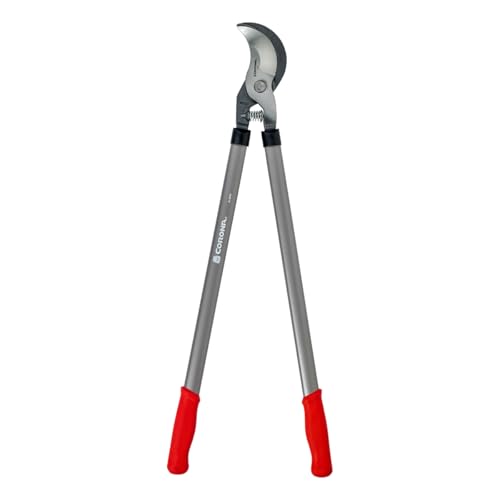 Corona Clipper SL 6500Highest cutting capacity
Why cleaning and storage matter
Loppers spend their working life in sap, soil and moisture. Left dirty, the blades gum up, the pivot stiffens and rust starts along the cutting edge. A rusty or sticky blade needs more effort and tears the bark instead of slicing it.
Dirty blades can also carry plant disease from one shrub to the next. If you prune living wood, a quick clean between plants is a good habit. This matters most with bypass blades, which are the type that suits live wood, as covered on our best loppers page.
The good news is that the whole routine takes about ten minutes. Most of the work is drying and oiling, not scrubbing.
What you need before you start
You probably own most of this already. Gather it on a workbench or an old towel so small parts do not get lost.
- Stiff brush or old toothbrush
- Bucket of warm water with a few drops of dish soap
- Scrubbing pad or fine steel wool for stubborn sap and light rust
- Rubbing alcohol or white vinegar for sticky resin
- Clean rags or paper towels
- Light machine oil, camellia oil or a dry lubricant spray
- Sharpening file or whetstone, if the edge has dulled
- Cut-resistant gloves and safety glasses
How to clean loppers, step by step
Wear gloves and eye protection for the whole job. Loppers have long blades that can swing closed, so keep your fingers clear of the cutting edge at every step. If the handles have a latch or lock, use it while you clean.
Follow this order:
- Brush off loose dirt and plant debris from the blades, pivot bolt and handles.
- Wipe sticky sap with a rag dampened with rubbing alcohol or vinegar. Let it sit for a minute on hardened resin, then scrub with a pad.
- Wash the metal parts in warm, soapy water. Keep wooden handles out of the bucket and wipe them with a damp cloth instead.
- Remove light rust by rubbing along the blade with fine steel wool, moving away from the edge and not across it.
- Rinse with clean water and dry every surface right away. Moisture left in the pivot area is the main cause of rust.
- Open and close the blades a few times to check the action, then oil as described below.
Sharpen and oil the blades
Check the edge after cleaning. If it leaves a ragged cut or you have to force the blades through a branch well inside the rated capacity, it may need sharpening. On a bypass lopper, sharpen only the beveled outer edge of the cutting blade. Hold the file at the original bevel angle and stroke away from the edge in one direction. Do not file the flat inner face. Anvil blades are different, so check the maker's guidance for those.
Next, put a drop of light oil on the pivot and rub a thin film over both blades with a rag. A thin coat is enough. Too much oil attracts dust and can drip onto your hands or onto plants.
Many models, such as the Fiskars PowerGear2 and the PrunePro, list a low-friction blade coating that reduces gumming and helps resist rust. A coating helps, but it does not replace cleaning and drying. Avoid steel wool on coated blades, since it can scratch the finish. A soft cloth and soapy water are safer there.
If your lopper has a gear or cam mechanism, wipe the visible moving parts and add a drop of oil where metal slides on metal. Do not take the mechanism apart unless the maker's manual says to.
Where to store loppers
The best spot is dry, out of the rain and off the ground. A shed, garage or covered utility room works well. Avoid damp basements and open sheds with cold nights, where condensation can form on metal.
Close the blades before you store them. Use the lock or latch if your model has one, so the edge cannot swing open. If there is no lock, a hook-and-loop strap or a short length of cord around the handles works.
Here is how the main storage options compare:
| Storage method | Good for | Watch out for |
|---|---|---|
| Wall hooks or pegboard | Most sheds and garages | Needs a solid mounting point and a spot out of reach of kids |
| Wall-mounted tool rack | Several long-handled tools | Check the rack fits the handle width |
| Tool bin or cabinet | Small spaces, shared garages | Make sure tools are dry first so moisture does not get trapped |
| Leaning in a corner | Short-term only | Tools can slide and fall, and the blades may touch the floor |
How to hang loppers on a wall
Hanging is the simplest way to keep blades dry and protected. Pick a stud or a sturdy backing board rather than drywall alone, since loppers are long and need a firm hold.
Overall length varies by model. In our product data, the Fiskars 28 in bypass lopper is 28 in long, and the Corona SL 6500 is 33 in. Measure your own tool before you pick a spot, and leave some clearance so you are not reaching past the blades.
For the cleanest result, use two hooks:
- Mark the wall at about shoulder height so you do not have to lift the tool over your head.
- Screw a pair of heavy-duty hooks into a stud, spaced a bit narrower than the lopper's handle length so the handles cradle on both.
- Hang the lopper by its closed handles with the blades pointing up or toward the wall, never outward at walking height.
- Keep the hooks above where children can reach, or use a locking cabinet if kids are around.
Safety and seasonal care
Always treat stored loppers as sharp tools. Wear gloves when you take them down, and never reach into a bin where blades might be hidden. Use eye protection when sharpening, because metal particles can fly off the file or stone.
Check the tool each season. Look for loose pivot bolts, bent blades and cracked handles. A lopper with a loose pivot can pinch or twist under load. If you use a telescopic model, such as the Ymachray with its 41 in maximum length, check each handle joint and locking collar for dirt or wear before use, since those extra parts can loosen.
Before winter, give the tool a full clean and a slightly heavier coat of oil. In spring, wipe off excess oil and test the action before the first cut. When you shop for new loppers, factors like blade coating and handle material can make upkeep easier, and our loppers comparison lists them side by side.
Frequently asked questions
Can I use WD-40 on loppers?
Yes, for quick rust loosening and displacing water. For long-term protection, finish with a light machine oil or similar lubricant, since thin sprays can evaporate.
Should I disinfect loppers between plants?
If you are cutting diseased wood, yes. Wipe the blades with rubbing alcohol before moving to a healthy plant, then dry and oil them afterward.
How often should I sharpen loppers?
Sharpen when the cuts turn ragged or you notice extra effort on branches within the rated capacity. For many home gardeners, that means once or twice a season.
Is it OK to leave loppers outside overnight?
It is best not to. Dew and rain on bare metal speed up rust, and a lopper left on the ground is also a trip and cut hazard.