How to Clean and Maintain a Foam Cannon
Rinse your foam cannon with clean water after every wash, then give it a deeper clean with warm water and a soft brush every few weeks. Take out the orifice only when foam turns thin or spitty, and store the cannon empty and dry. These habits stop soap residue from building up and clogging the small parts that make foam.
 Tool Daily JT001-1Lightest in the lineup
 Tool Daily JT067Gun included, M22 fittings
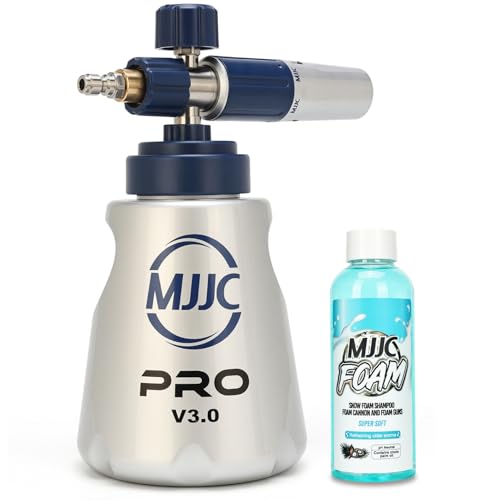 MJJC QRFLPROV3Biggest soap bottle
Why a foam cannon needs regular cleaning
A foam cannon works by forcing water through a tiny orifice and mixing it with soap and air. Soap that dries inside leaves a film, and that film narrows the passages and makes foam thin or uneven. In hard water areas, mineral scale can add to the problem.
The good news is that most of the work takes a few minutes. Keeping up with small cleanups is much easier than scrubbing a cannon that has been left full of dried soap for weeks.
If you are still choosing a cannon, our best foam cannon comparison lists the connector, bottle size, fitting material and orifice details that affect how easy a model is to maintain.
The quick rinse after every wash
This is the habit that matters most. Do it before you put the cannon away, while the soap is still wet.
Safety first: shut off the pressure washer and squeeze the trigger to release trapped pressure before you disconnect anything. If your washer is electric, switch it off at the unit as well. Wear safety glasses, because a pressurized connector can spit water or soap.
- Pour any leftover soap solution back into a container or down the drain.
- Fill the bottle about one quarter full with clean, lukewarm water.
- Reconnect the cannon to the wand and run it for a few seconds until clear water comes out of the nozzle.
- Turn the foam knob through its range while it runs, so water flushes the whole mixing path.
- Disconnect, empty the bottle, and wipe the outside with a damp cloth.
- Leave the lid off so the bottle can air dry.
The deeper clean for slow foam or buildup
Do this every few weeks if you wash often, or any time foam looks thinner than usual. Start by making sure the cannon is disconnected and depressurized.
Unscrew the bottle and lid. Wash the bottle with warm water and a drop of mild dish soap, using a bottle brush if the mouth allows. Wide-mouth bottles, like those on several models in our comparison, make this much easier because you can reach the bottom and corners.
Next, soak the head of the cannon, not the whole thing, in warm water for 10 to 15 minutes. Do not use boiling water. Some listings give a water temperature limit. For example, the Tool Daily JT067 lists a maximum of 140°F (60°C), so keep your water below the limit your maker gives.
If you see white crusty scale, a short soak in a diluted white vinegar mix can help. Rinse everything thoroughly afterward, and do not leave metal parts sitting in vinegar for long.
Cleaning the orifice and fittings
The orifice is a small brass or stainless insert at the front of the mixing chamber. It is the most common place for clogs. If foam comes out in sputters or the fan pattern looks lopsided, check it first.
Unscrew the nozzle housing, remove the orifice, and hold it up to the light. You should see a clear round hole. Gently clear any blockage with a soft bristle or a thin wire from a tool kit. Do not use a drill bit or sharp pick, since scratching the hole changes how it sprays.
Models with swappable orifices give you more to look after. The MJJC Pro V3.0, for instance, lists 1.1mm, 1.25mm and 1.35mm orifices. Store spares in a small labeled bag so they do not get mixed up or lost, and note which size matches your washer's pressure.
Check the quick connect fitting and any O-rings too. A cracked or flat O-ring leaks, and a leak lowers the pressure that reaches the orifice.
A simple maintenance schedule
Use this table as a starting point. Adjust it to how often you wash and how hard your water is.
Materials also play a part. The Rag Company Ultra H2O lists full stainless steel internals and says it is rebuildable, while the McKillans wide mouth model lists brass fittings. Both can be kept in good shape, but trapped soap sitting on any metal is something to avoid, so the quick rinse matters either way.
| Task | How often | What it prevents |
|---|---|---|
| Quick rinse with clean water | After every wash | Dried soap in the mixing path |
| Wash bottle and lid | Every few washes | Residue and sour smells |
| Inspect and clear orifice | Monthly, or when foam thins | Clogs and uneven spray |
| Check O-rings and connector | Every few months | Leaks and pressure loss |
| Vinegar soak for scale | Only if you see mineral buildup | Narrowed passages |
Storage and what to avoid
Store the cannon empty, dry and out of freezing temperatures. Water trapped inside can freeze, expand and crack plastic or metal parts. A shelf in a garage cabinet works well, as long as it stays above freezing.
Avoid leaving soap in the bottle between washes, even for a few days. Skip harsh solvents, bleach and strong degreasers, which can damage seals and plastic. Never point the nozzle at people or pets, and wear eye protection whenever the system is under pressure.
Finally, use the right soap. Thick or very concentrated soaps can leave more residue, so follow the dilution on the label and keep your mix in range.
Frequently asked questions
What is foam gun cleaner?
It is a cleaning product sold to dissolve soap film inside foam cannons and foam guns. You usually add a small amount to warm water and run it through the cannon. A plain flush with warm water and a mild dish soap solution does much of the same job for routine upkeep.
How long does a foam cannon last?
There is no fixed lifespan. It depends on build quality, how often you use it, your water hardness and how well you rinse it. Cannons that are rinsed after each wash and stored dry tend to wear more slowly. Seals and O-rings usually need replacing before the main body does.
Can I clean a foam cannon with vinegar?
Yes, in diluted form and for short soaks, mainly to loosen mineral scale. Rinse all parts thoroughly with clean water afterward, and do not leave metal fittings soaking for long.
Why is my foam cannon leaking at the connector?
The most common cause is a worn or dry O-ring in the quick connect fitting. Depressurize the system, remove the old ring, check for cracks, and replace it if needed. Also make sure the connector clicks fully into place.