How to Choose Ear Protection for Shooting
Choose ear protection by starting with its noise reduction rating (NRR), then decide between passive muffs, which block more sound, and electronic muffs, which let you hear range commands. For indoor ranges or heavy shooting, aim for the highest NRR you can wear comfortably and consider doubling up with foam plugs. Fit matters as much as the number, so check that the cups seal well and clear your gun stock.
 Walker's GWP-RSEMBest overall
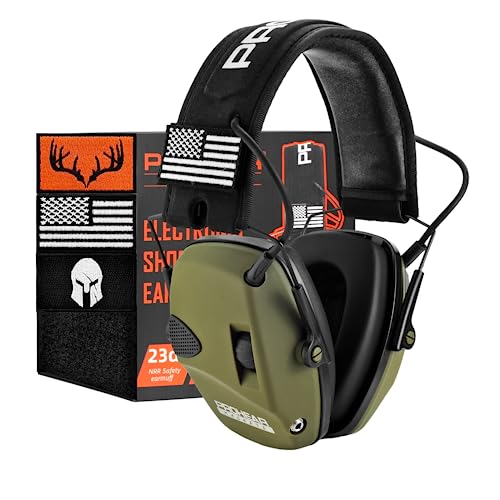 PROHEAR PROHEAR 066Light with long battery life
 Howard Leight R-02529Tied for longest battery
Start with the noise reduction rating
The NRR is a number in decibels (dB) printed on the package. A higher number means the protector is rated to block more sound. Gunfire is loud enough to damage hearing in a single shot, so this is the first spec to check.
On our best earmuffs for shooting page, the ratings that are published run from 22 dB to 37 dB. Keep in mind that a lab rating is a best case. A poor seal, thick hair or the arms of your glasses can all let sound leak in, so real-world protection is usually lower than the label.
Some makers publish a different rating, such as SNR, or no rating at all. These numbers are not directly comparable to NRR, so be careful when you line up products from different brands.
Passive or electronic muffs
Passive muffs are simple. They use dense cups and foam to block sound, and they have no batteries to fail. Electronic muffs add microphones and speakers. They amplify quiet sounds like conversation and cut off loud sounds like gunshots.
There is a trade-off. Among the models on our comparison page, the passive ones list higher NRRs than the electronic ones. You give up some blocking for better awareness. For example, the Pro For Sho passive muffs list an NRR of 34 dB at 7.2 oz with no amplification. The electronic PROHEAR 066 lists 23 dB, 4X amplification and an audio input.
| Type | Main strength | Main drawback | Good fit for |
|---|---|---|---|
| Passive muffs | Higher NRR, no batteries | You hear range commands less clearly | Indoor ranges, noisy sessions, simple setups |
| Electronic muffs | Hear voices while shots are cut off | Lower NRR on the models we compare, batteries needed | Instruction, hunting, group shooting |
| Plugs plus muffs | Extra blocking from two layers | Less awareness, more gear to manage | Very loud settings such as indoor ranges |
Check the fit with your gun and glasses
A muff only works if the cups seal against your head. Look for an adjustable, padded headband so you can set the cups to sit fully around your ears.
Cup shape matters for shooting. Low-profile cups leave room for a rifle or shotgun stock against your cheek, so the stock does not push the cup and break the seal. The Walker's Razor Slim, PROHEAR 066 and Howard Leight Impact Sport all list a low-profile design.
If you wear glasses or safety glasses, look for cups described as glasses-friendly. Thick temple arms can open a gap under the cushion. The PROHEAR 022 lists glasses-friendly cups and silicone pads with a gel core, though it does not list an NRR.
Weigh comfort, weight and battery life
You may wear muffs for hours, so comfort adds up. Lighter muffs are easier on your head and neck. The Pro For Sho passive pair weighs 7.2 oz, and the PROHEAR 066 weighs 9.6 oz. Padding and cushion material change how hot and tight they feel over time.
With electronic models, check battery life. Among the models on our page that list it, battery life runs from 300 to 350 hours. The Howard Leight Impact Sport lists 350 hours, and its listing says it shuts off loud sounds like gunfire to a safe 82 dB. Carry spare batteries anyway, and turn muffs off when you are done.
A quick checklist before you buy
Use these questions to narrow your choices.
- What is the NRR, and is it published by the maker?
- Is it passive or electronic, and which matches how you shoot?
- Do the cups have a low profile that clears your stock?
- Will it seal over your glasses?
- How much does it weigh, and is the headband adjustable and padded?
- For electronic models, what are the battery life, volume control and audio input?
- Does it fold for storage, and does it come with a warranty?
Safety notes for the range
Never rely on one pair of broken or worn muffs. Check cushions for cracks and hardening, since a damaged seal lets sound in. Replace them when they no longer fit snugly.
For the loudest settings, such as indoor ranges, many shooters wear foam plugs under their muffs. Insert plugs deeply and correctly, and make sure the muff headband still seals over them.
Wear eye protection too, and keep hearing protection on from the first shot until everyone has finished. Remember that electronic muffs cut off loud sounds but are not a substitute for following range commands and safety rules. If you ever notice ringing in your ears after shooting, your protection may not be enough, so try a higher rating or double up.
To compare more options beyond shooting, see our best ear protection page.
Which one should you pick?
If you shoot mostly at indoor ranges and want the most blocking, a passive pair with a high NRR is a sensible start. If you take instruction, hunt or shoot in groups, electronic muffs help you hear voices and surroundings.
Either way, pick the pair that fits your head and your gun, then add plugs if the noise level calls for it. Compare the specs side by side on our shooting earmuff comparison to see NRR, weight and battery life together.
Frequently asked questions
Is a higher NRR always better?
A higher NRR blocks more sound on paper, but only if the muffs fit and seal well. A very heavy pair that you pull off after an hour will not protect you. Pick a high rating you can actually wear for your whole session.
Can I use earbuds or in-ear protection instead of muffs?
Yes, in-ear options exist and some shooters find them more comfortable, especially with a stock against the cheek. Check that they list a rating, fit your ear canal properly and are inserted correctly.
Do electronic muffs protect as well as passive ones?
They can protect well because they cut off loud sounds, but on our comparison page the electronic models list lower NRRs than the passive ones. Their advantage is awareness, not maximum blocking.
Should I wear plugs and muffs together?
For very loud settings, such as indoor ranges or larger calibers, wearing both is a common choice. Make sure the muffs still seal over the plugs and that you can follow range commands.
When should I replace my ear muffs?
Replace the cushions or the muffs when the pads are cracked, flattened or no longer seal, or if the headband has lost its tension. Some models offer replacement cushions.