How to Charge an Electric Bike While Camping
The easiest way to charge an ebike while camping is to plug its normal charger into a campsite hookup or a portable power station. Solar panels and your vehicle can also work, but they need more planning and a bit of math. Start by finding your battery's watt-hours, then pick the source that can supply that much energy.
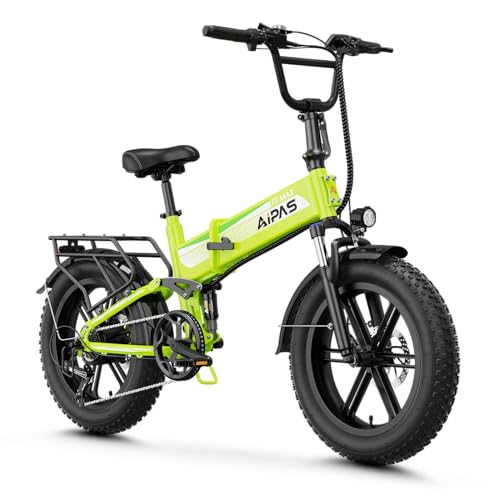 Aipas F3 MAXBest for hills and range
 DTTZH A12Best for keyless starting
 URLIFE F1LBest compact commuter
Start with your battery's watt-hours
Every charging plan begins with one number: how much energy your battery holds. Look at the battery label for volts (V) and amp-hours (Ah). Multiply them to get watt-hours (Wh). Many batteries also print the Wh figure directly.
Here is an example with made-up numbers. A 36V, 10Ah battery holds 360Wh. Chargers lose some energy as heat, so plan for a little more than that to fill it from empty. If your battery is larger, the same math applies, and your power source needs to be larger too.
Also check your charger's label. It lists the input it needs (usually standard household AC) and its output voltage. Most ebike chargers are made for a regular wall outlet, which is why camp power setups usually need to produce household-style AC.
Option 1: Campsite hookup
If your site has an electric post or you are in an RV with shore power, this is the simplest route. Plug the charger into the outlet, then connect it to the bike. Charging takes the same time as it does at home.
Use a heavy-duty outdoor-rated extension cord if you need one, and keep the charger itself off wet ground. Chargers are not built for rain. Set it on a dry surface, ideally under cover, and keep the plug connection off the ground where water can pool.
Option 2: Portable power station
For tent camping without hookups, a portable power station is the most practical choice. It is a large battery with built-in outlets and an inverter, so your ebike charger plugs in just like it would at home. You can charge the power station before the trip and, if you like, top it up with solar.
The key check is capacity. Compare the power station's watt-hour rating with your bike battery's Wh. If the station holds about twice your bike battery's capacity, you get roughly one full charge with room for losses, and a bit extra for phones and lights. Also make sure the station's continuous output rating is higher than the wattage printed on your charger.
Option 3: Solar panels
Solar works, but it is slow and depends on weather. Panels produce power only in good light, so output drops with clouds, shade and low sun angles. Panel size matters a lot: a small panel may take more than one day to refill a mid-sized battery, while a larger setup can do it in a single sunny day.
Most campers pair panels with a power station rather than connecting them straight to the bike charger. The panels fill the station during the day, and you charge the bike from the station when it suits you. Check that the panel's voltage and connector match the power station's solar input.
Here is a simple way to estimate. Take your battery's Wh, add some extra for losses, and divide by the hours of strong sun you expect. That gives the panel wattage you need. Be generous with the sun hours estimate only if the forecast is clear.
Option 4: Your vehicle
A car or van can charge an ebike through an inverter that turns 12V power into household AC. Choose an inverter with a continuous rating above your charger's wattage, and connect it according to its instructions.
Run the engine while charging, or watch the starter battery closely. A bike charger can drain a car battery faster than you expect, and a dead battery at a remote site is a real problem. Never run an engine in a closed garage or enclosed tent area, because exhaust contains carbon monoxide.
Which method fits your trip?
The table below summarizes how the four options compare in general terms.
| Method | Best for | Main limit |
|---|---|---|
| Campsite hookup | Developed campgrounds and RVs | Needs a working outlet at your site |
| Portable power station | Tent camping and short trips | Capacity must exceed your battery's Wh |
| Solar panels | Longer stays in sunny places | Slow and weather dependent |
| Vehicle and inverter | Car camping and vans | Can drain the starter battery |
Safety and battery care
Electric bike batteries store a lot of energy, so treat them with care. A few habits go a long way.
- Use only the charger made for your battery. A mismatched charger can overheat the pack.
- Charge in a dry, shaded, ventilated spot away from tent fabric, sleeping bags and fuel.
- Do not charge unattended overnight inside a tent. Stay nearby and check that the charger and battery feel only warm.
- Let a hot battery cool before charging, and a very cold battery warm up first.
- Stop using any battery that is swollen, damaged or smells odd, and keep it away from flammable items.
- Keep cords out of walkways to prevent trips, and keep all plugs dry.
Reduce how much charging you need
The best way to simplify camp charging is to need less of it. Ride in a lower assist level, keep tires properly inflated, and pack light. A smaller daily range means a smaller power setup.
If you are still choosing a bike, battery size and weight matter for trips like this. Our best folding electric bike for camping comparison lines up published specifications so you can match a bike's battery to the kind of power source you plan to carry.
Folding models also pack into a car or camper more easily, which makes it simpler to keep the battery and charger dry and close to your power source. If you want to see how folding designs differ, the folding ebike comparison is a good place to start.
Frequently asked questions
Can I charge an ebike from a USB power bank?
Usually not. Most ebike batteries need a dedicated charger with much more power than a typical USB bank provides. Use a power station with a household-style outlet instead.
Can I ride while the battery charges from solar?
No. Charge the battery while the bike is parked and the connections are dry. Riding with cables attached can damage ports and create a trip hazard.
Should I bring a spare battery?
For longer trips it can help, since you can swap packs and charge the empty one later. Check that the spare is compatible with your bike and carry it safely.
Is it okay to charge in the rain?
Avoid it. Move the charger and battery under cover or into a dry vehicle, and wait until the connections are dry.