How to Brighten an Office With No Windows
Start with the ceiling fixture, because in a windowless office it supplies all of the light. Choose a high-output light with a daylight color setting of about 5000 to 6500 K and a CRI near 90, then add a desk lamp and light-colored surfaces to spread the brightness around. You cannot create true natural light without a window, but you can get close to the look of it.
 LED ENERGY PLUS LEP-2X43K4K5K405060ZEBest overall for grid ceilings
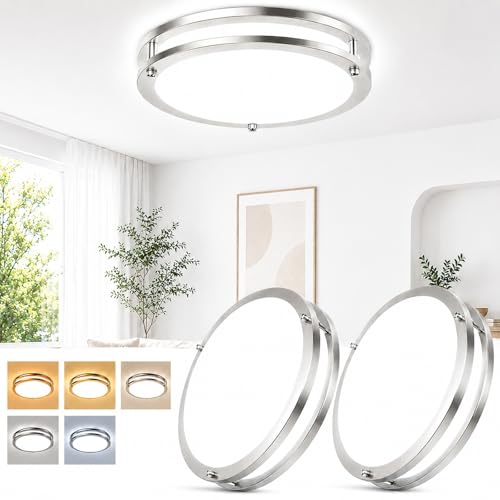 weddeg 63633008-03High CRI, top coverage rating
 LUTEC XDD-74200 lm compact fixture
Start with the ceiling light
With no window, the overhead fixture does the work that daylight would normally do. If the room still feels dim after you switch on the light, the fixture is usually the problem, not the room. Swapping a weak or yellow fixture for a better one is the biggest single change you can make.
Compare three specs. Lumens tell you how much light the fixture puts out. CRI tells you how natural colors look, which matters when skin, paper and plants all look flat under poor light. Color temperature, measured in kelvin, tells you whether the light looks warm and yellow or cool and daylight-like.
Our best lighting for office with no windows page lays these specs out side by side. The small round lights on it list 2400 to 4200 lm, while large ring fixtures list 8000 lm or more. Higher is not always better for a tiny room, but a very low figure will leave a windowless space gloomy.
Pick a daylight color tone
Warm light at 3000 K looks yellow and cozy. That is pleasant for a living room, but it can make a windowless office feel closed in and sleepy. For desk work, a cooler setting of 5000 to 6500 K looks closer to daylight and keeps paper and screens looking crisp.
Check that the top end of the range reaches at least 5000 K. Many fixtures on our page offer several presets, so you can run cool light during work hours and switch to something warmer later.
Pay attention to how the setting is changed. The LUTEC 13 in light, for example, uses a manual switch inside the fixture, and the maker says to set the color before you mount it. A remote model lets you change color any time, like the one on our page that switches between 3000 and 6500 K.
Match the fixture to your ceiling
The right fixture depends on what is above you. A standard round flush mount attaches to a ceiling junction box. A commercial office with a suspended grid ceiling can take lay-in 2x4 panels instead, which replace fluorescent troffers.
The table below uses figures from our comparison page to show how the main types differ.
| Fixture type | Example from our page | Listed output | Good to know |
|---|---|---|---|
| Lay-in 2x4 panels | LED Energy Plus 4-pack | 9360 lm | Needs a suspended grid ceiling; dimmable |
| Compact round flush mount | LUTEC 13 in | 4200 lm | Coverage listed up to 250 sq ft; color set before install |
| Round flush mount, high CRI | weddeg 13 in 2-pack | 3600 lm each | CRI 90; coverage listed up to 250 sq ft |
| Ultra-thin round | Brightever 12 in | 3200 lm | Only 0.67 in thick; CRI not listed |
| Large ring fixture | Shine LUEST 39.37 in | 8000 lm | CRI 90; remote control; 6 in tall |
Add light at different levels
One bright ceiling light can still leave dark corners and a harsh pool of light on your desk. Layering fixes this. Put a desk lamp near your work area for task light, and consider a floor lamp in a far corner so the walls do not fall into shadow.
Aim some of that light at the walls. Light that bounces off a wall makes the whole room feel larger and less like a box. If you use lamps with adjustable color, match them to the ceiling light so the room does not look patchy.
Dimming helps too. A fixture that dims smoothly lets you run full brightness for detailed tasks and pull it back for calls or a break. Glare is the other thing to watch, since a bare, bright source in your line of sight tires your eyes. A frosted or diffused cover softens it.
Use paint, surfaces and decor
In a room with no daylight, every surface either helps or hurts. Light walls reflect more of the available light than dark ones, so a white or soft neutral paint makes the same fixture feel brighter. A matte finish avoids shiny glare spots.
Keep the furniture light as well, or at least avoid large dark pieces against the walls. A pale desk surface bounces light back up toward your work.
A few touches make the room feel less closed in:
- Hang a large mirror opposite a lamp or the ceiling light to bounce light around.
- Use art with open, airy scenes, such as landscapes, to give the eye somewhere to travel.
- Add a framed backlit panel or a faux window if you want something that reads as a window.
- Bring in a plant only if it will get enough light, since a windowless office may not support most of them without a grow light.
Be realistic about natural light
Without a window or skylight, you cannot bring in real natural light. What you can do is imitate its qualities: plenty of brightness, a cool daylight tone and accurate color. That is why CRI and kelvin range matter so much for this room.
If your office has a door to a brighter space, a glass panel or an open door during the day can borrow light from the next room. Check with your building manager before changing doors or walls in a rented space.
Also give yourself breaks. Step outside or to a bright area during the day, because even the best ceiling fixture is no stand-in for time in daylight.
Install safely
Turn off the power at the breaker, not just the wall switch, before you remove or fit any fixture. Confirm the wires are dead with a non-contact voltage tester. If you are not comfortable with wiring, hire a licensed electrician.
Use a stable ladder on a flat floor, and ask someone to hold it. Large ring fixtures are awkward to lift, so get a second person to help hold the fixture while you connect it. Check that the fixture is rated for your ceiling and that the box can carry its weight.
Wear safety glasses when working overhead, since dust and debris fall into your eyes. Follow the maker's instructions for dimmers, as not every fixture works with every dimmer.
Frequently asked questions
Will a brighter light make the room feel less stuffy?
It often helps the room feel more open. Light walls, a mirror and some light on the walls will do more for that feeling than brightness alone.
Do I need a dimmer in a windowless office?
It is not required, but it is useful. You can run the light at full strength for detail work and lower it when you want less glare.
Is a bigger fixture always better?
No. Match output to the room, and look for a coverage rating where the maker gives one. A small room may do fine with a compact fixture plus a desk lamp.
Can I use lamps instead of replacing the ceiling light?
Lamps can add task and wall light, but a weak ceiling fixture will still leave the room dim. Use lamps to supplement the ceiling light, not to replace it.