How to Adjust Heavy Duty Metal Gate Hinges
Most heavy duty strap and bolt-on gate hinges have no tension setting. You adjust them by loosening the mounting bolts, lifting or shifting the gate, adding shims where needed, and retightening. Only self-closing spring hinges have true tension adjustment, and that is done with a stop rod or pin at the top of the hinge.
 Ajingff MJMJL02Best overall
 Weigreat WGZXMJL03Closest to the leader
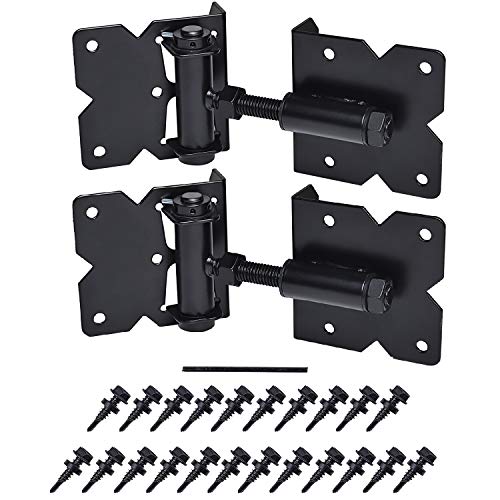 SANKINS SANKINS_B0897CH8RHSelf-closing, adjustable tension
First, know which kind of hinge you have
The word adjust means different things on different hinges. Many heavy duty gates hang on simple T-strap or bolt-on hinges with a fixed pin or a ball bearing. These do not have a tension setting. What you can change is the gate's position: height, lean and the gap beside the post.
Spring-loaded self-closing hinges are the exception. They hold stored force in a spring, and you can raise or lower that force. If someone asks how to adjust the tension on a gate hinge, this is the type they mean.
For example, the Weigreat set on our best gate hinges heavy duty page is listed as not self-closing, so there is no tension to set. The SANKINS hinges are listed as self-closing and adjustable, so they do have it.
Tools and safety before you start
A heavy gate can pinch fingers, crush toes or pull a hinge loose while you work. Take a minute to set up before you loosen anything.
Wear safety glasses and work gloves. A spring hinge can release suddenly, and rusty bolts can shed flakes into your eyes. If you cut off a seized bolt or grind rust, add hearing protection too.
- Wrench or socket set that fits your hinge bolts
- Drill and bits if you need to re-drill holes
- Level and tape measure
- Wood blocks, a scrap board or a jack stand to support the gate
- Steel shims or flat washers
- Penetrating oil and a rag
- A helper for any gate you cannot lift easily
Fix a sagging or dropped gate
A gate that drags on the ground or will not latch is the most common problem. The cause is usually a loose bolt, a leaning post or a worn hole, not a failed hinge. Start with the simple fixes first.
Never loosen all the bolts on both hinges while the gate is unsupported. Always prop the latch end of the gate first.
- Support the free end of the gate on a block set to the height you want, so the weight is off the hinges.
- Check the post. If it leans or wobbles, fix the post before touching the hinges, because no hinge adjustment will hold on a moving post.
- Loosen the hinge bolts a half turn, not all the way. This lets the hinge plate slide slightly.
- Raise the gate until the top rail is level and the latch lines up. Use a level on the top rail.
- Add shims behind the hinge leaf if there is a gap that keeps the gate leaning.
- Tighten the bolts evenly, starting with the bottom hinge, then recheck level and swing.
- Open and close the gate through its full arc to confirm it clears the ground and the latch.
Use shims and locking screws where they are built in
Some heavy hinges are designed with adjustment in mind. The Insaga 6.7 in model on our comparison page lists steel shims and locking screws meant to reduce misalignment and gaps. It lists 1100 lb per pair, and hardware is not included, so check what fasteners you have on hand.
On a hinge like this, set the shims first to square the gate, then snug the locking screws to hold the position. The same listing mentions oil-injection ports, so a small amount of oil there keeps the bearings turning freely.
On wood posts, bolts that have chewed out their holes will keep creeping no matter how tight you go. Move to fresh holes a short distance away or use larger washers. If you are choosing replacements, our best gate hinges page lists mounting type and included hardware side by side.
Adjust spring tension and gap on self-closing hinges
Spring hinges let you decide how hard the gate pulls shut. The SANKINS listing describes a row of small holes around the top of the hinge. You place a small stop rod in one of those holes to hold the spring at the tension you want.
Support the gate while you do this. Use the adjustment tool as the listing describes, and keep your face and hands away from the spring path in case the tool slips.
Go one hole at a time. The goal is a gate that closes and latches on its own without slamming. If it bounces open or stops short of the latch, change the setting and test again.
The same SANKINS listing says the hinge adjusts for a gap of 0.23 in to 1.25 in between the gate post and the gate frame, using a bolt you tighten or loosen. It also says at least a 0.23 in gap is needed to install. Measure your gap before you buy.
| Symptom | Likely cause | What to adjust |
|---|---|---|
| Gate drags on the ground | Loose bolts or worn holes | Support, lift, shim and retighten |
| Gate leans toward the latch | Hinge leaf not square | Add shims behind the hinge |
| Gap too wide or narrow at post | Hinge spacing | Adjust the gap bolt on a spring hinge, or move the hinge |
| Self-closing gate slams | Spring tension too high | Move the stop rod to a lower setting |
| Self-closing gate will not latch | Spring tension too low | Move the stop rod to a higher setting |
| Squeak or stiff swing | Dry pin or bearing | Clean, then oil the pin or port |
Lubricate and keep it from slipping again
Clean grit from the pin and bearing area with a rag, then add oil. Ball bearing hinges, such as the ones listed on our comparison page, swing smoothly when clean, but dirt wears them down over time.
Check the bolts a few times a year. Seasonal swelling and shrinking in wood posts can loosen them. A dab of thread locker on metal-to-metal bolts helps if the gate sees constant use.
If you weld a replacement hinge, strip any paint or coating from the weld area first. Wear a proper welding helmet and gloves, and keep flammable material clear.
When adjustment is not enough
If the hinge is bent, the pin is worn through or the hinge is badly cracked, replace it. The same goes for a gate that is simply heavier than the hinge rating. Ratings are given per pair, so compare your gate's weight with the number and leave a margin.
A heavy gate may also outgrow manual hinges. If the gate is large and you want it to move on its own, see our best heavy duty swing gate opener comparison. If the latch is what keeps missing, our best heavy duty gate latch page may help more than a hinge change.
Frequently asked questions
Can I adjust a gate hinge without taking the gate off?
Usually yes. Prop the gate on a block, loosen the bolts slightly, shift or shim the hinge, and retighten. Remove the gate only if a hinge needs replacing.
Why does my gate keep sagging after I tighten the bolts?
The post is often the cause. A leaning post or stripped wood holes will let the hinges move again. Fix or reinforce the post, or use fresh holes.
Do ball bearing hinges need adjusting?
Not for tension. They only need alignment, tight bolts and occasional cleaning and oil.
Should I oil hinges that have sealed or pre-lubricated bearings?
Follow the maker's note. If the hinge has oil ports, use them sparingly. Otherwise, clean the exposed pin area and avoid heavy grease that traps grit.