How Tight Should a Chainsaw Chain Be?
A chainsaw chain should sit snug against the underside of the bar and still pull around freely by hand. With the saw off, you should be able to lift the chain slightly in the middle of the bar, but the drive links must stay in the groove. If it sags or will not move by hand, adjust it before you cut.
 KAKEI 18" 3/8"LP .050" 62DL- German Steel *3Best overall
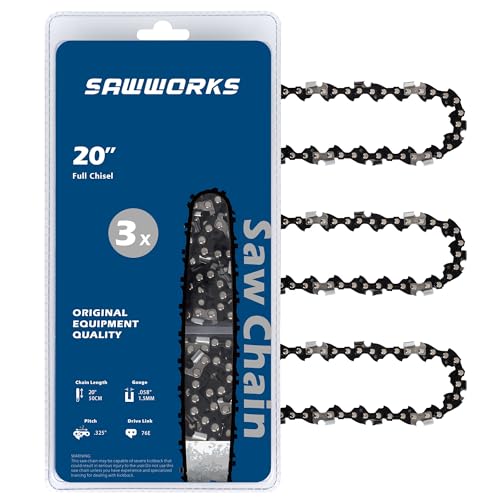 SawWorks 20" 76DL .325" .058"-GermanSteel *3PcsBest for big saws
 GSSHBR 18Inch 3/8 050 62 5PackBest 18 in value pack
The short rule: snug, but free to move
The right tension is a middle ground. The chain should touch the underside of the bar all along its length, with no visible sag. At the same time, you should be able to pull it around the bar by hand without a fight.
A common check is to lift the chain gently at the center of the top of the bar. The bottom edges of the drive links, the small tabs that ride in the groove, should still be partly in the groove. Many guides describe seeing a few drive links, around three, as a reasonable gap. If you can pull the links fully out of the groove, the chain is too loose. If you cannot lift it at all, it is likely too tight.
Always check your owner's manual too. Saw makers set their own guidance, and it takes priority over any general rule.
Too loose or too tight: what goes wrong
Tension affects safety as well as cutting quality. A chain that is off in either direction wears parts faster and can cause problems mid-cut.
| Condition | What you will see | Risk |
|---|---|---|
| Too loose | Sags below the bar, links lift out of the groove, rattling sound | Chain can derail or come off the bar, uneven cuts, faster wear on the bar and sprocket |
| Just right | Snug under the bar, pulls around by hand, slight lift in the middle | Normal wear, smooth cutting |
| Too tight | Hard or impossible to pull by hand, saw bogs down, bar gets hot | Extra friction, overheating, strain on the bar, chain and engine or motor |
How to tighten a chainsaw chain
Safety first. Turn the saw off and let it cool. Disconnect the spark plug wire on a gas saw, remove the battery on a cordless saw, or unplug a corded saw. Wear cut-resistant work gloves, because the cutters are sharp even on a stopped chain.
- Loosen the bar nuts or the side cover knob just enough that the bar can move, then snug them back lightly by hand.
- Hold the nose of the bar up. This takes slack out of the chain and gives you a true reading.
- Turn the tensioning screw (or the tool-free dial on some saws) clockwise to tighten. Small turns are enough.
- Check the fit: the chain should touch the bar underside and still pull freely by hand.
- While still holding the nose up, fully tighten the bar nuts or knob.
- Pull the chain around the bar by hand once more to confirm it moves without binding.
Check tension again during use
Tension changes as a chain works. When the chain gets warm, the metal expands and the chain can feel looser once it cools, and a cold chain that was set tight may bind when it heats up. Because of this, set tension when the saw is cool, then recheck after the first few cuts.
New chains need extra attention. A fresh chain beds in during early use and often needs one or more small adjustments. Check it more than once before you settle into a long job.
If you are cutting for a long stretch, stop at regular intervals to let the saw cool, look over the chain and adjust if it has gone slack. Always stop the engine or motor first.
Why chainsaw chains stretch
Strictly speaking, a chain does not stretch like a rubber band. What you feel as stretch is wear. The rivets and the holes in the links slowly wear, which adds tiny gaps at each joint. Across dozens of joints, that adds up to a longer, looser chain.
Several things speed this up:
Heat is one. Friction from a dull chain, low bar oil or too much tension raises temperatures and wears joints faster. Dirt and sand are another, since grit works into the joints like sandpaper. Cutting with a dull chain forces you to push harder, which adds load as well.
Chain build also plays a role. Some listings describe hardened rivets, for example the KAKEI 18 in 3-pack, which notes hardened and quenched rivets that resist wear and reduce chain tension changes. Our best chainsaw chain page shows which chains list hardened rivets or chrome plating so you can compare those details.
Keep the chain fitting correctly
Tension only works if the chain is the right size for the bar. The bar length, pitch, gauge and drive link count must all match your saw, and they are usually stamped on the guide bar. A chain with the wrong drive link count will either be too loose even with the tensioner maxed out or too tight to fit at all.
As an example, the KAKEI 18 in chain lists 3/8 LP pitch, .050 in gauge and 62 drive links. A 20 in chain from SawWorks lists .325 pitch, .058 in gauge and 76 drive links. Those two are not interchangeable, even though both are common sizes.
If you find the tensioner is at the end of its travel and the chain is still slack, the chain is probably worn out. Replace it rather than forcing it. Buying a multi-chain pack makes swaps easy, and you can compare options on our chainsaw chain comparison page.
Quick safety reminders
Chain work involves sharp edges and a tool that can kick back, so a few habits matter every time.
- Wear cut-resistant gloves when handling or adjusting a chain.
- Wear eye protection, hearing protection and chainsaw-rated leg protection when cutting.
- Never adjust a chain with the saw running or the battery or spark plug wire connected.
- Do not use a chain that is damaged, badly worn or loose on the bar.
- Use the right chain for the saw. Low-kickback chains reduce, but do not remove, the chance of kickback.
Frequently asked questions
Should I tension a chain hot or cold?
Set it when the saw is cool. A hot chain is expanded and will feel looser once it cools, so a hot setting can leave it too tight or too slack later.
How many times should I adjust a new chain?
Expect a few small adjustments in the first uses. A new chain beds in, so check it after the first few cuts and again before any long job.
Can I fix a chain that keeps going loose?
Retighten it and check bar oil, sharpness and the sprocket. If the tensioner runs out of travel and the chain is still slack, the chain is worn and should be replaced.
Does bar oil affect tension?
Yes. Low oil raises friction and heat, which wears the joints faster and makes the chain loosen sooner. Keep the oil reservoir filled.