How Much Hearing Protection Do You Need for Shooting?
Yes, you need hearing protection every time you shoot, and for most people a good pair of earmuffs with an NRR in the mid 20s or higher is the baseline. Indoor ranges, rifles and muzzle brakes call for more, which usually means wearing foam plugs under the muffs. The right amount depends on where you shoot, what you shoot and how long you stay.
 Walker's GWP-RSEMBest overall
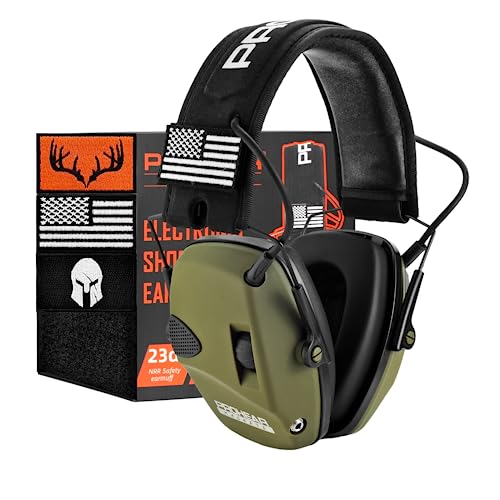 PROHEAR PROHEAR 066Light with long battery life
 Howard Leight R-02529Tied for longest battery
Why shooting needs real protection
A gunshot is a sharp, extremely loud burst of sound. A single unprotected shot can damage hearing for good, and the harm adds up over time. Hearing loss from noise is permanent, and ringing in the ears after a session is a warning sign that damage has already happened.
That is why the answer to "do you need ear protection for shooting" is always yes. It applies to indoor ranges, outdoor ranges, hunting practice and plinking in a backyard. It also applies to the person standing behind you, not just the shooter. Anyone within earshot of live fire should be covered.
What NRR tells you
NRR stands for noise reduction rating. It is measured in decibels (dB), and a higher number means the device blocks more sound. On our best earmuffs for shooting page, the models that list an NRR run from 22 dB to 37 dB.
Treat the label number as a best case. It comes from lab testing with a perfect fit. Glasses arms, long hair, a hat or a loose headband can break the seal around the cup and let more sound in. Plan on getting somewhat less protection than the label suggests.
How much protection fits your situation
There is no single number that suits everyone. Match your protection to the noise around you. The louder and more enclosed the space, the more you want to block.
- Outdoor range with small calibers: a solid pair of earmuffs with a mid-range NRR is a reasonable start.
- Indoor range: sound bounces off walls and ceilings, so aim for a higher NRR, or wear plugs and muffs together.
- Rifles, shotguns and muzzle brakes: these are louder at the shooter's ear, so lean toward higher NRR or double protection.
- Several shooters in a row: the noise adds up around you, so do not drop your guard because it is not your turn.
- Long sessions: choose a comfortable pair you will actually keep on, because protection only works when it stays in place.
Are earmuffs enough?
For many shooters, yes. Well-fitted earmuffs with a decent NRR handle typical outdoor shooting. A passive pair like the Pro For Sho model on our page lists an NRR of 34 dB at 7.2 oz, which shows that a high rating does not have to mean a heavy set of cups.
For the loudest settings, double up. Foam earplugs under earmuffs give you two barriers, so if one leaks the other still helps. The gain is real but smaller than you might expect, so do not assume the numbers simply add together. Insert the plugs deeply and correctly first, then put the muffs on over them.
If you wear glasses, check that the cups seal around the arms. Thin glasses frames cause fewer leaks than thick ones, and low-profile cups also leave room for a rifle or shotgun stock against your cheek.
Passive or electronic muffs
Passive muffs block sound with no power at all, so they never run out of batteries. Electronic muffs use microphones to shut off loud sounds and amplify quiet ones, which helps you hear range commands and conversation. On our page the passive models list higher NRRs than the electronic ones, so you trade a little blocking for more awareness.
Here is how a few models from that page compare on published specs.
| Model | Type | NRR | Amplification |
|---|---|---|---|
| Walker's Razor Slim Electronic | Electronic | 23 dB | Yes |
| PROHEAR 066 | Electronic | 23 dB | Yes, up to 4x |
| Howard Leight Impact Sport | Electronic | 22 dB | Yes, 4x |
| Pro For Sho PAS-GY | Passive | 34 dB | No |
Choosing and fitting your muffs
Start with NRR, then look at comfort. A heavier pair can tire you over a long session, and padding matters if you wear them for hours. The PROHEAR 066 lists a weight of 9.6 oz and 300 hours of battery life, which suits long days at the range. Check the headband adjustment too, since a snug seal is what delivers the rated protection.
Follow these steps each time you gear up:
- Put the muffs on before you enter the shooting area, not after the first shot.
- Pull hair, hats and glasses arms clear of the cup seals.
- Adjust the headband so both cups sit flat around your ears.
- For electronic muffs, check the batteries and set the volume before you load.
- Add foam plugs underneath if the range is indoors or the guns are loud.
- Keep your protection on until everyone has finished and the line is safe.
Safety notes
Electronic muffs do not make a gun safe to be around. They reduce loud noise, but they can also make it harder to hear a shouted warning, so keep the volume at a level where you can still hear calls on the line.
Also pair hearing protection with eye protection. Shooting glasses guard against brass, debris and fragments, and they belong in the same routine as your muffs. Replace cushions that crack or flatten, because a worn seal lets sound in.
Frequently asked questions
Can I use regular headphones or earbuds instead?
No. Music headphones are not made to block gunfire and give no rated protection. Use hearing protection built for shooting, and only add audio if the muffs have a dedicated input.
Do electronic muffs protect as well as passive ones?
They can protect well, since the circuitry cuts off loud sounds. On our page, though, the passive models list higher NRRs, so check the number for each pair.
How often should I replace my muffs?
Replace them when the cushions crack, flatten or no longer seal, or when the headband loses tension. Some makers sell replacement cushions, which helps extend a pair's life.
Do kids need hearing protection at the range?
Yes. Choose a pair with an adjustable headband that fits a smaller head. For example, the Pro For Sho model on our page lists a fit that adjusts from kids to adults.
What if my ears ring after shooting?
Ringing means your ears took more noise than they should. Use higher-rated muffs, add plugs, or both next time, and see a doctor if it does not fade.