How Many Gallons of Paint Does a Mobile Home Need?
A typical single-wide mobile home with roughly 1,200 square feet of exterior wall needs about 7 gallons of paint for two coats, assuming 350 square feet of coverage per gallon. Smaller homes may need 5 gallons, and large double-wides or rough, chalky siding can push the total to 10 gallons or more. Measure your walls, divide by the coverage on the label, double it for two coats, and round up.
 Rust-Oleum 1993730Best overall
 INSL-X CC560109A-01Top coverage in semi-gloss
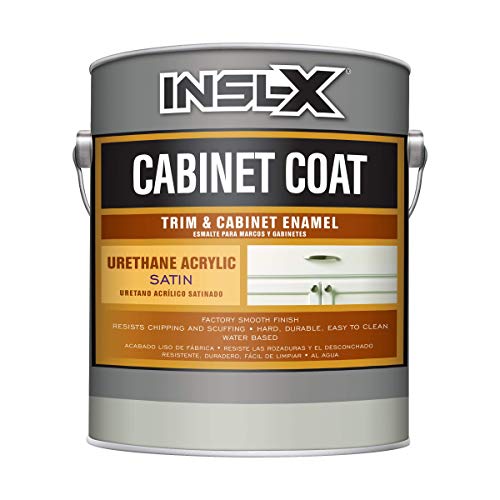 INSL-X CC550109A-01Top coverage in satin
The quick formula
Paint math is simple once you know your wall area. Multiply the distance around the home by the wall height, subtract the doors and windows, then divide by the coverage per gallon printed on the can.
Because most exterior jobs need two coats (or one primer coat and one color coat), double the result. Always round up to the next full gallon, since running short mid-wall can leave a visible color difference if the next batch is tinted slightly differently.
- Step 1: Add the length and width of the home, then double it to get the perimeter.
- Step 2: Multiply the perimeter by the wall height to get total wall area.
- Step 3: Subtract about 15 square feet for each standard window and about 20 for each door.
- Step 4: Divide the remaining area by the coverage per gallon.
- Step 5: Multiply by the number of coats, then round up.
A worked example for a single-wide
Take a home that is 14 feet wide and 70 feet long with 8-foot walls. The perimeter is 2 x (14 + 70) = 168 feet. Multiply by 8 feet and you get 1,344 square feet of wall.
Say the windows and doors take away about 150 square feet. That leaves roughly 1,200 square feet to paint. At 350 square feet per gallon, one coat needs about 3.4 gallons, so two coats need about 6.9 gallons. Buy 7, and consider an extra gallon for touch-ups.
This is an illustration, not a measurement of your home. Your skirting, porch, awnings and trim will change the numbers, so measure your own walls.
Gallons by wall area
Use this table to get a fast estimate. It assumes two coats at 350 square feet per gallon, which is the low end of the 350 to 450 square foot per gallon range listed for INSL-X Cabinet Coat. Check the coverage on the can you actually buy and adjust.
| Paintable wall area | Gallons for one coat | Gallons for two coats (rounded up) |
|---|---|---|
| 800 sq ft | 2.3 | 5 |
| 1,000 sq ft | 2.9 | 6 |
| 1,200 sq ft | 3.4 | 7 |
| 1,500 sq ft | 4.3 | 9 |
| 1,800 sq ft | 5.1 | 11 |
What can size should you buy?
For full walls, buy gallons or 5-gallon pails if the maker offers them. Small cans are fine for trim, doors and touch-ups but become impractical for siding.
The product data on our comparison page shows how fast small cans run out. The 0.25 qt Rust-Oleum Painter's Touch covers up to 30 square feet, while the 4 qt (one gallon) INSL-X Cabinet Coat cans list 350 to 450 square feet. Even a 1 qt can of Cabinet Coat covers only 87 to 112 square feet, so a quart-size can works better for a test patch than for a whole wall.
Before you pick a product, look at our best paint for mobile home exterior comparison. Many of the products there are cabinet or trim paints, and several are listed for interior use only, so confirm the listing says exterior or outdoor.
What changes the amount you need
Coverage figures on a can assume a smooth, sealed surface. Real siding is rarely that friendly, so plan for some variation.
Bare or chalky metal siding, weathered paint and rough textures soak up more paint. If your siding is porous or faded, add about 10 percent to your total, or plan on a primer coat first. Some paints claim no primer is required, such as Cabinet Coat and Zinsser Perma-White, but Rust-Oleum Painter's Touch asks you to sand with 180/200 grit and degrease first. Read the maker's prep steps, because prep affects how well the paint bonds and how far it spreads.
Color matters too. Going from a dark color to a light one usually takes extra coats. Spraying uses more paint than rolling because some of it drifts and bounces off. Skirting, trim, doors and shutters are extra area, so measure them separately and add them in.
- Rough or chalky siding: add about 10 percent.
- Big color change: plan for a primer coat or a third coat.
- Spraying: expect more paint used than with a roller or brush.
- Trim, skirting and doors: measure and add them on top.
Match the paint to the surface
A manufactured home often mixes metal, vinyl and old painted surfaces. Several paints on our page list metal and wood, but none of the listings mention vinyl, so check with the maker before painting vinyl panels.
For doors and trim, Rust-Oleum Door & Trim lists interior or exterior metal, wood and fiberglass, and Modern Masters front door paint lists exterior metal or wood doors and shutters, covering up to 100 square feet per quart. Those are good fits for accents, but they are not sized for whole walls.
If you want to compare sheen, coverage and prep needs side by side before you buy, see our mobile home exterior paint comparison.
Safety before you start
Exterior painting means ladders, so set them on firm, level ground and keep clear of power lines and service drops that often run close to a mobile home. Do not lean out to reach; move the ladder instead.
If your home was built before 1978, the old paint may contain lead. Do not sand or scrape it until you have tested it, and follow lead-safe work practices. Wear safety glasses when sanding or spraying, and a respirator rated for the job if you spray or sand. Apply paint only within the temperature range on the label. For example, the Cabinet Coat listing calls for air, product and surface temperatures above 50°F and below 90°F.
Frequently asked questions
Do I need to paint the roof too?
Roof coatings are different products with their own coverage rates. Calculate roof area separately and follow the coating maker's instructions rather than using your wall numbers.
Is a double-wide twice as much paint?
Not necessarily. Wall area depends on the perimeter and height. A 28 by 56 foot home has the same 168 foot perimeter as a 14 by 70 foot single-wide, so wall area can be similar. Measure to be sure.
Should I buy extra paint?
Yes, plan on an extra gallon or at least a quart for touch-ups. Keep the label so you can match the color and sheen later.
Can I use leftover cabinet paint on exterior trim?
Only if the listing names exterior use. Several cabinet paints on our comparison page are listed for interior use, so read the label first.