How Long Does Water Pipe Heat Tape Last?
There is no single lifespan for water pipe heat tape. A good self-regulating cable that is installed correctly, kept dry and covered with insulation can often work for several years. Warranties and maker claims in our product data range up to 10 years, but how long yours lasts depends on installation, exposure and damage. Test it every fall and replace it at the first sign of trouble.
 Radiant Solutions Company HTP-1-37Best overall
 JDZKOMKE 100FTBest long run
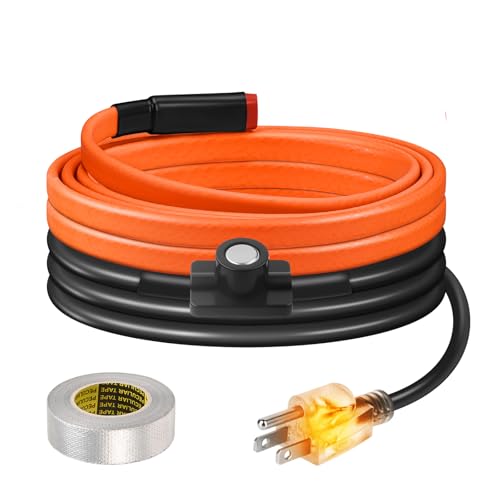 BDDFOTO OR-ParentBest for short pipes
Warranty, service life and real life are different things
When you shop, you will see two kinds of numbers. A warranty is what the maker will stand behind. A service-life claim is what the maker hopes the cable can do under good conditions. Neither one is a promise about your pipes.
In the product data on our comparison page, the Radiant Solutions HeatTapePro lists a 10-year warranty. The JDZKOMKE 100 ft cable lists a 20-year service life in its marketing, along with a TPE jacket and an IP67 waterproof rating. Treat claims like these as a sign the maker built the cable to last, not as a guarantee. A cable that is crushed, soaked at the plug or left plugged in all summer will not follow the brochure.
The practical answer is to plan on checking your cable every year and to expect that it may need replacing sooner than the longest claim you see.
What shortens the life of heat tape
Most failures come from the environment and the installation, not from the heating core itself. Here is how common factors affect a cable.
Water is the biggest enemy. It gets into damaged jackets, loose end seals and unprotected plug connections. That is why a waterproof rating and a full-cable listing matter.
| Factor | How it affects lifespan | What helps |
|---|---|---|
| Moisture at connections | Water at the plug, splice or end seal can cause shorts or corrosion | Choose a waterproof rating such as IP65 or IP67, and keep the plug off the ground |
| Sun and weather | UV and temperature swings can crack a jacket over time | Use an outdoor-rated or UV-resistant jacket and cover the cable with insulation |
| Physical damage | Crushing, sharp bends, nails, tape and critters can break the core or shield | Run the cable flat along the pipe and protect it where people or animals pass |
| Overlapping or bunching | Some cables overheat when they touch or cross | Overlap only if the maker says the cable is safe to overlap |
| Running all year | Constant power wears the cable and wastes electricity | Use a built-in thermostat and unplug it in warm months |
| Wrong use | A cable made for water pipes can overheat on dry or non-water surfaces | Follow the maker's list of approved pipes and uses |
A yearly check before cold weather
A short check each fall catches most problems before the first freeze. Do it with the cable unplugged and cool.
Then plug the cable in on a cool day and confirm it warms up. Some products include an indicator light or other feature to help you confirm it is working, so read the instructions for yours.
- Unplug the cable and look along its full length for cracks, cuts, brittle spots, melted areas or exposed wire.
- Check the plug, any splice and the end seal for moisture, corrosion or discoloration.
- Remove any wet or crushed pipe insulation and replace it.
- Make sure the cable still sits snugly against the pipe and the securing tape or ties are intact.
- Plug it into a GFCI outlet, press the test button on the outlet, and confirm the outlet works.
- After a few minutes, feel along the pipe for warmth. A cold section may mean a break.
Signs it is time to replace it
Heat tape is a safety device for your plumbing, so it is better to replace a doubtful cable than to hope it holds. Replace it if you see any of these signs:
- Cracked, brittle, scorched or swollen jacket
- Exposed wire or a damaged plug or cord
- A tripping GFCI outlet that you cannot trace to something else
- Cold sections along the pipe when the cable is powered
- Burning smell, melted insulation or visible sparking
- A pipe that has frozen even though the cable was plugged in
How to get more years out of it
Good habits matter as much as the cable you buy. Insulate over the cable so it does not have to work as hard. The heat stays near the pipe, and the cable runs less often.
Pick a cable with a built-in thermostat if you can. Several products in our data have one, and the HEATIT 40 ft cable lists a thermostat that turns on at 38°F and off at 50°F. That kind of control keeps the cable from running on mild days.
Match the cable to the job. Buy a length that fits your pipe run, and do not coil extra cable in a tight bundle unless the instructions allow it. Check that the pipe material is on the maker's compatibility list. Many cables in our data list copper, PVC, PEX and stainless steel.
Look for a listing that covers the whole cable. A UL or ETL listing on the full cable says more than a certified plug alone. You can compare these details and more on our best heat tape for water pipes page.
Safety notes
Heat tape combines electricity, water and cold, so treat it carefully.
Always plug it into a GFCI-protected outlet, and keep the plug connection dry and off the ground. Never use a damaged cable, even if it still warms up. Do not cut a cable or splice it unless the maker clearly allows it and gives the steps. Follow the maker's rules on overlapping, since some cables can overheat if they cross.
Keep the cable away from fuel lines and anything that is not a water-filled pipe unless the instructions approve it. One cable listing in our data warns against use on fuel lines and gutters. If you work on a ladder or on a roof edge, use proper fall protection and do not work alone on a wet or icy surface. If you ever smell burning, unplug the cable and have it checked before using it again.
Choosing a replacement
When it is time to replace your cable, start with the length of your pipe run, then look at output, thermostat, jacket and listing. Our guide on the best heat tape for water pipes sets cables side by side, from 3 ft pieces to 250 ft rolls. Choose self-regulating cable for water pipes, and check the maker's warranty terms as well as its service-life claims.
Whichever cable you choose, plan to inspect it every year. A good routine will do more for your pipes than the highest number on the box.
Frequently asked questions
Can I leave heat tape plugged in all year?
It is better not to. A thermostat helps, but unplugging the cable in warm months reduces wear and avoids needless power use. Plug it in and test it each fall.
Does a longer warranty mean the cable lasts longer?
Not always. A warranty shows what the maker will cover, and it often has conditions. It is a useful sign of confidence, but installation and weather still decide how long the cable works.
Can I reuse heat tape from last winter?
Yes, if it passes a full inspection and warms up when tested. Replace it if the jacket is cracked, the plug is damaged or any section stays cold.
Does pipe insulation really make heat tape last longer?
It can. Insulation holds heat near the pipe and shields the cable from sun and weather, so the cable runs less often and is exposed to less wear.