How Long Does Paint Correction Take on a Car?
Paint correction on a car usually takes anywhere from about 4 hours for a light one-step polish to 6 to 8 hours or more for a two-step job. Badly damaged paint can run past 30 hours. The exact time depends on vehicle size, paint hardness, how deep the defects are, and how experienced you are with a polisher.
 Niusken PGJ-21V-RED
 Niusken PGJ-21V
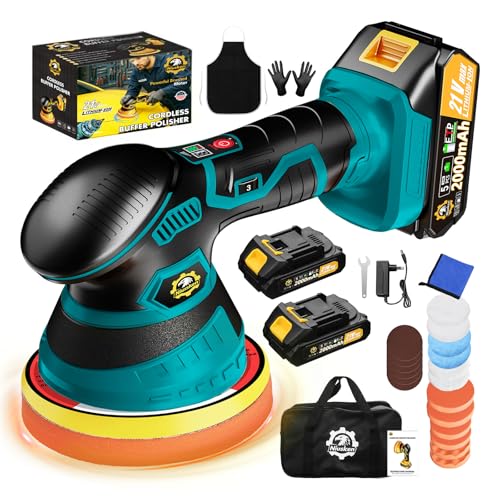 Niusken PGJ-21V-BLUE
What decides how long the job takes
There is no single number, because every car starts in a different condition. A small sedan with light swirl marks is a very different project from a large SUV with deep scratches and years of neglect. Most of the variation comes from a handful of factors.
If you are planning a weekend, think in ranges rather than a fixed time. Add a buffer for the slow parts, because rushing the polishing stage is the quickest way to get uneven results.
- Vehicle size: more panels and more surface area mean more passes.
- Paint condition: light swirls clear fast, while deep scratches and etching take repeated passes.
- Paint hardness: harder clear coats resist abrasion and can need more work to level.
- Number of steps: a one-step polish is faster than a cutting step followed by a finishing step.
- Your experience: beginners work slower, check results more often, and redo sections.
- Tools and pads: the polisher type, pad choice, and compound all affect how fast defects come out.
Typical time by level of correction
The ranges below are general planning figures based on commonly shared estimates, not guarantees. Your own car may fall outside them, especially if it is large or the paint is in poor shape.
A one-step polish is meant to improve gloss and remove light defects in a single pass with one pad and polish combination. If you find yourself heading well past the four-hour mark, many detailers switch to a lighter two-step approach instead of grinding away with a single aggressive setup.
| Level | Typical time | Best for |
|---|---|---|
| One-step polish | Up to about 4 hours | Light swirls, dull paint, a visible gloss boost |
| Two-step correction | About 6 to 8 hours or more | Moderate swirls and scratches, a cleaner finish |
| Heavy or multi-stage correction | Often 30 hours or more | Deep defects, neglected paint, very large vehicles |
Where the hours actually go
Polishing is only part of the job. A lot of time goes into preparation, and skipping it makes the correction itself harder and less effective.
Most of the work follows this order:
- Wash the car thoroughly, including wheel wells and door jambs where grit hides.
- Decontaminate the paint to remove bonded particles that a normal wash leaves behind.
- Inspect under good light so you can see the real defects.
- Tape off trim, rubber, and sharp edges to avoid damage.
- Do a test spot to pick the right pad and polish combination.
- Polish panel by panel, wiping residue and checking your work as you go.
- Wipe the surface down and finish with a protective layer such as wax, sealant, or coating.
How your polisher affects the schedule
The machine you use changes both speed and effort. A dual-action polisher is more forgiving and a common choice for beginners, but it removes defects more gradually. A rotary machine can cut faster in experienced hands, but it carries a higher risk of burning through paint or leaving holograms if used poorly.
If you are still deciding which tool suits your skill level and your car, our guide to the best polisher for paint correction compares published specifications side by side, so you can match machine type, pad size, and power to the work ahead.
Pad size matters too. Larger pads cover big flat panels quickly, while smaller pads reach tight areas like bumpers and mirrors. Many people keep a mix on hand so they are not forcing one size to do every job.
Ways to save time without cutting corners
You cannot skip the steps that protect your paint, but you can work more efficiently. Start with the least aggressive combination that works, since a test spot often shows you do not need heavy cutting at all.
Work in small sections, finish each one properly, and keep your pads clean so they cut consistently. Swapping to a fresh pad when one is loaded with residue is faster than fighting a clogged one. Good lighting also saves time, because you spot leftover defects while you are still on that panel instead of discovering them later.
If you are buying equipment for the first time, the polisher comparison can help you avoid a machine that is too small or underpowered for your car, which is a common reason jobs drag on.
Safety notes before you start
Polishing is low risk compared with many car projects, but a few precautions matter. Wear eye protection, since compound and pad residue can fling off a spinning pad. Wear a dust mask or respirator if you are sanding or working in a dusty space, and consider hearing protection if your machine or workspace is loud.
Keep the power cord away from the pad and from wet areas, and plug into a properly grounded outlet. Avoid running a polisher on wet paint or near standing water. Keep the machine moving and the pad flat, and be careful on edges and body lines, where paint is thinnest and heat builds fastest.
How long the results last
Paint correction removes or levels defects rather than covering them, so the improvement lasts as long as the paint stays protected. New swirls can return if you wash with dirty mitts, dry with rough towels, or use automatic brushes.
Applying a sealant or coating after polishing helps the finish stay glossy and easier to clean. Good washing habits do more to preserve your results than any product, so plan to maintain the finish with gentle, regular care.
Frequently asked questions
Can I finish paint correction in one day?
Often yes for a one-step polish on a small to mid-size car, if the paint is in decent shape. A two-step job may fill a full day, and heavy correction is usually spread over several days.
Does a bigger polisher make the job faster?
Not always. A larger pad covers more area, but a machine that is hard to control can cost you time through mistakes. Choose one that fits your experience and your car.
How long does a polisher last?
That depends on build quality, how often you use it, and how well you clean and store it. Pads wear out sooner than the machine, so check them for damage and replace them when they stop cutting or finishing evenly.
Should I stop and take a break mid-job?
Yes. Taking breaks helps you keep your focus and spot defects clearly. It is better to pause between panels than to rush a section when you are tired.