How Long Does Core Drilling Take and Why?
Most core holes in standard concrete take roughly 15 to 30 minutes for a medium size, a few minutes for small holes, and 30 minutes to an hour or more for large ones. Add setup time on top. Bit diameter, wall depth, rebar, the drill's power, and water flow decide where your job falls in that range.
 VEVOR Z1Z-9230Best overall
 VEVOR (8260H)Z1Z-9260Largest hole capacity
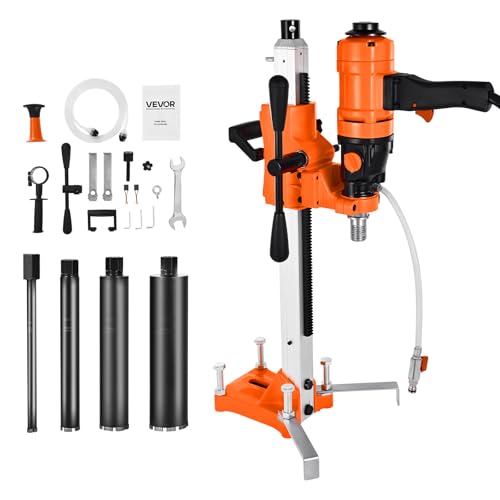 VEVOR Z1Z-CF03-80SHandheld or stand with four bits
The short version: it depends on five things
Core drilling is not a quick punch through a wall. A diamond bit grinds a ring-shaped cut, and the cutting speed depends on what the bit is pushing through and how well it can work.
The five biggest factors are hole diameter, depth, material hardness, steel reinforcement, and how well the drill, bit, and water supply are matched. Setup and cleanup also count, and they often take as long as the cutting itself on a single hole.
The times below are rough planning figures, not guarantees. Treat them as a starting point and expect real jobs to run shorter or longer.
Typical times by hole size and material
Here is a general guide for plain, unreinforced concrete of ordinary wall thickness. Cutting time only, not setup.
| Situation | Rough cutting time | Main reason |
|---|---|---|
| Small hole in plain concrete | A few minutes up to about 15 minutes | Less material to grind away |
| Medium hole in standard concrete | About 15 to 30 minutes | More bit surface contacting the material |
| Large hole in standard concrete | About 30 minutes to an hour, sometimes more | Large ring, more resistance, slower feed |
| Concrete with dense rebar | Noticeably longer | Bit must grind through steel as well as stone |
| Very hard aggregate or old, dense concrete | Longer than plain concrete | Hard material wears the diamond segments more slowly |
| Brick or block | Often quicker than concrete | Softer, less dense material |
Why core drilling takes so long
A core bit does not chip or smash material. It grinds it away with diamond segments, which is steady work rather than fast work. Pushing harder rarely helps and can stall or damage the bit.
Several things slow the cut in practice:
- Bigger diameter: a wider bit has a longer cutting edge and more material to remove, so the same motor works harder and often needs a slower feed.
- Depth: the bit has to keep cutting, and the core has to stay inside the barrel. A deep cut also needs more water and more patience.
- Rebar: steel is much harder to cut than concrete. Hitting it can slow progress a lot and wears the segments faster.
- Dull or glazed bit: when diamonds stop exposing fresh edges, the bit rubs instead of cutting. Cutting time can climb sharply.
- Weak water flow or a drill that is underpowered for the bit size: heat and slurry build up, and the bit bogs down.
What counts as setup time
The cutting itself is only part of the job. Before the bit touches the surface, you need to mark the spot, check for hidden pipes, wires, and rebar where possible, and anchor the drill stand or fix the rig securely.
Then you connect water, set the bit height, and start with a gentle pilot cut. After drilling, you remove the core, clear slurry, and clean up. On a single hole, this work can easily match or exceed the cutting time.
If you have many holes, setup gets faster because you repeat the same steps. That is why a job with ten identical holes is rarely ten times as long as one hole.
How to speed up the job without cutting corners
You cannot rush a diamond bit, but you can remove the things that waste time. Work through these steps in order:
- Match the drill to the hole size. A rig with enough power for the bit diameter cuts more steadily than one running at its limit. Our best core drill comparison lists the published specifications so you can line up motor power and bit capacity.
- Scan the area first for rebar and utilities, so you know what to expect and can adjust the bit or the position.
- Use a bit suited to the material. Bits are built for different materials, so check the maker's guidance for concrete, brick, or reinforced work.
- Keep a steady water supply to cool the bit and carry out slurry.
- Let the bit do the cutting. Apply even, moderate feed pressure and back off if the motor labors.
- Replace or dress a glazed bit instead of forcing it.
Safety notes
Core drilling mixes electricity and water, so use a drill designed for wet work and plug it into a ground fault circuit interrupter (GFCI) outlet or protected supply. Keep connections and cords out of standing water.
Wear eye protection, hearing protection, gloves, and sturdy footwear. Slurry is slippery, so keep the floor around the rig clear.
Anchor the stand properly. A rig that shifts when the bit binds can injure you or break the bit. If you are drilling overhead or from a ladder or lift, get proper fall protection and consider hiring a trained crew.
Never drill into walls or floors without checking for live wires, gas lines, and pressurized pipes first. For structural walls, post-tensioned slabs, or unknown buildings, talk to a qualified professional before cutting.
Choosing a drill that fits your timeline
If you drill a few small holes a year, a lighter rig is usually enough, and a slower pace is fine. If you cut large or deep holes regularly, a more powerful rig with a solid stand will save real time and reduce bit stress.
Check the motor rating, maximum bit diameter, speed settings, and whether the drill supports wet cutting. You can see these side by side on our core drill comparison, which is a good starting point before you commit to a model.
Also plan for the rest of the kit. A drill is only as fast as its bit, stand, and water supply, so budget time to set those up correctly.
Frequently asked questions
Is core drilling faster than other ways to make a hole?
For clean, round holes of larger diameters, core drilling is the usual choice because it removes less material than breaking out a full hole. For small holes, a hammer drill is typically quicker.
Does wet drilling take longer than dry drilling?
Not usually. Water cools the bit and clears slurry, which helps it keep cutting at a steady pace. It also keeps dust down. Some bits are made for dry use, so follow the maker's instructions.
What should I do if the bit stops advancing?
Stop, switch off, and check the bit. It may be full of core material, glazed, or stuck on rebar. Remove the core or switch to a bit made for the situation before continuing.
Can I drill several holes in one visit?
Yes. Setup is the slowest part, so batching holes of the same size saves time. Just keep an eye on bit wear and water supply as the work goes on.