How Long Does a Wood Chisel Set Last and How to Extend It?
A wood chisel set has no fixed lifespan. With regular sharpening, dry storage and a mallet instead of an iron hammer, the steel can last for many years, often decades. What usually ends a set's life is neglect, such as rust, chipped edges or split handles, not normal use.
 Mount Jasper Wood ChiselBest overall
 AZUNO WCS10AWide range, full kit
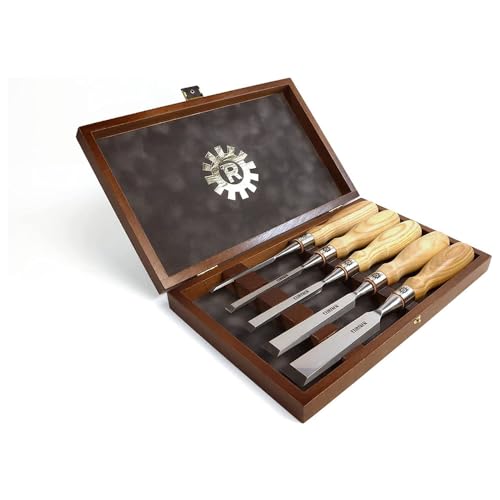 Narex 853600Hardest blades listed
What 'lasting' really means for a chisel
Chisel steel does not wear out the way a tire or a drill battery does. Every time you sharpen, you remove a little metal, but a blade is long enough to survive many sharpening sessions. The edge goes dull in a day. The tool itself can serve for years.
So the better question is how long the edge holds between sharpenings, and how long the rest of the set (handles, caps, case) stays in good shape. Both depend on the specs you chose and the habits you build. Hobby use and daily shop use will age a set at very different speeds, so treat any timeline as a rough guide, not a promise.
What decides how long a set survives
Steel and hardness set how well an edge holds. On our best wood chisel set page, the listed sets run from 59 to 62 HRC, and harder blades hold an edge longer. Harder steel can also be more brittle if it is misused, so prying and twisting are still bad ideas.
Handles and strike caps decide how well the tool takes a mallet. A metal ring or cap protects the end of the handle from splitting. Here is how a few sets on that page compare on the specs that matter for durability.
| Set | Blade steel | Hardness | Bevel angle | Protection and kit |
|---|---|---|---|---|
| Mount Jasper Wood Chisel Set | Chrome-vanadium | 60 HRC | 25° | Metal strike cap, stone, honing guide, wooden box |
| Narex Richter Bevel Edge Set of 5 | Chrome-vanadium | 62 HRC | 24° | Presentation box, lightly oiled blades |
| Narex Standard Bevel Edge Set | Chrome-manganese | 59 HRC | 25° | Wooden presentation box |
| Enertwist Wood Chisel Set | Chrome-vanadium | Not published | Not published | Individual blade guards, strike cap, stone, honing guide, hard case |
| WORKPRO Wood Chisel Set | Chrome-vanadium | Not published | 28° | Blade guards, strike cap, stone, honing guide, case |
Daily habits that protect the edge
Most edge damage happens in the first few seconds of careless handling. A blade that rolls off a bench onto concrete or knocks against another chisel can chip in an instant. Build a few small habits and the edge lasts noticeably longer.
- Use a wooden or plastic mallet, not an iron hammer. The Mount Jasper listing says the same about its metal-ringed hardwood handles.
- Clamp the workpiece so you never have to hold it with your free hand. Keep both hands behind the cutting edge.
- Cut with the grain where you can, and take light cuts instead of forcing a deep one.
- Do not pry out waste or twist the blade in a cut. Chisels are for cutting, not levering.
- Keep the edge away from nails, screws, concrete and dirty reclaimed wood.
- Put the chisel down on its back or in its guard, never edge-down on metal.
A simple sharpening routine
A dull chisel makes you push harder, and extra force leads to slips and damaged edges. Regular honing is the single most useful thing you can do for the set. Many sets include a stone and a honing guide, and the guide holds the blade at a steady angle.
Match the angle the maker ground. Among the sets on our page, bevel angles run from 24° to 28°, and 25° is the most common. The Mount Jasper listing, for example, describes a 25° pre-ground bevel and a double-grit stone (120/200). The Enertwist guide is listed for 25 and 30 degrees, so check which setting fits your blades.
- Flatten the back of the blade first, so the very tip sits flat against the stone.
- Clamp the chisel in the honing guide at the bevel angle your set lists.
- Use the coarser grit only if the edge is chipped or very dull, then move to the finer side.
- Stroke evenly until you feel a small burr on the back, then flip the blade and remove it with a light pass.
- Wipe the blade clean and test it on scrap wood.
Storage that stops rust and damage
Moisture is the slow enemy. Chrome-vanadium and chrome-manganese steels resist rust better than plain carbon steel, but they are not stainless. A damp garage can still leave spots on a blade in a few weeks.
Wipe each blade dry after use, and add a very thin film of oil before long storage. The Narex Richter listing notes that its chisels ship lightly coated with corrosion-inhibiting oil, which is a good model to copy. Keep the set in its box or case, with a little space between tools so edges do not touch.
Blade guards help too. Sets such as the Enertwist and WORKPRO list a protective cap for each chisel, which guards the edge and also protects your fingers when you reach into a toolbox. If your set has no guards, simple wraps or a slotted rack do the same job.
Handle care and when to replace a part
Check the handles before each project. Look for cracks along the grain, a loose fit where the handle meets the blade, and a mushroomed or dented strike end. A metal cap or ferrule slows this damage but does not stop it if you swing too hard.
Hardwood handles can be wiped with a light oil to keep them from drying out. Rubber and plastic handles need only a clean, dry wipe. If a handle splits, stop using that chisel for striking until it is fixed, because a failing handle can send the blade somewhere unexpected.
A chisel is worn out when the blade has been ground so short that it no longer fits the work, when it has deep pitting near the edge that sharpening cannot remove, or when it is bent. Replace single chisels first. You rarely need to replace the whole set.
Safety notes
Wear safety glasses, since chips and steel flecks can fly during mallet work. Cut away from your body and keep your free hand out of the path of the blade. Sharp chisels are safer than dull ones, but they still cut skin easily, so use guards when you carry or store them. Wear hearing protection if you do a lot of mallet work in an enclosed room.
Frequently asked questions
Does a harder blade always last longer?
A higher HRC number usually means the edge holds longer between sharpenings. It does not make the chisel unbreakable, and some listings do not publish hardness at all, so check the specs first.
Can I sharpen chisels without a honing guide?
Yes, many woodworkers do it freehand. A guide is easier for beginners because it keeps the angle steady, and a steady angle gives a cleaner edge.
Should I oil the blades or the handles?
Blades benefit from a very thin oil film before long storage. Wooden handles can take a light oil occasionally. Rubber or plastic handles only need to be kept clean and dry.
Is it a problem if my set has no blade guards?
Not if you store the chisels carefully. A fitted box, a rack with slots or simple wraps will protect the edges just as well.