How Long Does a Rolling Tool Box Last?
A well-built steel rolling tool box can last many years, and often decades, if you keep it dry, avoid overloading it, and look after the wheels and drawer slides. There is no fixed number, because the wheels, slides and locks usually wear out long before the steel body does. How you load it and where you store it matter more than the brand name.
 LARBANKE tool chestBest overall
 VEVOR TBT112405BKThick Q235 steel body
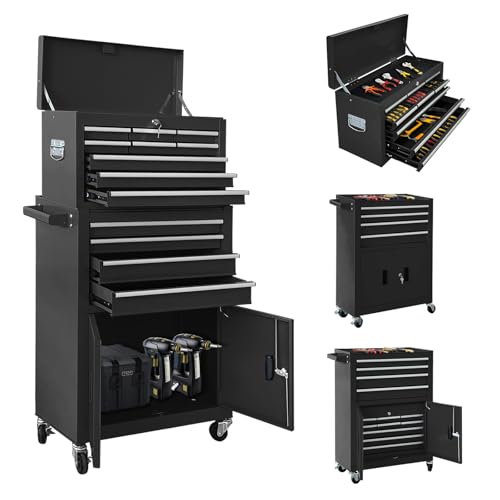 Sormols No.1Detachable rolling combo
The short version: the body outlasts the parts
Most rolling tool boxes are steel shells with moving parts bolted on. The steel body is the most durable piece. Casters, drawer slides, latches and locks take the daily wear, so they set the real lifespan of the box.
Published specifications can tell you what a box is built from, but they do not promise a service life. None of the listings we compare state one. What we can do is point to the features that tend to make a box last longer, and the habits that shorten its life.
What wears out first
Think of a rolling tool box as a chain of parts. The weakest link decides when the box starts to feel old. In rough order, these are the parts that usually give out first:
- Casters: Small wheels carry the whole load and take hits from cracks, cords and door thresholds. Flat spots, wobble and failing brakes show up early.
- Drawer slides: Slides that carry heavy tools every day can bind, sag or lose smooth travel. Ball-bearing slides handle weight better than plain friction slides.
- Locks and latches: Cheap lock cylinders can stick or break. Latches that hold drawers shut during transport can bend if the box is shoved around.
- Finish: Paint or powder coat chips at corners and edges. Once bare steel is exposed to moisture, rust starts there.
- Steel body: Dents and rust are the usual problems. A body rarely fails structurally unless it is badly overloaded or left wet for long periods.
What helps a box last longer
Build details matter, though specs only tell part of the story. Steel construction resists dents better than thin plastic. A powder-coated finish protects against scratches and chipping. Sormols, for example, lists a cold-rolled steel body with a powder coat on its 13-drawer rolling chest, and VEVOR describes thickened Q235 steel on its 5-drawer box.
Ball-bearing slides are another good sign. Maxority lists ball-bearing slides on all seven drawers of its 60 lb rolling chest. LARBANKE adds an ABS plastic countertop, which its listing describes as rust-proof and wear-resistant, and a drawer design meant to keep drawers from tipping out when fully open.
Wheels deserve extra attention if you plan to move the box often. The Sormols chest lists 360 degree swivel casters with brakes, and the Maxority lists four lockable swivel wheels. Our best rolling tool box page shows which picks have wheels at all, since several top-ranked boxes are carry-style chests without casters.
Load and weight: the quiet lifespan killer
Overloading is one of the fastest ways to wear out a box. Heavy loads strain slides, bend drawer bottoms and wear caster bearings. Check the maker's stated capacity before you fill a chest. Winado lists 330 lb on its 5-drawer metal box, WORKPRO lists 1000 lb, and HAUTMEC lists 1600 lb. Many makers publish no figure at all, so if a number is missing, treat the heavy tools with caution.
Spread weight out. Put the heaviest items in lower drawers, which keeps the box stable and reduces stress on the top slides. Do not stack heavy tools in a single drawer if you can split them across two.
Empty weight matters too. A 73 lb chest like the Sormols rolls better than it lifts, so plan to move it on its wheels rather than carrying it. Carry-style boxes such as the 27.51 lb LARBANKE and the 27.56 lb VEVOR are easier to lift, but they list no wheels.
Care habits by part
A few minutes of upkeep now and then adds a lot of life. Here is what to look after, and how often a quick check makes sense.
| Part | What to do | How often |
|---|---|---|
| Casters | Clear thread, grit and debris; check brakes hold; tighten loose bolts | Every few months, or after rough floors |
| Drawer slides | Wipe dust off; apply a light dry lubricant if they drag | Twice a year, or when stiff |
| Locks | Work the key a few times; spray a small amount of graphite or lock lubricant if sticky | Once or twice a year |
| Finish | Wipe up spills, touch up chips with rust-resistant paint | As needed |
| Storage spot | Keep off bare concrete when damp; avoid leaks and humidity | Ongoing |
Safety notes
Rolling boxes can tip, especially with several drawers open. Open one drawer at a time and set the caster brakes before you pull a drawer. Anti-tip designs help, but they do not replace good habits.
Do not push a loaded chest across a steep slope, and do not tow or lift it by the handle if it is too heavy. Use a second person for tall, heavy chests, and keep fingers clear of drawer edges and caster mounts. Wear gloves and eye protection when sanding rust or touching up paint, and use spray lubricants and rust treatments in a ventilated area.
When to repair and when to replace
Replace a single part when the rest of the box is sound. Casters are often the easiest swap, and you can usually fit new ones of the same size. A sticking lock or a bent latch can sometimes be replaced as well.
Think about replacing the whole box when rust has eaten through the body, when several drawers no longer track straight, or when the frame has been bent by overloading. If you need more space rather than a new box, look at a system that stacks or combines. Our best tool box organizer system page covers modular options, and best tool box for mechanics suits heavier daily use.
If you mostly work out of a vehicle, a rolling chest is a different job from a truck box. See best tool box for truck for those, or best tool box for a wider comparison.
Frequently asked questions
Is a steel rolling tool box better than plastic for longevity?
Steel generally resists dents and heavy loads better, but it can rust if the finish is damaged and left wet. Plastic does not rust, though thin plastic can crack or sag under weight.
Can I replace the wheels on a rolling tool box?
Often yes, if the casters bolt on. Match the mounting plate or stem type, size and load rating of the originals. If the casters are welded or riveted in place, replacement is harder.
Does a lock make a toolbox last longer?
Not directly. A lock protects the tools inside, and a latch keeps drawers from sliding open while you roll the box, which prevents bumps and spills that can damage it.
Is it fine to keep a rolling tool box in an unheated garage?
Yes, but keep it dry. Moisture and big humidity swings are harder on steel than cold. Raising it off a damp floor and wiping spills promptly helps prevent rust.