How Long Does a Rock Polisher Take to Finish a Load?
A typical rotary rock polisher (tumbler) takes about four to eight weeks to finish a load, because each of the four stages usually runs for about a week. A vibratory tumbler is faster, often finishing in roughly one to two weeks. Hard stone, a crowded barrel and rushed rinsing are the main reasons a load takes longer than expected.
 Niusken PGJ-21VBest cordless for beginners
 PORTER-CABLE 7424XP
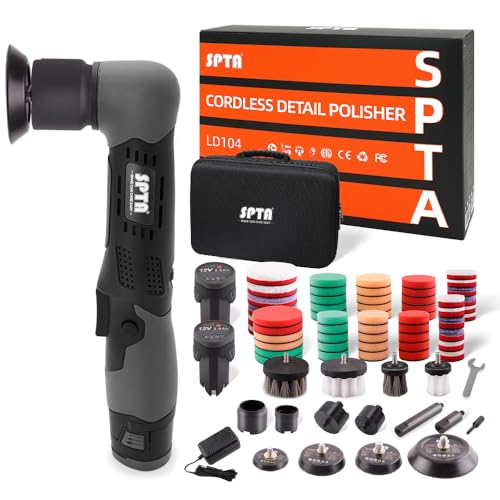 SPTA LD104USBest for tight areas
The short timeline
Most hobby rock polishers work in stages. You start with a coarse grit to shape the stones, move to finer grits to remove scratches, and finish with a polish. Each stage needs its own run, and each run is where most of the time goes.
For a standard rotary barrel, plan on about one week per stage. That adds up to roughly four weeks for a smooth, well-behaved load. Many hobbyists allow up to eight weeks, because the coarse stage often has to be repeated on hard or very rough stones.
Vibratory tumblers shake the load instead of rolling it. The grinding stages tend to run for only a few days each, and the final polish can be as short as a day or so. They cost you less waiting time, though the exact schedule depends on the model and the maker's instructions.
| Stage | Purpose | Rotary barrel (typical) | Vibratory (typical) |
|---|---|---|---|
| 1. Coarse grind | Shapes rough edges | About 7 days, sometimes longer | 2 to 3 days |
| 2. Medium grind | Smooths the coarse scratches | About 7 days | 2 to 3 days |
| 3. Fine grind or pre-polish | Prepares a clean, even surface | About 7 days | 2 to 3 days |
| 4. Polish | Brings out the shine | About 7 days | About 1 to 3 days |
| Total | Full cycle | About 4 to 8 weeks | About 1 to 2 weeks |
What changes the time
The numbers above are starting points, not promises. Several things push a load toward the long end.
Rock hardness matters most. Agate and jasper grind down slowly, while softer stones wear faster and can be ruined by too much time in coarse grit. Mixing very hard and very soft stones in one barrel gives uneven results, so most guides suggest keeping hardness similar within a load.
- Rock hardness: harder stone needs more grinding time in the early stages.
- Starting shape: very jagged pieces often need a second coarse run.
- Barrel fill level: a barrel filled about two thirds to three quarters full tumbles best, and too little or too much slows the process.
- Grit freshness: worn out grit stops cutting, so a stage can stall.
- Cleanliness: leftover coarse grit carried into a finer stage leaves scratches and forces you to repeat work.
A simple stage by stage schedule
Here is a practical way to run a standard rotary load. Treat the day counts as a guide and check the stones before moving on.
- Sort stones by hardness and size, then fill the barrel to the recommended level with grit and water.
- Run the coarse stage for about a week. Check the stones, and repeat if edges are still sharp or pitted.
- Wash the stones and the barrel thoroughly, then start medium grit for about a week.
- Wash everything again, then run fine grit or pre-polish for about a week.
- Clean once more, then run the final polish for about a week. Rinse and dry to see the finished shine.
How to tell a stage is really done
The calendar helps, but the stones tell you the truth. Pull a few out after the planned time, rinse them and look closely under good light.
After coarse grind, the stones should be rounded with no sharp corners. After medium and fine grind, the surface should look even and slightly smooth, with no deep pits left. If you still see pits or cracks, another run in the same stage will save you from a dull final result.
Skipping ahead is the most common way to lose time. Polishing over leftover scratches does not hide them, so you end up restarting the cycle.
Is a handheld polisher a faster option?
For a single special stone, sometimes. A small bench polisher or a wet polisher can bring a shine to one piece in a short sitting, without waiting weeks for a barrel. The trade off is that you work one stone at a time, so it does not suit large batches.
Our best polisher page compares several machines side by side. It does not cover rock tumblers, but its picks include a bench polisher rated up to 10000 rpm with dust collection, aimed at jewelry and small parts, and a wet polisher with 7 diamond pads from 50 to 3000 grit, aimed at stone countertops. Those two are the closest match if you want to finish individual pieces by hand.
If you meant a car or paint polisher when you searched for a rock polisher, the same page lists corded and cordless models, so you can compare polishers by speed, weight and included pads before you choose.
Safety and setup notes
Tumbling is gentle, but the grit and the machines still deserve care.
- Wear eye protection when opening barrels, and when using any bench or wet polisher.
- Wear a dust mask and work in a ventilated area when handling dry grit or dry polishing stone.
- Use hearing protection around loud barrels or bench machines for long sessions.
- Keep any electric polisher away from water unless it is built for wet use, and plug it into a properly protected outlet.
- Never pour used grit slurry down a drain. Let it settle and dispose of it as the maker advises, because it can clog pipes.
Quick ways to save time without hurting results
You can shorten the wait a little, but only by working smarter, not faster. Start with stones that are already close to the shape you want. Keep sizes mixed so small pieces cushion larger ones. Replace tired grit instead of stretching it.
If waiting is the main frustration, a vibratory model may suit you better than a rotary one. Just be ready to follow its stage times closely, since shorter runs leave less room for error.
Frequently asked questions
Can I run a rock polisher for less than a week per stage?
With a rotary barrel, usually not for a good result. Shorter runs often leave scratches that show up in the polish stage. Check the stones and only move on when the surface looks even.
Is it a problem to leave a stage running longer than planned?
Usually not for hard stone, and an extra day or two often helps. Very soft stones can wear down too much or lose their shape, so check them more often.
Do I need to clean the barrel between stages?
Yes. Even a little coarse grit carried into a finer stage can scratch the stones and force you to repeat that stage.
Can I polish different kinds of rock together?
It works best when the stones have similar hardness. Mixed loads wear unevenly, so the softer pieces may end up rounder or duller than the hard ones.