How Long Does a Home Concrete Mixer Last?
A home concrete mixer used for occasional projects can serve for many seasons, but no honest number fits every machine. How long it lasts depends mostly on how well you clean it after each batch, how you store it, and whether you overload the motor. The drum material, motor protection and warranty on the spec sheet give the best clues before you buy.
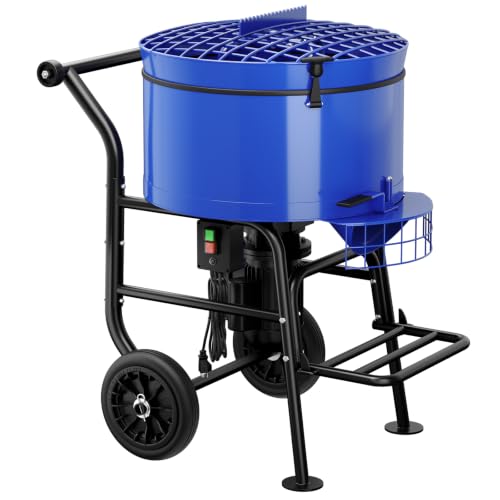 Dkenicor KF100368US-01LHC-001-YIH
 Dkenicor KF100248-02-YH-OBest compact steel drum
 Dkenicor KF100322US-02MLHC-001Best overall
What decides how long a mixer lasts
Published specs do not state a lifespan, so we will not promise one. What we can do is show what wears a mixer out and which features help it hold up. Home use is usually gentle compared with daily job-site work, which helps.
Three things matter most. The first is leftover concrete, which hardens inside the drum and on the paddles and slowly builds up. The second is moisture and rust on steel parts. The third is motor strain from loads that are too heavy or too stiff.
The parts that wear out first
Most failures start in a handful of places. Knowing them lets you check the right things before each job.
Cured concrete is abrasive, and a drum with a thick crust turns less smoothly and puts more load on the motor and gearing.
- Drum interior and mixing paddles: concrete buildup and scraping wear.
- Motor and gearbox: heat from heavy loads and water getting in during cleanup.
- Drum and frame finish: chips in paint or powder coat let rust start on steel.
- Tires and wheels: air tires can go flat, while solid or flat-free tires avoid that.
- Power cord and switch: damage from being dragged, pinched or left in the rain.
Steel drum or poly drum
The drum material changes how the mixer ages. Steel is tough and traditional. Poly resists rust and dents and is easier to clean, which suits occasional use and outdoor storage, as we note on our best concrete mixer for home use page.
Steel can last well if the coating stays intact and the drum is dried after washing. The Dkenicor 5.3 cu ft model, for example, is listed with heavy-duty steel and a powder-coated, rust-resistant finish. A poly drum like the one on the BILT HARD 4 cu ft model skips the rust question, and the listing says it resists dents, cracks and rust.
Neither material is maintenance free. Both still need washing before the concrete cures.
Spec features that point to a longer life
Some specs hint at durability even though they are not lifespan figures. Here is how a few models on our comparison compare on those points.
Remember these are published specifications and listing claims, not results from our own use.
| Model | Drum | Durability-related features listed |
|---|---|---|
| Dkenicor 5.3 cu ft | Steel | 750W motor, powder-coated finish, 8 in solid rubber wheels |
| BILT HARD 4 cu ft | Poly | Motor overload protection, flat-free 10 in tires, powder-coated steel frame |
| YARDMAX YM0115 4.0 cu ft | Steel | IP45 wash-down certified motor and gearbox, 2-year warranty |
How to make a mixer last longer
Habits matter more than any single spec. A few minutes after each job protects the machine for the next one.
Concrete stays workable for roughly an hour or so, depending on heat and humidity, so plan your cleanup before the mix starts to set.
- Rinse the drum right after you empty it. Add water and a handful of gravel, run it for a minute, then pour it out away from storm drains.
- Scrape off any film with a plastic tool before it hardens. Avoid hammering on the drum.
- Keep water off the motor and gearbox unless the motor is rated for wash-down. Even then, follow the manual.
- Dry the drum and let it drain, then store the mixer under cover.
- Do not overload it. Stay within the stated bag count or max load for your model.
- If the motor has overload protection and it trips, let it cool before restarting, as the BILT HARD listing advises.
- Touch up chipped paint on steel parts to slow rust.
Safety notes
Always plug the mixer into a properly grounded outlet, ideally one with GFCI protection, and keep the cord out of wet areas. Unplug the mixer before cleaning, clearing a jam or reaching near the drum.
Wear safety glasses, gloves and a dust mask or respirator when handling dry cement mix, since the dust irritates eyes and lungs. Wet concrete can burn skin, so wash it off promptly. Lift with a helper, because mixers on our list weigh roughly 90 to 125 lb.
When to repair and when to replace
A worn tire, switch or cord is usually a cheap fix. A drum with heavy dents, cracks or deep rust, or a motor that hums and stalls on a normal load, often points to replacement.
If you are shopping now, compare drum size and motor strength against your projects on our best concrete mixer page. A machine sized a little above your typical job tends to work less hard than one stretched to its limit every time.
Frequently asked questions
Does a warranty tell me how long a mixer will last?
Not directly. A warranty shows what the maker will cover, not how long the mixer will run. The YARDMAX YM0115 lists a 2-year warranty, which is one more point to weigh.
Can I leave a mixer outside?
It is better not to. Poly drums handle weather better than steel, but the motor, cord and switch still need protection from rain, so store it under cover.
Is a mixer worth it for a single small project?
For a few fence posts or one repair, mixing by hand may be enough. A mixer pays off when you have several bags to mix or expect more projects.
What if concrete hardens inside the drum?
Unplug the unit first. Chip soft buildup with a plastic scraper, or soak it with water and gravel. Avoid hard hits that dent or crack the drum.