How Long Does a Fluid Extractor Last?
There is no single lifespan for a fluid extractor, and published specs do not list one. A well-kept manual or dual-mode unit can serve for many oil changes, and the parts that wear out first are usually the seals, O-rings and hoses, not the tank. How you use, clean and store it matters more than the model.
 VEVOR YS-087BBest overall
 Lustriix QDSDCYBBest compact dual-mode
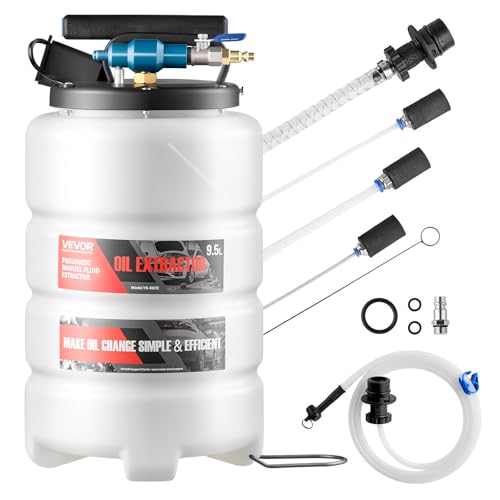 VEVOR YS-087CLongest tube
What actually decides how long it lasts
Manufacturers publish tank size, tube length and power source, but not a service life. So any exact number of years would be a guess. What we can say is which factors push life up or down.
A fluid extractor is a simple tool. It is a sealed tank, a way to create vacuum, and a set of tubes. Fewer moving parts means fewer things to fail, but the vacuum only works if the tank stays airtight. That is why seals matter so much.
- Seal and O-ring condition: these harden, crack or swell over time.
- Fluids used: oil, coolant and brake fluid are fine for most units, but gasoline and other volatile or corrosive fluids can damage seals and are unsafe.
- Frequency of use: a shop that runs it weekly wears parts faster than a driver who changes oil twice a year.
- Cleaning and storage: old oil left in the tank, hoses and fittings speeds up aging.
- Pump type: a hand pump, an air-driven mode and a 12V motor each wear differently.
Which parts wear out first
In most extractors the tank itself outlasts everything else. The weak points are the rubber and soft plastic parts that touch fluid or flex during use.
The table below shows the usual order of wear and what to watch for. It is general knowledge about how these tools work, not a test result.
| Part | Why it wears | Warning sign |
|---|---|---|
| O-rings and sealing rings | Rubber hardens or swells from fluid and age | Vacuum drops, air hisses at the lid or fittings |
| Suction tubes and hoses | Flexing, kinks and heat soften or crack them | Cracks, collapsed walls, air leaks at the joints |
| Hand pump or plunger | Seal inside the pump wears | Many strokes needed, little suction |
| Air fitting (pneumatic mode) | Threads and seals loosen with repeated hookups | Air escapes at the connector |
| 12V motor and cable | Heat, dirty power connections, long runs | Slow flow, motor sounds strained, clamps get hot |
What the product listings say about build
Some listings describe materials that may help durability, though they are manufacturer claims and not a lifespan promise. The VEVOR 9.5L model is listed with a one-piece tank, O-rings and sealed fittings, and a semi-transparent PE reservoir described as resistant to corrosion and aging. The VEVOR 15L kit includes two sealing rings, which is handy because those are the parts most likely to need replacing.
The Harpy Eagle electric pump is a 12V, 100W unit. Its listing says it uses a rotary design built from metal with no plastic parts. That is a claim about materials, and how long the motor lasts still depends on use and care.
If you are still choosing a model, our best fluid extractor page lines up tank size, power source and included tubes so you can see what each kit comes with.
Why a fluid extractor stops working or leaks
Most failures come down to air getting in or the line being blocked. Check the simple causes before you replace anything.
Work through this list in order:
- Check that the lid, O-ring and every fitting are seated and clean. A speck of grit or a twisted ring breaks the seal.
- Make sure the tube is pushed all the way down the dipstick tube and is not kinked.
- Warm the engine for a few minutes first. Cold oil is thick and flows slowly, which can look like a weak pump.
- If the tank is full, empty it. Many units stop pulling once the fluid reaches the limit.
- Inspect hoses for cracks and replace any that leak air.
- In pneumatic mode, confirm the compressor is connected correctly and the air hose is not leaking.
- On an electric pump, check the 12V clamps, the cable and the connection to the battery.
How to make it last longer
Care is simple and takes a few minutes after each job. The aim is to keep old fluid from sitting in the seals and tubes.
Drain the tank fully into a proper container. Wipe the lid, O-rings and fittings, and run a small amount of clean fluid or a suitable cleaner through the tubes if the maker allows it. Let everything dry before you close it up.
Store the unit away from heat and direct sun, with tubes coiled loosely so they do not kink. Do not leave the tank pressurized or the vacuum held for long periods. Keep a spare set of sealing rings if your kit offers them.
Match the tool to the job. Both the Lustriix and EWK listings warn against gasoline and other volatile fluids, and the Lustriix listing also excludes corrosive, alkaline and high-temperature fluids. Using the wrong fluid is one of the quickest ways to ruin the seals.
Safety notes
Used oil and engine fluids can be hot, so let the engine cool a little after warming it and wear gloves and eye protection. Never extract gasoline or other flammable liquids with these tools, since a spark or static can start a fire.
If you use pneumatic mode, follow the pressure limits in the manual and never exceed them. A damaged tank or hose under pressure can fail suddenly. For 12V pumps, connect the clamps firmly, keep cables away from hot or moving engine parts, and avoid running the motor dry.
Dispose of used oil, coolant and brake fluid at a recycling or collection point that accepts them.
When to replace instead of repair
Replace small parts first. New O-rings or a new hose is usually enough to bring suction back.
Consider replacing the whole unit if the tank is cracked, the lid no longer seals even with new rings, a pump will not hold vacuum, or a motor overheats or fails. At that point, compare tank capacity, power source and tube length again on our best fluid extractor page, and pick a tank larger than your engine's oil capacity.
Frequently asked questions
Can a fluid extractor wear out from brake fluid or coolant?
Only if the unit is not rated for it. Check the fluids listed for your model, and rinse the tank and tubes after use so residue does not attack the seals.
Is a manual extractor longer lasting than an electric one?
Manual units have no motor to burn out, so there is less that can fail. Their pump seals and O-rings still wear, though, and no published data ranks one type above the other.
Do replacement O-rings fix most leaks?
Often, yes. Most leaks come from a worn or poorly seated ring or a cracked hose, so replace those before you buy a new extractor.
Should I keep the extractor full between uses?
No. Empty and clean it after each job, because fluid left inside for long periods can degrade seals and leave residue in the tubes.