How Long Do Metal Cutting Tools Last?
There is no single lifespan. A metal cutting tool lasts as long as its cutting edge stays sharp, and that depends on the type of tool, the metal and how you use it. Abrasive discs wear away fast, while carbide or cermet chop saw blades are rated by their makers for thousands of cuts, and the saw body can outlast many blades.
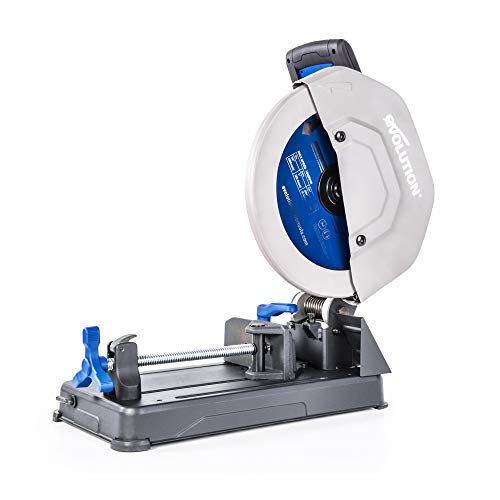 EVOLUTION S355CPSLBest overall
 EVOLUTION S14CPS
 EVOLUTION S14MCSBest for fabrication shops
Tool life or blade life?
When people ask how long a metal cutting tool lasts, they usually mean one of two things. The first is the consumable part: the blade, disc or saw frame blade that actually touches the metal. The second is the tool itself, such as the motor, gearbox, vise and base.
The consumable part wears out on a predictable schedule. The tool body can last for years if it is kept clean and not overloaded. That is why spec sheets and listings quote blade life in cuts, and quote motor life or warranty length for the machine.
How long each type of tool lasts
Lifespan varies a lot between tool types, so compare like with like. The table below gives general guidance, not exact numbers, because the metal, the thickness and your technique all change the result.
Abrasive cutting discs on an angle grinder are designed to wear down as they cut. They shrink in diameter with use and are replaced often. Toothed blades behave differently. Their teeth dull gradually, and good ones keep a clean cut for a long time.
| Tool or blade | How it wears | What to expect |
|---|---|---|
| Abrasive cut-off disc | Wears away with every cut | Shortest life, used up quickly |
| Hacksaw or hand saw blade | Teeth dull, or snap if twisted | Replace when cutting slows or the blade wanders |
| Carbide-tipped chop saw blade | Tips dull slowly at low speed | Long life when run dry and fed steadily |
| Cermet-tipped chop saw blade | Very hard tips resist heat | Longest rated life among the saws we compare |
| Saw body, motor and vise | Brushes, bearings and clamps age | Years with basic care |
What the published ratings say
We compare published specifications, so the numbers below are the makers' ratings, not independent results. They are useful for comparing saws against each other, but real life will differ with your material.
On our best metal cutting tool comparison, the three saws that list a rated blade life sit between 3500 and 4000 cuts. The VEVOR 16 in saw is rated for up to 4000 cuts through Q235 reinforcing bar per blade. The Evolution S14MCS lists 3500+ cuts in 4 in mild steel, and the VEVOR 7-1/4 in saw lists more than 3500 cuts.
Speed matters here. The Evolution S14MCS runs at 1100 RPM, the slowest of the saws that list a speed, while the small VEVOR runs at 4000 RPM. Slower blades generally run cooler, which helps teeth stay sharp. For the full side-by-side, see our best metal cutting tool page.
What shortens the life of a cutting tool
Most early failures come from a short list of causes. Heat is the biggest one, because it softens and dulls cutting edges. Poor feeding technique is next.
- Feeding too slowly, which rubs the teeth instead of cutting and builds heat.
- Starting a cut before the blade reaches full speed.
- Cutting materials the blade was not made for, such as stainless steel with a mild steel blade.
- Loose clamping, which lets the work vibrate and chips the teeth.
- Twisting or forcing the blade sideways in the cut.
- Using abrasive discs on the wrong tool or past their wear limit.
- Letting chips and dust pile up around the guard, base and vise.
How to make your tools last longer
Good habits add more life than any single feature. Evolution's own advice for its cermet blade matches general practice: let the blade reach full speed before contact, use firm and consistent pressure, and avoid a slow feed rate that causes sparking and heat.
Follow these steps each time you cut:
- Clamp the work firmly so it cannot shift or vibrate.
- Check that the blade matches the metal and the saw's rated speed.
- Let the blade reach full speed, then lower it with steady pressure.
- Let the blade do the work. Do not lean on the saw or twist it.
- Brush away chips after the cut and before the next one.
- Inspect the blade for chipped or missing teeth before each session.
Safety when blades get old
A worn blade is not just slow, it is riskier. It needs more force, which can cause kickback or slipping. Always unplug the saw before changing a blade, and wear eye protection and hearing protection every time you cut metal.
Metal pieces and chips can be sharp and hot, so use gloves for handling stock. Never use a blade or disc that is cracked, bent or missing teeth. For abrasive discs on a grinder, check that the disc is rated for the grinder's speed and keep the guard in place.
When to replace, and how to choose for longevity
Replace a blade when cuts take much longer, the work burns or throws heavy sparks from a cold cut blade, burrs get worse, or teeth are visibly chipped. Do not wait for it to fail.
If long life matters to you, a toothed carbide or cermet blade at lower speed is a sensible match for steady cutting. Our best angle grinder disc for cutting metal page helps if you prefer a grinder, and our best hand saw for cutting metal page covers manual options for occasional jobs.
Frequently asked questions
Can I sharpen a carbide-tipped metal cutting blade?
Some carbide-tipped blades can be resharpened by a professional service, but many are replaced instead. Check the maker's guidance for your blade.
Is a longer warranty the same as longer blade life?
No. A warranty covers defects in the tool, such as the Evolution saws' 3 year warranty. Blades are wear items and are usually not covered for normal dulling.
Does cutting thicker metal wear a blade faster?
Usually yes. Thicker stock means more teeth working longer per cut, which creates more heat and wear. That is why ratings state a material and thickness.
Should I use cutting fluid to extend blade life?
Not on dry-cut saws. Blades sold as dry-cut or cold-cut are made to run without coolant, so follow the maker's instructions for your saw.