How Long Do Light Bulbs Last? Lifespans by Bulb Type
Light bulbs last anywhere from under a year to more than two decades, depending on type. Traditional incandescent bulbs are rated for roughly 750 to 2,000 hours, while the LED bulbs on our comparison page are rated for 10,000 to 25,000 hours. At about 3 hours of use a day, that is roughly 9 to 22 years for an LED.
 TJOY QASN83+85Best overall
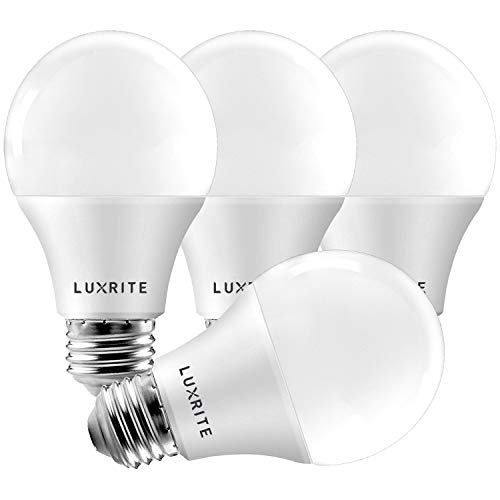 LUXRITE B07BHVRVPSLongest lasting
 GE 42977Best known brand
Lifespan by bulb type
Bulb life is measured in hours, not years. The hour rating on the box is the number of hours a bulb is expected to run before it fails or gets noticeably dimmer. It is a rating, not a guarantee, and real bulbs can fall short of it or run past it.
The table below uses a common planning figure of 3 hours of use per day, which works out to about 1,095 hours a year. Ranges for older bulb types are general figures. The LED range comes from the bulbs on our best light bulbs page.
| Bulb type | Typical rated hours | Approximate years at 3 hours a day |
|---|---|---|
| Incandescent | 750 to 2,000 | Under 1 year to about 1.8 years |
| Halogen | 2,000 to 4,000 | About 1.8 to 3.7 years |
| CFL (compact fluorescent) | Up to about 10,000 | Up to about 9 years |
| LED, everyday A19 bulbs | 10,000 to 25,000 | About 9 to 22 years |
| LED, higher-rated models | 25,000 to 50,000 | About 22 to 45 years |
How long light bulbs last in years
To turn a rating into years, divide the rated hours by the hours you use the bulb each year. A bulb in a living room lamp that runs 3 hours a day uses about 1,095 hours a year. A closet bulb that runs 20 minutes a day might outlast the house's paint.
Here is how that looks with real ratings from our spec sheet. A bulb rated for 10,000 hours, like the Amazon Basics A19 LED, comes to a bit over 9 years at 3 hours a day. A 15,000-hour bulb, like the TJOY 3000K 8-pack, comes to about 13.7 years. The LUXRITE A19 is rated for 25,000 hours, which is about 22 years at the same pace.
If you run a bulb 10 hours a day, such as in a shop or a busy kitchen, divide the same ratings by about 3,650 hours a year instead. A 25,000-hour bulb then lasts closer to 7 years. Compare ratings in our best light bulbs guide with your own daily use in mind.
Why LEDs last so much longer
An incandescent bulb makes light by heating a thin filament until it glows. That filament slowly wears away and eventually breaks. Halogen bulbs work the same way but run even hotter, so they trade some life for brighter, whiter light.
LEDs produce light in a small semiconductor chip, so there is no filament to burn through. They fail gradually. Most LEDs slowly lose brightness over time, and the hour rating usually marks the point where output has dropped noticeably. A good LED often keeps working past that point, just dimmer.
The parts that usually give out first in an LED are the driver electronics and the heat management around the chip, not the light-emitting part itself. That is why two LEDs with similar looks can have very different ratings.
What shortens a bulb's life
The rating assumes good operating conditions. Several everyday things can pull a bulb below its number.
- Heat: enclosed fixtures, recessed cans and hot attics trap heat, which is hard on LED electronics. Check that the bulb is rated for enclosed fixtures if it goes in one.
- Frequent switching: this matters mostly for incandescent and CFL bulbs. LEDs handle switching well.
- Vibration: fixtures that shake, such as a garage door opener light, can loosen parts inside a bulb. Our best light bulb for garage door opener page covers bulbs suited to that job.
- Dimmer mismatch: a bulb that is not dimmable, or that does not match your dimmer, can flicker, buzz or wear out early. Look for a dimmable rating and TRIAC dimmer support if you use a standard dimmer.
- Moisture and weather: outdoor fixtures expose bulbs to damp and temperature swings. Choose bulbs rated for the location, and see our best light bulbs for outdoor fixtures page for options.
- Power surges: a spike on the line can damage the electronics in any bulb, LED included.
How long do light bulbs last in storage?
A bulb sitting in its box does not use up its rated hours, because those hours count only while it is lit. A spare bulb in a drawer is still a fresh bulb in terms of operating life.
Storage does not last forever in a practical sense, though. Keep spares in their original packaging, in a dry place at normal room temperature, and away from things that could crush or knock them. Glass bulbs are fragile, and a damp garage or hot attic can corrode the metal base over time.
When you pull out an old spare, screw it in and check that it lights before you put the ladder away. If it is a multipack, our guide to everyday bulbs notes pack counts, which helps you decide how many spares are worth keeping.
Getting the most from a bulb
A long rating is one thing to check. Warranty is another, since it tells you what the maker will stand behind. On our spec sheet, the LUXRITE has a 2-year warranty and the TJOY has a 1-year warranty.
Also look for a UL listing, which shows the bulb was evaluated for electrical safety. Match the bulb to the fixture: right base (E26 is common for standard lamps), right shape, right brightness, and dimmable if it will sit on a dimmer.
Finally, think about where you read, cook or work. If color and eye comfort matter more to you than lifespan, our best light bulbs for health page looks at those traits instead.
Safety when changing bulbs
Switch the light off at the wall and let the bulb cool before you touch it. Halogen and incandescent bulbs can stay hot enough to burn skin for several minutes.
Use a stable stepladder on level ground for ceiling fixtures, and do not stand on furniture. Hold the glass gently and do not over-tighten the base.
If a CFL breaks, ventilate the room and follow your local guidance for cleaning it up, since CFLs contain a small amount of mercury. Do not use a bulb in a fixture whose wattage limit is lower than the bulb's wattage, and replace any socket that looks scorched or cracked.
Frequently asked questions
Do LED bulbs ever burn out?
Yes. LEDs can fail suddenly because of a bad driver, heat damage or a power surge. Most also dim slowly as they age, so a bulb may look weaker long before it stops working.
Is it worth replacing working incandescent bulbs with LEDs?
In most cases, yes. An A19 LED uses about 9 watts to give the light of a 60W incandescent, and it lasts many times longer, so you change it far less often.
Why did my new LED bulb fail early?
The usual causes are heat in an enclosed fixture, a dimmer that does not match the bulb, or a power surge. Check the warranty, because a bulb that fails well short of its rating may be covered.
Does leaving a bulb on all the time use up its life faster?
Rated hours count the time a bulb is lit, so yes, running it all day uses the rating up sooner. A bulb rated for 15,000 hours that runs 24 hours a day would reach that number in under two years.