How Long Do Forstner Bits Last and How to Care for Them
There is no fixed number of holes or years, because a Forstner bit lasts as long as its edges stay sharp and clean. With sensible speeds, clear chips, and dry storage, a quality bit can serve for many projects. Neglect, heat, and dense or dirty material shorten its life quickly.
 Fisch FSA-367208Best overall
 Freud PB-100Lifetime guarantee included
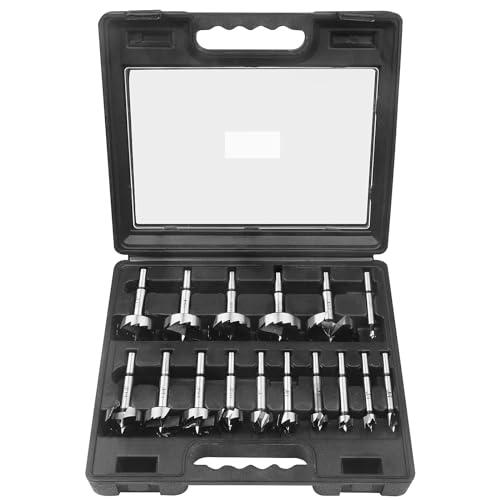 BAIDETS BD210035Every size named
What decides how long a Forstner bit lasts
Makers do not publish hole counts or lifespans, so any exact number you see online is a guess. What we can say is which factors matter most. The steel, the edge design, how you run the bit, and how you store it all add up.
Heat is the biggest enemy. A Forstner bit has a wide cutting rim that rubs against the wood, and friction builds quickly if the bit spins too fast or packs with chips. Overheated steel loses its hardness, and a bit that has turned dark blue or brown at the rim will not hold an edge well.
Material matters too. Dense hardwoods, glue-heavy plywood, MDF, and composites wear edges faster than clean softwood. Hitting a nail, screw, or grit in reclaimed lumber can chip a rim in one pass.
Steel and design: what the spec sheets say
When you compare sets, look at what the listing states about the steel. High-speed steel resists heat and tends to stay sharp longer in dense woods. Carbon steel works well in wood but may dull sooner. Some listings do not name the steel at all, which makes durability harder to judge.
Edge design affects wear as well. A wave or serrated rim helps clear chips, which keeps the bit cooler. A center point or spur keeps the bit from wandering, so the rim cuts evenly instead of rubbing on one side. Our best forstner bit set page lists these details for each set so you can compare them side by side.
Here is how a few sets on that page describe themselves:
| Set | Steel as listed | Edge or tip as listed | Case |
|---|---|---|---|
| Fisch Black Shark (16 bits) | High-speed steel, forged | Wave rim, center point | Included |
| Freud PB-100 (16 bits) | Forged construction, steel not named in our data | Serrated rim, spur | Not listed |
| BAIDETS (16 bits) | Carbon steel | Center point | Not listed |
| COMOWARE (16 bits) | Carbon steel | Center spur | Not listed |
| CMT 537.000.16 (16 bits) | Alloyed steel | Center point | Included |
Habits that wear bits out faster
Large bits need the most care. A wider rim travels faster at its edge, so it builds heat sooner. Slow the drill down as the diameter goes up.
- Running at too high a speed, especially with larger diameters
- Pushing hard instead of letting the rim cut
- Drilling deep holes without backing out to clear chips
- Drilling into hidden metal, grit, or dried glue
- Dropping bits loose into a toolbox where the rims knock together
- Leaving resin and pitch on the rim so it burns on the next hole
How to drill so the edges stay sharp
A secure grip also helps. Hex and flatted shanks resist slipping better than plain round ones, which matters on large bits. A bit that slips in the chuck can wobble and wear the rim unevenly.
- Mark the center and set the point in the mark so the bit starts without wandering.
- Clamp the workpiece. A drill press gives the steadiest cut, and the listings above note drill press compatibility for most sets.
- Choose a slow speed, slower for bigger bits and for hardwood.
- Feed with steady, moderate pressure and let the rim shave the wood.
- Back the bit out often on deep holes to clear chips and let it cool.
- For a hole in thin stock, stop before the point breaks through and finish from the other side to avoid tear-out.
Cleaning, sharpening, and storage
After use, brush off sawdust and wipe the bit. If you see sticky resin or pitch, soften it with a household resin cleaner or a little solvent and wipe it away with a rag. Avoid scraping the cutting edges with anything hard.
Light sharpening can extend the life of a bit that has started to dull but is not damaged. Use a small diamond hone or fine sharpening stone and work only the inside face of the cutting edges, keeping the original angle. Do not file the outer rim, because that changes the diameter and the shape of the hole. Take only a few light strokes and match them on each side so the bit stays balanced. Wave rims and tight spur geometry are harder to restore, so for those bits a gentle touch-up before they get very dull is the safer approach.
Store bits dry. Moisture leads to rust, and rust pits the edges. A case keeps sizes in order and protects the rims, and the Fisch and CMT sets in the table include one. If your set has no case, a wooden block with drilled holes works well. A light wipe of machine oil on the steel before long storage is a good habit, but wipe off any excess before you drill so it does not stain the wood.
When to replace a bit
Even with good care, bits do wear out. Watch for these signs: the bit needs much more pressure than before, it smokes or burns the wood, the hole walls look rough or torn, or the rim has visible chips or a rounded edge. If light honing does not bring back a clean cut, replace it.
A warranty can help with defects. Some listings, such as the Freud set, mention a limited lifetime guarantee. Read the terms, since guarantees usually cover manufacturing flaws and not normal wear or misuse.
If you replace bits often because one size gets all the work, consider a set that covers your most-used diameters. Sets on our page run from 0.25 in up to 2.125 in, while smaller sets stop at 1 in or 1.375 in.
Safety notes
Wear eye protection every time you drill, because chips and splinters can fly. Clamp the workpiece, since a Forstner bit can grab and spin the wood if it catches, and never hold small pieces by hand. Keep loose sleeves, long hair, and jewelry away from the spinning bit.
Bits and shavings can be hot right after a deep cut. Let them cool before you touch them. Unplug a corded drill or remove the battery before changing bits, and keep your fingers clear of the cutting edges, which stay sharp even when worn.
Frequently asked questions
Can I sharpen a Forstner bit at home?
Yes, light touch-ups are possible with a small diamond hone or fine stone. Work only the inside of the cutting edges and keep the original angle. Heavy grinding is better avoided.
Do high-speed steel bits always last longer than carbon steel?
Not always. High-speed steel tends to resist heat better, but technique, speed, and the material you drill still matter. A well-used carbon steel bit can outlast a misused premium one.
Why does my bit smoke or burn the wood?
Usually the speed is too high, the feed is too light, or chips are packed in the hole. Slow down, feed steadily, and back the bit out to clear chips.
Is it fine to use Forstner bits in a handheld drill?
Many sets list handheld use, but a drill press gives a steadier cut and puts less strain on the rim. If you go handheld, clamp the work and use a slow speed.