How Does an Insulated Screwdriver Work?
An insulated screwdriver has a steel blade covered by a handle and shaft coating that do not conduct electricity well. That barrier slows or blocks current from traveling up the tool into your hand if the tip touches a live part. It only protects you if the maker rates it for a specific voltage and marks it on the tool.
 SUNHZ MCKP YMX022Best overall
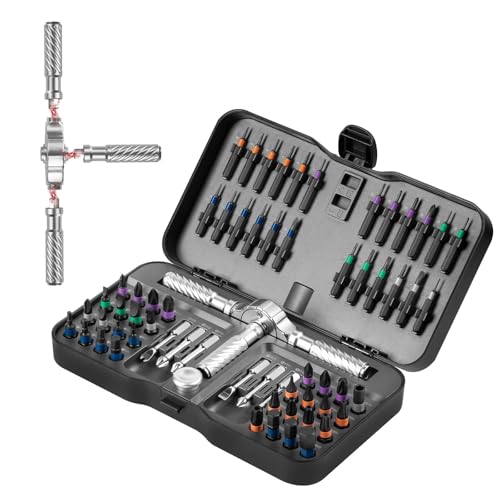 VMAN VMAN-66IN1
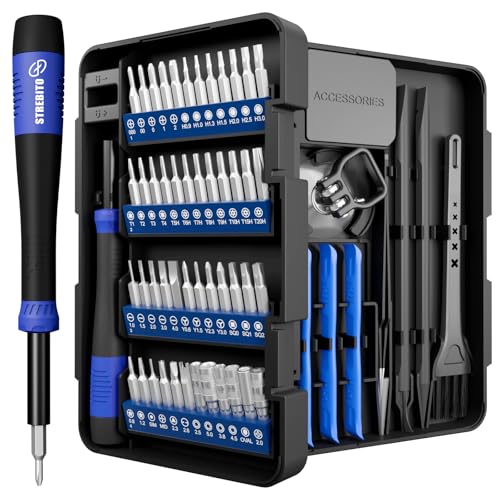 STREBITO Broad electronics repair kit
The basic idea: a barrier between the blade and your hand
Metal conducts electricity, and a screwdriver blade is metal. If a bare blade touches a live terminal, current can flow through the shaft and handle into your body. An insulated screwdriver breaks that path by wrapping the parts you touch in a material that resists current.
The tip stays bare steel, because it has to grip the screw. Everything else is designed so your hand never meets a conductive surface. On many designs the shaft is coated right down to a short exposed tip, which also lowers the chance of the blade bridging two terminals at once.
Think of it as a second line of defense, not a replacement for the first. The first line is switching off and locking out power. Insulation is there for the moment something goes wrong, such as a circuit that turns out to be live.
What insulated screwdrivers are made of
The core is almost always the same as a standard screwdriver: a steel blade, often chrome vanadium or S2 alloy steel. The insulation is added around it. Handles are usually molded from tough, non-conductive plastics or rubber-like compounds, and the shaft gets a separate sleeve or coating.
Some professional designs use more than one layer, so a nick in the outer layer does not leave bare metal exposed. A contrasting inner color is a common way to show when the outer layer has worn through.
| Part | Typical material | Job |
|---|---|---|
| Blade tip | Hardened steel (such as chrome vanadium or S2 alloy) | Turns the screw; left uncovered |
| Shaft sleeve or coating | Non-conductive plastic or similar compound | Blocks current along the steel |
| Handle | Molded insulating plastic, often with a soft grip zone | Keeps your hand away from conductive parts |
| Ferrule or collar | Insulating material at the handle and shaft joint | Closes the gap where leaks are most likely |
What an insulated screwdriver looks like
Most are easy to recognize once you know what to look for. The handle is thick and often two-tone, and the shaft is covered in a smooth sleeve with only a short length of bare metal at the tip. Many are red and yellow, though color alone proves nothing.
The real giveaway is the printing. A genuine tool carries a voltage rating and a certification mark on the handle or shaft. Often you will see a double-triangle symbol or a rating such as 1000 V, along with the maker's name.
How to tell a rated tool from a look-alike
A thick rubber grip is not the same as electrical insulation. Many handles are shaped for comfort and grip, and the material was never tested for shock protection. Use this checklist before you trust a tool near live parts:
- Look for a stated voltage rating on the handle or shaft, not just in a product listing.
- Look for a certification marking from a recognized standard.
- Check that the shaft is sleeved down to a short bare tip.
- Inspect for cracks, cuts, melted spots or exposed inner layers.
- Confirm the maker states the rating in writing. If it does not, treat the tool as unrated.
Using one safely
Even a rated tool is not a license to work on live circuits. Turn off the power at the breaker, test that the circuit is dead with a proper tester, and only then start work. Treat insulation as backup.
Never use a tool with damaged insulation for electrical work. A small cut can expose metal and defeat the protection. Retire it for general tasks instead.
Keep your hand behind the handle's guard or flange, away from the shaft. Wear safety glasses when working in panels, since a short circuit can throw sparks or molten metal. Keep the tool dry and clean, because moisture and grime can create a path for current.
If the job involves high voltage or you are not sure how to isolate power safely, call a licensed electrician.
What this means when you shop for a set
Our best insulated screwdriver set comparison starts with one rule: a genuinely insulated tool carries a voltage rating and a certification marking, and the maker should say so. Without that, assume the tool is not meant for live electrical work.
That matters because most of the top-ranked sets on that page are precision electronics kits. Across the five we reviewed, none lists an insulation or voltage rating in its data. The leading set, a 66-piece kit with 14 full-size drivers and S2 alloy steel blades, is a good example of a well-equipped general set that still does not state a rating.
Those kits still have a place. A precision set such as the 25-in-1 kit, which lists 24 bits in S2 alloy steel and weighs 0.42 lb, suits small electronics. Treat it as a repair tool for unplugged devices, not as protection around mains power.
When you read a spec sheet, check the insulation rating first, then the blade steel, then whether the driver sizes match your jobs. Our insulated screwdriver set comparison lays these details side by side so you can see which listings give you the facts and which leave them out.
Frequently asked questions
Does an insulated screwdriver make live work safe?
No. It lowers risk if the tip touches a live part by accident, but you should still de-energize and test the circuit first.
Can I tell if a screwdriver is insulated just by touching the handle?
No. Feel and color do not show whether a handle is rated. Look for a printed voltage rating and a certification mark.
Is a rubber or cushion grip handle insulated?
Not necessarily. Many soft grips are made for comfort. Unless the maker states a voltage rating, assume it offers no shock protection.
Why is the tip left bare?
The steel tip has to fit and turn the screw. Good designs keep the bare section short and cover the rest of the shaft.
When should I replace an insulated screwdriver?
Replace it for electrical work if the handle or shaft coating is cracked, cut, melted or worn through to bare metal.