How a Pipe Wrench Works and What It Is Used For
A pipe wrench is an adjustable wrench with serrated jaws that bite into round pipe and tighten their grip as you pull the handle. Plumbers, gas fitters and DIYers use it to turn threaded pipe and fittings. It is built for rough metal work, so it can mar the surface it grips.
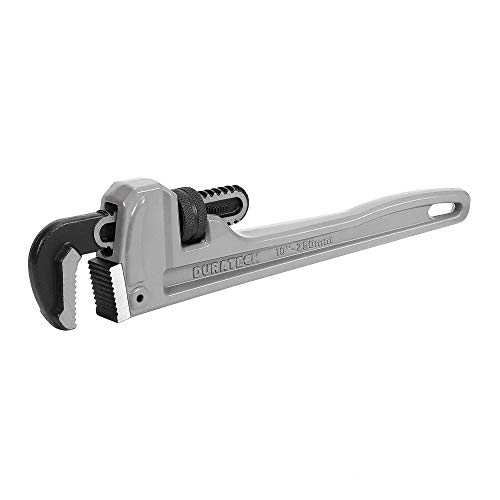 DURATECH DTAHDPW10Best overall
 KARRYTON KTAPW048Largest pipe capacity
 RIDGID 814Made in USA pick
What a pipe wrench is
A pipe wrench is a hand tool made to turn round, threaded pipe and the fittings joined to it. In plumbing, it is the tool you reach for when a smooth, round surface gives a normal wrench nothing to hold.
Most models share the same basic parts: a handle, a fixed heel jaw, a movable hook jaw and a knurled adjustment nut. The jaws have angled teeth, and those teeth do the real work.
How a pipe wrench grips
The hook jaw and heel jaw are set at an angle to each other. They float slightly in the head, so when you pull the handle, the hook jaw rotates a little and digs in harder. The more force you apply, the tighter the bite.
That is why a pipe wrench only turns one way. Pull in the direction the open jaw faces and it locks on. Reverse the pull and it releases, which lets you reset it for another turn without removing it from the pipe.
Here is the sequence in practice:
- Open the jaws by turning the adjustment nut until they fit loosely around the pipe.
- Set the wrench so the hook jaw faces the direction you want to turn.
- Back the nut off slightly so the jaws have a little play. This lets the hook jaw rock and bite.
- Pull the handle smoothly toward the open side of the jaw. The teeth lock onto the pipe.
- Release, reset and repeat until the joint is tight or loose.
What a pipe wrench is used for
The main job is tightening and loosening threaded steel and iron pipe, such as water and gas lines. It also turns pipe fittings, unions and nipples that have rounded or worn edges.
Beyond plumbing, HVAC workers, mechanics and general maintenance crews use it on rounded stock, old fasteners and seized joints. Many listings also mention gas tank repair, vehicle maintenance and garage projects.
Two-wrench work is common. One wrench holds the fitting still while the other turns the pipe, which keeps you from twisting a whole run of piping.
When not to use one
The teeth leave marks, so a pipe wrench is a poor choice for chrome, brass trim, plastic pipe or finished surfaces you want to keep clean. For hex nuts and bolt heads, use a standard wrench or socket that fits the flats.
Never use a pipe wrench as a hammer. Also avoid slipping a cheater pipe over the handle unless the maker says the tool can take it, since overloading can bend the handle or break the jaw.
Choosing a size and handle material
Start with the widest pipe you need to grip. Capacity is the first spec to check, and it should match your pipe. Our best pipe wrench page lines up several models by capacity, weight and features so you can compare them quickly.
In that lineup, the RIDGID Model 814 is a 14-inch aluminum wrench with a 2 in capacity at 2.5 lb. The RIDGID 18-inch models open to 2.5 in, and the 24-inch RIDGID Model 24 opens to 3 in at 9.55 lb. At the large end, the KARRYTON 48-inch aluminum wrench opens to 8 in but weighs 17.5 lb.
Handle material changes the weight a lot. Aluminum handles are listed as about 40% lighter than iron or steel, and ductile iron is heavier but is the material used on the two heavy-duty RIDGID models that meet the GGG-W-651 spec.
| Model | Handle | Capacity | Weight |
|---|---|---|---|
| DURATECH DTAHDPW10 (10 in) | Aluminum | Not listed | 1.08 lb |
| RIDGID 814 (14 in) | Aluminum | 2 in | 2.5 lb |
| RIDGID 818 (18 in) | Aluminum | 2.5 in | 3.8 lb |
| RIDGID Model 18 (18 in) | Ductile iron | 2.5 in | 4 lb |
| RIDGID Model 24 (24 in) | Ductile iron | 3 in | 9.55 lb |
| KARRYTON KTAPW048 (48 in) | Aluminum | 8 in | 17.5 lb |
Features worth looking for
A floating hook jaw makes quick adjustments easier. Replaceable hook jaws, heel jaws and springs let you repair a worn wrench instead of replacing it. Self-cleaning threads help the nut keep moving when dirt builds up.
Five of the six wrenches on our pipe wrench comparison list all three of these features. The KARRYTON lists none of them, so check the listing before you buy for repeated use.
Safety tips
A slipping wrench is the main hazard, and it can cause scraped knuckles or a fall. Clean grease and debris off the jaws and the pipe, and keep your body clear of the swing path.
Wear safety glasses and sturdy gloves. Rust, scale and old pipe dope can fly off when a stuck joint breaks free.
On gas lines, shut off the supply before you work and have a qualified gas fitter handle repairs. On water lines, close the shutoff valve and relieve pressure first. When working overhead or on a ladder, set your footing before you apply force.
Frequently asked questions
Why does my pipe wrench slip?
Common causes are worn teeth, dirt in the jaws, or too much play in the jaw setting. Clean the teeth, adjust the nut so the jaws sit snug with slight play, and replace worn jaws if the wrench has replaceable parts.
Is a pipe wrench the same as a monkey wrench?
No. A monkey wrench has smooth, parallel jaws for square or hex nuts. A pipe wrench has serrated, angled jaws that bite into round pipe and lock under load.
Can I use a pipe wrench on plastic pipe?
It is not a good fit. The teeth can gouge PVC and other plastics, and the clamping force can crack them. Use a strap wrench or hand-tighten where the fitting calls for it.
Do I need two pipe wrenches?
Often, yes. One wrench holds the fitting steady while the other turns the pipe, which keeps stress off the rest of the piping.