How Does a Gate Latch Work? A Simple Guide to Types, Setup and Wall Mounting
A gate latch is a two-part device. A moving bar or lever on the gate drops into a catch (the strike) on the post or wall and holds the gate shut until you lift the lever. Self-latching models use gravity or a spring so the bar falls into place on its own when the gate closes.
 HTHOOOOOME N-Gate Latch-1Best overall
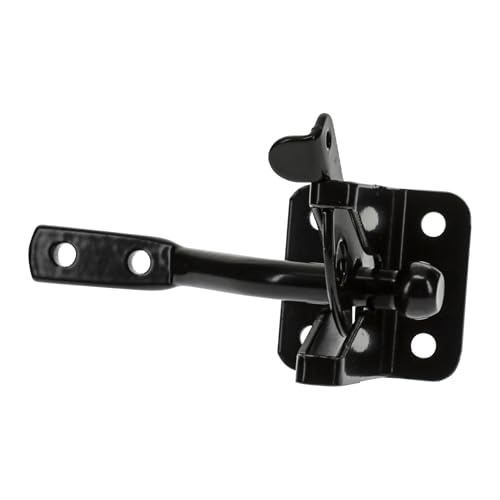 National Hardware N184-861Outswing farm gates
 SANKINS Powder-coated, screws listed
The basic parts of a gate latch
Most gate latches have two pieces. One mounts on the gate and holds the moving part, usually a bar and a lever. The other mounts on the post, fence or wall and acts as the catch, often called the strike.
When you close the gate, the bar meets the catch. When you lift the lever, the bar rises out of the catch and the gate can swing open. That is the whole idea, and everything else is a variation on it.
- Latch body: the housing that holds the bar and lever, fixed to the gate.
- Bar or lever: the part that moves up and down.
- Strike or catch: the fixed piece the bar drops into.
- Fasteners: screws that hold both pieces to the gate and post.
- Padlock hole: a slot on some models for adding a lock.
How a gravity self-latching gate latch works
A gravity latch relies on the weight of the lever. As the gate swings shut, the bar rides up over the catch, then drops back down by its own weight and locks behind it. You do not need to reach over and flip anything.
To open it, you lift the lever with your fingertips, which raises the bar clear of the catch. Several latches on our spec sheet, such as the HTHOOOOOME N-Gate Latch-1, the SANKINS models and the HILLMASTER 3830, are listed as gravity self-latching. The National Hardware N184-861 is listed as self-latching too.
Because the latch depends on gravity, it needs to hang level. If the gate sags, the bar may not line up with the catch. Fix the sag first, or the latch will seem faulty when the real problem is the gate.
Other latch styles you may see
Not every latch uses a gravity bar. Simple thumb latches have a lever you press, and manual slide bolts need you to move them by hand. Magnetic latches, which can be operated from either side of the gate, hide their fasteners and suit situations where you need access from both sides.
If you need to open the gate from both sides, see our best gate latch to open from both sides comparison. For the general field, start with our best gate latch page.
| Style | How it locks | Typical use |
|---|---|---|
| Gravity self-latching | Bar drops into the catch when the gate closes | Backyard, pool and pet gates |
| Thumb or manual lever | You set the lever by hand | Simple garden gates |
| Slide bolt | You slide a bolt into a keeper | Extra security on a closed gate |
| Magnetic | Magnets engage the latch when closed | Gates opened from both sides |
How to hook up a gate latch
Installing a latch takes a drill, a level, a pencil and a screwdriver. Always wear safety glasses when drilling or driving screws, and use a stable surface or ladder if the gate is tall.
Check your gate before you start. Match the latch to the swing direction, since some latches only fit one way. The National Hardware N184-861 lists outswing only, while the HTHOOOOOME, SANKINS and HILLMASTER models above list inward and outward swing.
- Close the gate and hold it in its natural, level position.
- Hold the latch body on the gate and mark where the bar meets the post.
- Check that the bar will drop into the catch, then mark the screw holes.
- Drill pilot holes so the wood does not split.
- Screw the latch body to the gate.
- Fix the catch to the post, lining it up with the bar.
- Test the swing several times and adjust the catch if it binds.
How to latch a gate to a wall
A wall works like a post, but the surface is harder. For brick, block or concrete, you need a masonry bit and wall anchors, and you should check for hidden pipes or wires before drilling into any wall. For a wood or metal wall frame, use screws that suit the material.
Mount the catch so it sits at the same height as the bar and lines up when the gate rests against the wall or stop. If there is a gap between the gate edge and the wall, check the gap against the latch reach. The listing for one latch on our sheet says it handles post gaps up to 1-9/16 in, so confirm the gap before you buy.
Metal gates and posts often need harder screws than the ones in the box. The SANKINS and HILLMASTER listings both say to use professional hard screws for metal gates.
What to check before you buy
Start with swing direction, then mounting side. Most latches on our sheet are reversible for left or right hand use. Next, look at the finish. The HTHOOOOOME lists a black anti-rust coating, and the SANKINS and HILLMASTER list black powder coat.
Check screws, too. The SANKINS 12-screw kit and the HILLMASTER 6-screw kit both include them. If you have a pet or child in the yard, compare options on our best gate latch for dogs page, and for hardware that carries a lot of load, see our best heavy duty gate latch page.
For hinges and other parts, our best gate hardware page puts them side by side.
Safety notes
A latch is a fastener, not a certified safety device. For pools, follow your local pool barrier rules and consider a latch that sits out of a small child's reach.
Wear eye protection when drilling. Use a ladder safely if you work above head height, and keep fingers clear of the bar and catch when testing the gate.
Frequently asked questions
Can I add a padlock to a self-latching gate latch?
Many can. The HTHOOOOOME, National Hardware, SANKINS and HILLMASTER latches on our sheet are all listed as padlockable. The padlock is usually not included, so check the listing.
Why does my gate latch not catch?
The usual cause is a sagging or shifted gate, which puts the bar out of line with the catch. Re-level the gate, tighten the hinges, then adjust the catch position.
Do I need special screws for a metal gate?
Often yes. Some listings say metal gates may need harder screws than the ones supplied, so check before you drill.
Can I use a latch on a gate that swings both ways?
Only if the latch supports it. Some list inward and outward swing, and some list outswing only, so match the spec to your gate.