How Do You Use a Sandblasting Cabinet? A Step-by-Step Guide
To use a sandblasting cabinet, connect dry compressed air, load clean media, put the part inside, close and seal the door, and then blast through the glove ports while watching through the window. Keep the gun a few inches from the part, move steadily, and run the dust collector or vacuum the whole time. Shut off the air and let the dust settle before you open the door.
 EUMAYES PSQTBest overall
 HOLDWIN SAFD45Light aluminum gun
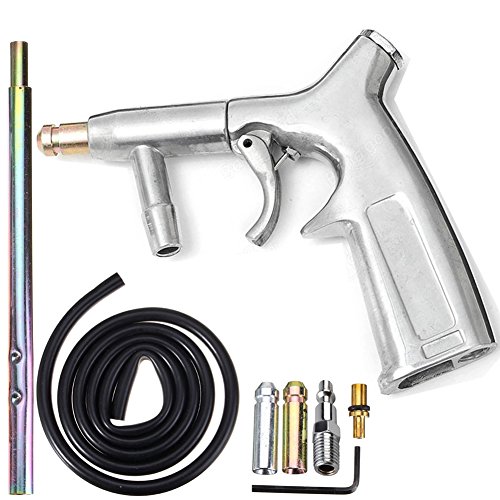 Jewboer Siphon kit with hose
How a Sandblasting Cabinet Works
A blast cabinet is an enclosed box with a viewing window, two glove ports, a door and a blast gun inside. Compressed air feeds the gun. As air rushes through, it creates suction that pulls abrasive media up from a hopper or feed hose and shoots it out of the nozzle at the part.
Because the box is closed, the media and the dust stay inside. The media falls back to the bottom of the cabinet, where it is collected and reused. A dust collector or shop vacuum pulls air through the cabinet so you can see the part and so fine dust does not leak out.
The gun does most of the work, and it also wears the fastest. If you are replacing or upgrading one, our best sandblasting gun for cabinet comparison lists the published specifications side by side so you can match it to your cabinet.
Set Up and Safety Checks Before You Blast
A few minutes of preparation prevents most of the problems beginners run into. Set the cabinet on a stable bench in a space with good airflow, and keep it away from open flames and sparks.
Blasting creates fine dust that can harm your lungs, and some coatings you remove, such as old paint, may contain lead or other hazards. Do not blast unknown coatings on older items without checking first. Even with a sealed cabinet, wear safety glasses and hearing protection, since compressors and blasting are loud.
- Check that the door gasket and glove ports have no tears or gaps.
- Make sure the viewing window is clean and the cabinet light works.
- Confirm the dust collector or vacuum is connected and its filter is clean.
- Drain moisture from your compressor tank and use an air line filter or dryer if you have one.
- Inspect the air hose and fittings for wear before pressurizing them.
- Fill the hopper with clean, dry media, following the cabinet maker's limit.
Step-by-Step: Blasting a Part
Once the cabinet is ready, the process is simple. Work through the steps in order, especially the first time.
- Clean the part of heavy grease and oil. Oil clumps the media and clogs the gun.
- Place the part on the grate or turntable inside, and close and latch the door.
- Turn on the dust collector or vacuum and let it run for a moment.
- Slide your hands into the gloves and pick up the gun.
- Set your regulator to a low pressure to start, staying within what your gun and media maker recommend.
- Press the foot pedal or trigger and aim at a test spot on the part.
- Sweep the gun across the surface in overlapping passes, rotating the part as needed.
- Release the pedal, wait for the dust to clear, and inspect the surface through the window.
- Turn off the air, keep the collector running for a short while, and then open the door.
Choosing the Right Media
The abrasive you choose changes the finish and how aggressively the cabinet cleans. Harder, sharper media cuts faster but can etch or thin delicate metal. Softer media cleans gently and leaves a smoother look. Always use media made for blasting, and never use play sand, which can create hazardous dust.
This table gives a general comparison. Check the manufacturer's data for your specific media before buying.
| Media type | Typical use | Finish | Best for |
|---|---|---|---|
| Aluminum oxide | Rust, paint and scale removal | Matte, slightly rough | Steel and cast iron |
| Glass bead | Cleaning and light finishing | Smooth, satin | Parts that need a clean look |
| Walnut shell or corn cob | Gentle cleaning | Light, non-etching | Soft metals and delicate parts |
| Silicon carbide | Fast cutting, etching | Rough, aggressive | Hard materials and glass |
| Steel grit | Heavy cleaning | Rough, coarse | Thick, durable steel parts |
Technique: Distance, Angle and Pressure
Most beginners blast too close and too hard. Start with the nozzle several inches from the part and move closer only if the media is not cleaning well. Holding the gun slightly angled, instead of straight on, helps the media bounce away and keeps the surface visible.
Keep the gun moving. Staying in one spot can pit or warp thin metal, especially sheet steel and aluminum. Work in smooth overlapping strokes, like spray painting, and check your progress often.
Pressure matters too. Higher pressure cleans faster but wears media, nozzles and parts more quickly. Lower pressure gives you control. Begin low, test on a hidden area, and increase only as needed.
Troubleshooting Common Problems
Most cabinet problems come from moisture, clogs or worn parts. Here are the usual causes.
- Weak or sputtering blast: the media is damp, the pickup tube is clogged, or the nozzle is worn.
- Media clumping: moisture in the air line or hopper. Dry the media and drain the compressor.
- Poor visibility: the dust collector is undersized, the filter is clogged, or the window is scratched.
- Slow cleaning: pressure is too low, the media is broken down, or the nozzle is too worn.
- Dust escaping: a gasket, glove or door seal is damaged.
Cleanup and Maintenance
After each session, turn off the air, let the dust settle, and open the door only when the cabinet is clear. Blow off the part with clean air or brush it down, then wipe it before painting or coating, since leftover dust blocks adhesion.
Sift used media now and then to remove debris and fines. When it turns to powder and stops cutting well, replace it. Check the nozzle regularly, since a widening opening wastes air and reduces results.
Clean or replace dust collector filters on schedule. A worn gun or nozzle is also a common reason blasting slows down. Our sandblasting gun comparison is a useful starting point when it is time to swap yours out.
Frequently asked questions
Can I use a sandblasting cabinet with a small compressor?
Often yes, but you will need to work in short bursts. Check the air requirement listed for your gun and nozzle, and compare it with your compressor's published output before you start.
Can I reuse blasting media?
Yes, most cabinets are designed to recycle media. Replace it when it becomes dusty, rounded or clumpy, since worn media cleans slowly.
Why is my part still dirty after blasting?
Oil and grease on the part can block the media from reaching the surface. Degrease it first, then check pressure, nozzle wear and media condition.
Do I still need a respirator with a sealed cabinet?
A sealed cabinet with a working dust collector protects you during blasting. Use a dust mask or respirator when emptying dust, changing filters or handling hazardous coatings.