How to Properly Use a Hammer: A Beginner's Guide
Hold the hammer near the end of the handle, start the nail with light taps, then swing from your elbow and wrist so the face lands flat on the nail head. Let the weight of the head do the work instead of forcing each blow. Wear eye protection, and choose a head weight that matches the job so you stay accurate and comfortable.
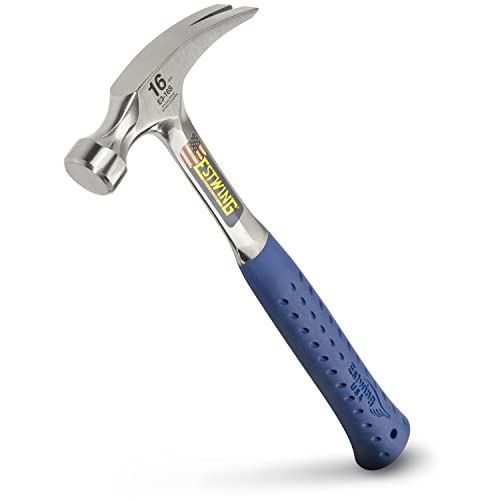 Estwing E3-16SBest overall
 Jorgensen 60102Magnetic starter, 20 oz head
 Estwing E3-16CCurved claw for prying
Start with the right hammer for the job
Most beginner mistakes come from a hammer that does not suit the task. A heavy head on a small trim nail is hard to control. A light head on a big framing nail takes many extra swings. Matching the tool to the job makes every other tip in this guide easier.
Head weight is the biggest factor. Lighter heads suit repairs and trim, and heavier heads drive larger nails faster. The hammers on our best hammer comparison run from 16 oz to 24 oz, so you can see how the range looks side by side.
The table below uses published specifications from that comparison to show how head weight lines up with typical use.
| Example hammer | Head weight | Claw and face | Good starting use |
|---|---|---|---|
| Estwing E3-16S | 16 oz | Rip claw, smooth face | General repairs and pulling nails |
| Estwing E3-16C | 16 oz | Curved claw, smooth face | Prying and pulling with extra leverage |
| Jorgensen 60102 | 20 oz | Straight rip claw, milled face | Heavier driving with a magnetic nail starter |
| Estwing E6-24TM | 24 oz | Rip claw, milled face | Large nails and framing-style work |
Hold the hammer the right way
Grip the handle near the end, not up close to the head. A longer lever gives you more power from the same effort, and the weight of the head carries the swing. Choking up on the handle feels safer at first, but it makes each blow weaker and more tiring.
Wrap your fingers around the handle and keep your thumb alongside them, not stretched along the top. Hold firmly but not in a death grip. A tight, tense hand tires quickly and passes more shock into your wrist.
Grip design matters here too. Steel handles are durable but pass more shock to your hand, while fiberglass absorbs more vibration. Several hammers in our data list a shock-reducing grip, which helps over long sessions. Estwing says its molded grip reduces impact vibration by 70%.
Drive a nail into wood, step by step
Driving a nail is a simple routine once you know the order. Follow these steps on a scrap board first if you are new to it.
- Mark where the nail should go, and rest the workpiece on a firm, stable surface.
- Hold the nail between your thumb and a finger, about two-thirds of the way up the shank, away from the point and not right under the head.
- Tap lightly a few times until the nail stands up on its own in the wood.
- Move your fingers well away from the nail. Some hammers have a magnetic nail starter that lets you set a nail one-handed, which keeps your fingers clear.
- Swing from your elbow, with a little wrist snap at the end. Keep your eyes on the nail head, not on the hammer.
- Let the face strike the nail head squarely. Stop when the head sits flush with the surface, or a hair below it if you plan to fill the hole.
Keep nails straight and protect the wood
A bent nail usually means the face hit at an angle. Keep the handle roughly level at the moment of impact, so the face meets the nail head flat. If a nail starts to bend, pull it and start again with a fresh one. Hammering a bent nail flat rarely holds well.
Face type changes the result. A milled face grips the nail head and slips less. A smooth face leaves fewer marks on the surface. If you are working on visible wood, a smooth face is the gentler choice, and a final tap that stops just before the surface helps avoid dents.
For hardwood, nails can split the board or refuse to go in. Place nails a little back from the board's end, and consider drilling a small pilot hole. For softwood, the nail usually goes in with less fuss, but the same end-spacing rule still helps.
Pull nails without hurting yourself or the board
The claw does the pulling. Slide it under the nail head, then rock the handle back to lift the nail. A curved claw gives more leverage for prying and pulling. A rip claw is straighter and suits demolition and prying boards apart.
For a long nail, stop partway and slide a small block of scrap wood under the hammer head. This raises the pivot point, gives you more leverage, and keeps the head from denting the surface. Keep pulling in short rocks rather than one big heave.
Do not use a hammer claw to pry against a hard object with a lot of force. Stress on the handle can damage it, especially on handles that are not one-piece construction.
Safety habits that matter
A hammer looks simple, but nails and fragments can fly. A few habits prevent most injuries.
- Wear safety glasses every time you strike something. Nails can bend and fly, and metal faces can chip.
- Check the head before each use. A loose head on a fiberglass or wood handle can come off mid-swing.
- Never strike a hardened steel surface, such as another hammer or a chisel head, with your hammer face.
- Keep your free hand clear of the strike zone once the nail is started.
- Look behind and above you before a swing, especially when working on a ladder. Dropped tools are a real hazard at height, so keep your footing stable and consider a tool lanyard if your hammer supports one.
- If you work indoors for long sessions, consider hearing protection, because repeated impact on hard surfaces is loud.
Build the skill and choose a tool you can control
Practice on scrap wood until you can drive a nail in a few controlled strokes without bending it. Accuracy comes before speed. Once the motion feels natural, speed follows on its own.
If you plan to buy a hammer, start with a head weight you can swing comfortably for the length of your project. A 16 oz head suits general repairs, while heads of 20 oz and up add driving power but take more effort over a long day. You can compare grip, claw and face options on our best hammer page before you decide.
Frequently asked questions
Why does my hammer keep slipping off the nail?
Slipping usually means the face is hitting at an angle or the nail head is not centered. Keep your eyes on the nail head, swing in a straight arc, and consider a milled face, which grips the nail better.
Should I use a heavier hammer to drive nails faster?
Only if you can control it. A heavier head adds power but tires your arm sooner and makes accuracy harder, so pick the lightest head that still does the job.
How do I avoid hitting my thumb?
Start the nail with light taps, then move your fingers away before the full swings. A magnetic nail starter lets you hold a nail without your fingers near the head.
Can I use a hammer on materials other than wood?
Yes, but match the tool to the surface. Some hammers have a removable rubber mallet cap for non-marring work. Avoid striking hardened steel, and always wear eye protection.