How Do Shooting Ear Muffs Work? Passive vs. Electronic Explained
Shooting ear muffs work in two ways. Passive muffs use dense cups and soft cushions that seal over your ears and physically block sound. Electronic muffs add microphones and a small circuit that pass quiet sounds like speech through a speaker and shut off loud sounds like gunfire.
 Walker's GWP-RSEMBest overall
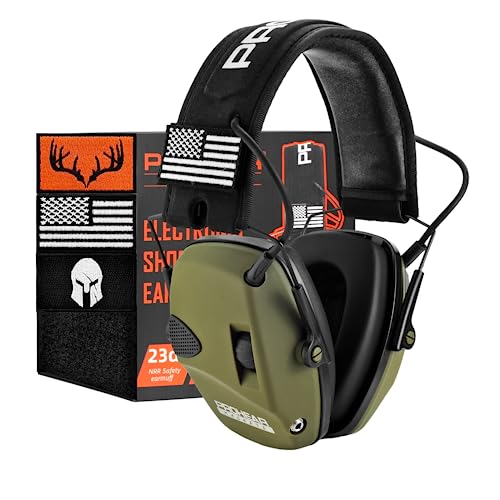 PROHEAR PROHEAR 066Light with long battery life
 Howard Leight R-02529Tied for longest battery
What shooting ear muffs are called
You will see the same product sold under several names. Most often they are called shooting earmuffs, ear protection for shooting, hearing protectors or ear defenders. Electronic versions are also called active hearing protection or electronic earmuffs.
All of these names describe the same basic idea: two sound-blocking cups joined by a headband that sit over your ears. The difference between models is mostly what happens inside the cups.
How passive muffs block sound
Passive muffs have no electronics. They work by putting several barriers between a gunshot and your eardrum.
The hard outer shell reflects and absorbs part of the sound energy. Foam lining inside the cup soaks up more of it. The ear cushion, which can be foam, memory foam or silicone, fills the gap between the cup and your head so sound cannot leak around the edge.
The headband matters too. It sets how firmly the cushions press against your head, and a good seal is what makes the muff perform as rated. Passive muffs also never run out of power. On our comparison page, the passive models list higher NRRs than the electronic ones, with one passive pair listing 34 dB at 7.2 oz and another listing 37 dB at 12 oz.
How electronic muffs work
Electronic muffs still have the same shell, foam and cushions. The passive barrier is always there, even if the batteries die. On top of that, they add a few parts that handle sound intelligently.
Small microphones on the outside of the cups pick up the sounds around you. A circuit then decides what to do with each sound before a speaker inside the cup plays it back to your ear.
- Quiet sounds, such as range commands, conversation and footsteps, are amplified so you can hear them.
- Loud sounds, such as a gunshot, trigger a cutoff or compression so the speaker does not pass them through at full volume.
- Several microphones, placed on both sides, let you tell which direction a sound came from.
What the product specs say
Published specs show these ideas in practice. The Howard Leight Impact Sport lists 4X amplification, two omnidirectional microphones and a cutoff of loud impulse noise to 82 dB. The PROHEAR 066 lists amplification of up to 4x and says it suppresses harmful noises like gunshots in under 0.01 seconds. The Walker's Razor Slim uses two high-gain microphones for omnidirectional hearing.
These are manufacturer claims from published listings, not results we measured. They do show how electronic muffs describe their job: let useful sound in, keep harmful sound out.
Electronic muffs run on batteries. Among the models on our page that list battery life, the range is 300 to 350 hours. The PROHEAR 066, for example, lists 2 AAA batteries and 300 hours. Some models also include an audio input jack, which lets you plug in a phone or other source.
Understanding NRR
NRR stands for noise reduction rating, and it is given in decibels (dB). A higher number means the muff is rated to block more sound. On our best earmuffs for shooting page, listed NRRs run from 22 dB to 37 dB.
The rating comes from lab testing under ideal conditions. In real use, a poor seal can lower the protection you actually get. Glasses arms, long hair, a hat or a cheek-weld against a rifle stock can all break the cushion seal.
Here is a quick way to compare the two types.
| Feature | Passive muffs | Electronic muffs |
|---|---|---|
| Power | None needed | Batteries |
| How they block loud sound | Shell, foam and cushion seal | Same, plus loud-sound cutoff |
| Hearing quiet sounds | Muffled along with everything else | Amplified through microphones |
| NRR on our page | Higher (34 to 37 dB listed) | Lower (22 to 23 dB listed where given) |
| Best fit | Maximum blocking, simple use | Range commands and awareness |
Fit and comfort decide how well they work
Even the best design only helps if it seals. Look for an adjustable headband so the cups sit fully around your ears. Low-profile cups leave room for a rifle or shotgun stock against your cheek, and cups designed to be glasses-friendly help the seal around eyewear.
Weight also affects comfort over a long session. Listed weights on our page range widely, from 7.2 oz for a light passive pair to 25.57 oz for the heaviest model. If you shoot for hours, comfort will affect whether you keep the muffs on.
For more detail on choosing between models, see our comparison of shooting earmuffs.
Safety notes
Hearing damage from gunfire can happen quickly and is permanent. Keep these points in mind.
- Wear your muffs before anyone fires, and keep them on until shooting stops.
- Wear eye protection as well, and check that the arms do not break the cup seal.
- For indoor ranges or very loud firearms, many shooters add foam earplugs under the muffs. Check the fit so the muffs still seal.
- Test electronic muffs before each session, and replace batteries early. If the electronics fail, you still have the passive barrier, but you lose amplification.
- Inspect cushions for cracks or flattening. Worn cushions let sound leak in.
- Do not rely on volume controls to be safe in noise. Turn amplification down if sounds feel uncomfortably loud.
Frequently asked questions
Do electronic shooting muffs block sound when the batteries are dead?
Yes, they still block sound passively through the shell, foam and cushions. You lose amplification, and the sound you can hear drops, but the basic protection stays.
Why do some muffs feel tight at first?
A snug clamp helps the cushions seal. Some makers say a new pair needs a short break-in period to loosen up. Always adjust the headband so the cups sit fully around your ears.
Can I use shooting muffs for other loud jobs?
Yes. Some listings mention lawn mowing, woodworking and chainsawing. Check that the NRR is right for the noise level and wear any other safety gear the job needs.
Are muffs or earplugs better for shooting?
Each has strengths. Muffs are quick to put on and easy to check for a seal. Plugs are small and work well under other gear. Many shooters use both for added protection on loud ranges.