How Do Leak Detectors Work? Sensors, Alarms and Alerts Explained
Most home leak detectors have metal probes that sit on the floor. When water touches them, it completes a tiny electrical circuit, and the sensor sounds an alarm, sends a wireless signal to a hub, or both. Other systems watch the flow of water in your pipes instead, but a simple spot sensor is the most common kind.
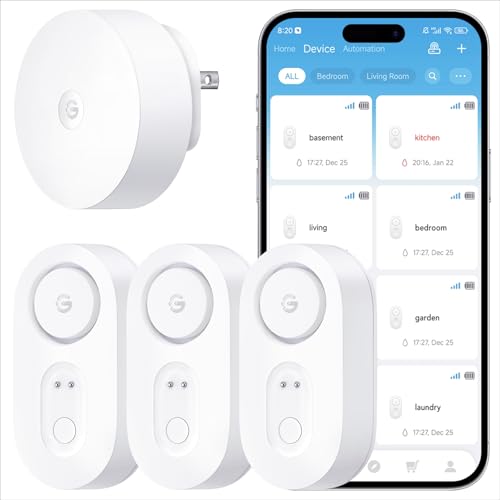 GoveeLife H5059+H5044Best overall
 YoLink YS1603+6YS7906Freeze alerts and shutoff
 YoLink YS1603+4YS7903Long-range shutoff starter
The basic idea: water closes a circuit
A typical spot leak sensor is a small, flat unit with metal contacts on its underside. Dry air does not conduct electricity well, so the circuit between those contacts stays open. When a drip or puddle bridges the contacts, water carries a small current between them. The sensor's electronics notice the change and treat it as a leak.
That is why these sensors react to even a thin film of water on a flat surface. Some models add extra probes on top of the housing. The listings for the GoveeLife Smart Water Leak Detector 2 and the RUIKORING 5-Pack both describe 2 top probes and 4 bottom probes. The bottom probes catch drips and pooling on the floor. The top probes can respond to heavier moisture, such as mist or a spray from above.
The sensor does not measure how much water there is. It only knows that water is present where it should not be, which is usually all you need to act early.
What happens after a sensor detects water
Once the circuit closes, the sensor does one or more of three things. Which ones depend on the model, so it is worth checking before you buy.
Our best leak detector page compares these alert options side by side.
- Sounds a local alarm. The sensor beeps loudly and often flashes a light. This helps when someone is home to hear it.
- Sends a wireless message. The sensor talks to a hub, which relays the alert to your phone by app, text or email. This helps when you are at work or traveling.
- Triggers other equipment. Some systems can signal a compatible automatic shutoff valve, which closes the water supply. The YoLink kits on our list support this, and the valve hardware is sold separately.
How the signal reaches your phone
Sensors under sinks and behind appliances are small and battery powered, so they use low-power radio rather than home Wi-Fi. A hub plugs into power and connects to your router. The sensors talk to the hub by long-range radio, and the hub passes the alert along over the internet.
Because of this, a hub kit needs a spot where your router can reach it. If the hub loses power or internet, phone alerts can stop, though the sensors may still sound their own alarms where they have one.
Listed ranges for the hub kits we compare run from 1804 ft to 2034 ft. Those figures are open-air distances. Walls, metal appliances and floors cut the real range, so test your farthest sensor after setup. The YoLink listings say this directly, noting that walls, metal and placement affect actual range.
Other ways leak detection works
Spot sensors are not the only approach. Some systems monitor the plumbing itself, which is useful for leaks you cannot see. This table compares the main types in plain terms.
Whole-home flow and acoustic systems are usually installed on the main supply line and may need a plumber. The products on our comparison page are spot sensor kits, which you can place yourself.
| Type | How it detects a leak | Best for |
|---|---|---|
| Spot water sensor | Water bridges metal contacts on the floor | Under sinks, near water heaters, washers and toilets |
| Flow monitor | Tracks water moving through a pipe and flags unusual patterns | Hidden leaks and running fixtures |
| Acoustic detector | Listens for the sound a leak makes in a pipe | Finding a leak's location in pipes |
| Sensor plus shutoff valve | A sensor signals a valve to close the supply | Stopping water without waiting for you |
Specs that change how a detector performs
Because the detection method is similar across spot sensors, the differences come down to alerts, range, durability and count. Here is how several products on our page compare, using their published specifications.
Note the RUIKORING pack has no app alerts, so it only helps when someone can hear it. The YoLink Starter Kit has silent sensors, so it relies on phone alerts.
Waterproof ratings matter because sensors live on wet floors. As our buying guide explains, IP67 allows short immersion and IP66 resists strong water jets. Battery life is also worth a look, since a forgotten dead battery means no protection. Most kits here list 5 years.
| Product | Connectivity | Range | Alarm | Sensors | Rating |
|---|---|---|---|---|---|
| GoveeLife 3-Pack | Hub + app | 1804 ft | 105 dB | 3 | IP67 |
| YoLink 4 Kit | Hub + app | 2034 ft | 105 dB | 6 | IP67 |
| YoLink 1 Starter Kit | Hub + app | 2034 ft | Silent | 4 | IP68 |
| GoveeLife Detector 2 | Hub + app | 1968 ft | 100 dB | 6 | IP66 |
| RUIKORING 5-Pack | Standalone | None listed | 120 dB | 5 | IP67 |
Placing sensors so they work
A detector only helps if water reaches it. Put one sensor at each spot where a leak is likely, lying flat where water would first pool. Good places include:
- Beside the water heater
- Behind the washing machine and under the dishwasher
- Under kitchen and bathroom sinks
- Next to toilets
- Near a sump pump or in a basement low point
Safety notes
Water and electricity do not mix. If a sensor alarms near outlets, appliances or a power strip, do not step into standing water. Turn off power at the breaker first, if you can reach it from a dry spot, and call an electrician if you are unsure.
Loud alarms are meant to be heard across a house. Listings for the units we compare go up to 105 dB for hub kits and 120 dB for the standalone pack. If you test one up close, keep it away from your ears or wear hearing protection.
Installing a shutoff valve means working on your water supply. Hire a licensed plumber if you are not comfortable cutting into pipes. Also keep sensors indoors unless the maker says otherwise. The YoLink Starter Kit listing says indoor use only and warns against continuous submersion.
Frequently asked questions
Do leak detectors need Wi-Fi?
Not always. Standalone alarms work on their own and just make noise. Hub kits need the hub connected to your router, usually by Ethernet or 2.4 GHz Wi-Fi, to send phone alerts.
Can a sensor be reused after it detects water?
Generally yes. Wipe the probes dry and place it again. The GoveeLife 3-Pack listing says it can be used multiple times after wiping dry.
Will a leak detector stop the leak?
On its own, no. It warns you. To stop water automatically, you need a compatible shutoff valve, which is sold separately for the kits that support it.
How do I know the battery is still good?
Hub kits typically show battery status in the app, and the YoLink listings say so. Standalone alarms often flash a light when the battery runs low.
Why might a sensor give a false alarm?
Heavy humidity, mist or a splash can touch the probes. Sensors with top probes can react to that kind of moisture. Dry the sensor and move it if it keeps happening.