Heavy Duty vs Regular Staples: Key Differences
Heavy duty staples are thicker and longer than regular staples, so they can pass through bigger stacks of paper without bending. They also need a stapler built for them, which is why the two types are not usually interchangeable. If you staple more than about 50 sheets, or you work with thick manuals and booklets, a heavy duty stapler and matching staples are the better fit.
 Swihauk NN0652ABest everyday desk stapler
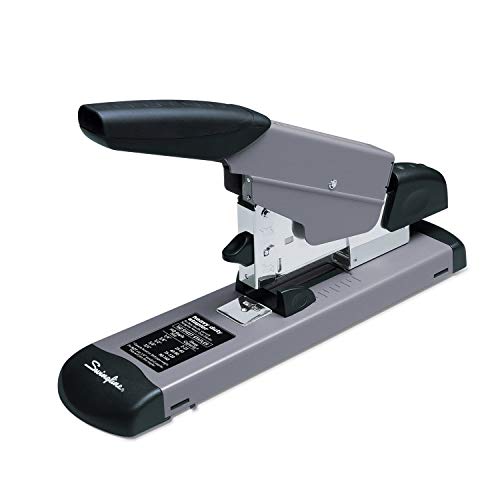 Swingline S7039005ABest Swingline
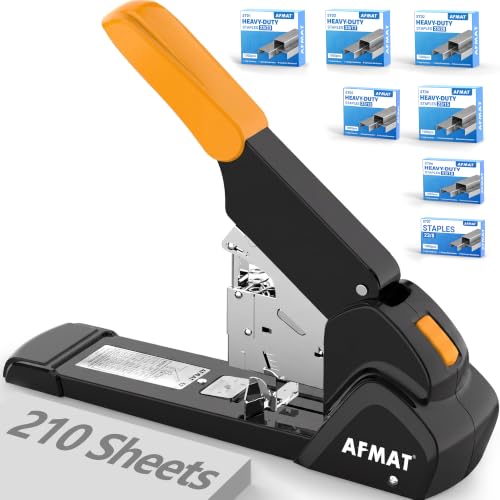 AFMAT ES15ORHighest capacity
The core differences at a glance
Regular and heavy duty staplers work the same way. A driver pushes a staple through the paper, and an anvil folds the legs flat on the other side. The difference is in how much stack the tool can handle and how it is built to handle it.
Regular staples are made from thinner wire with short legs. They suit everyday jobs such as stapling a few pages together. Heavy duty staples use thicker wire and longer legs, which helps them punch through and hold thick stacks. The stapler that drives them needs a stronger mechanism and a sturdier frame to do it.
| Feature | Regular stapler | Heavy duty stapler |
|---|---|---|
| Typical sheet capacity (our comparison data) | 40 to 70 sheets for desk models | 100 to 220 sheets for true heavy duty models |
| Staples | Standard short-leg staples | Longer, thicker staples, often in several lengths |
| Build | Often mixes metal and plastic | All-metal frames are common among heavy duty models |
| Effort | Light press for small stacks | Can take more force, unless it uses a reduced-effort lever design |
| Best for | Homework, memos, small reports | Thick reports, manuals, booklets, bulk paperwork |
Why staple size and wire matter
A staple has to do two jobs. It must get through the stack, and its legs must be long enough to fold over and grip. If the legs are too short for the stack, they will not curl back properly and the pages can slip out. If the wire is too thin, it can buckle as it goes in.
That is why heavy duty staplers come with several staple lengths. The Swingline Heavy Duty 160-Sheet Stapler, for example, lists a 1/4 in to 3/4 in leg range. Its listing says to pick the staple length based on how many sheets you are fastening, and that the stapler performs well only with certain staples at each capacity.
Shorter lengths are for thinner stacks, and longer ones are for the biggest stacks. Keeping two or three lengths on hand is a sensible habit if your workload varies.
Heavy duty does not always mean one staple type
Heavy duty is a broad label, and models vary in what they accept. Some are built around a single heavy staple. The Amazon Basics Effortless Heavy-Duty Stapler is rated for up to 210 sheets and comes with 15/16 in heavy-duty staples. Its listing notes that it has to be used with heavy duty staples or it will not work properly.
Others take staples you may already own. The Bostitch Titan Heavy Duty Stapler is rated for 50 sheets. It uses 1/4 in standard staples for 2 to 25 sheets and 5/16 in extended staples for 26 to 50 sheets. The Swihauk Heavy Duty Metal Stapler also lists 1/4 in and 5/16 in staples at a 50-sheet capacity.
So a heavy duty label can mean a 50-sheet desk stapler or a 200-sheet machine. Always check the capacity and staple size in the specs rather than relying on the name. Our best heavy duty stapler comparison lists both capacity and accepted staple sizes side by side.
Can you use heavy duty staples in a regular stapler?
In most cases, no. Heavy duty staples are wider and thicker, and they usually do not fit the narrow channel of a regular stapler. Forcing them in can cause jams, bent staples or damage to the mechanism.
The reverse can work in some cases. A few staplers sold as heavy duty accept standard 1/4 in staples as well as longer ones, as the Bostitch Titan and Swihauk models above do. Others, like the Amazon Basics model, need their own staple type.
Before you buy a box of staples, follow these steps:
- Look up the staple size printed in your stapler's manual or on its body.
- Match the box label to that size, including leg length and staple series.
- Check the sheet range on the staple box and compare it with your typical stack.
- If you are unsure, buy a small box first and test a few staples on scrap paper.
Light vs heavy duty staple guns
Staple guns are a different tool from desk staplers, though the same naming idea applies. They drive staples into wood, fabric backing, insulation or other materials rather than paper. A lighter staple gun suits upholstery fabric, craft projects and thin material. A heavier one, with thicker staples, suits tougher jobs such as fastening into harder surfaces.
The staples are not interchangeable between tools. Check the staple type listed for your gun, including the series and leg length. Our comparison page covers desk staplers, so for staple guns, follow the manufacturer's specifications on the tool itself.
How to choose between them
Start with the thickest stack you staple regularly, not the average one. If most of your work is under 25 sheets with the occasional thick report, a 50-sheet model with extended staples may be enough. If you bind large stacks every day, look at models rated for 100 sheets or more.
Effort is the second factor. Reduced-effort designs use leverage to lower the force needed, which helps if you staple often or have hand or wrist pain. The AFMAT ES15 is rated for 220 sheets and its listing claims up to 60% less hand pressure than standard staplers. Features like front jam clearing and a non-slip base also make long stapling sessions easier.
If you are comparing several models, our heavy duty stapler comparison puts capacity, staple size, weight and build on one spec sheet.
Safety and care
Stapling looks harmless, but heavy duty tools store a lot of force.
Keep your fingers clear of the staple exit and anvil, and never test a stapler by pressing it against your hand. Staples can occasionally fire out sideways or bounce back, so wear safety glasses when using a staple gun or a plier stapler on hard material. Use a stable surface so the tool does not slip under pressure, and clear jams with the stapler pointed away from you.
Store staples dry, since rust can cause jams and leave marks on paper.
Frequently asked questions
Is a heavy duty stapler overkill for small stacks?
Usually it works fine, but check the minimum sheet range. Some models list a minimum, so very thin stacks may not be held as neatly.
Do heavy duty staplers need more effort to press?
Often they do, because they drive longer, thicker staples. Reduced-effort or lever designs lower the force needed, so look for one if you staple often.
How do I know which staple length to use?
Match the length to your stack. Short legs for thin stacks, longer legs for thick ones. The staple box usually lists a sheet range, and your stapler's manual lists the lengths it accepts.
Will a staple remover work on heavy duty staples?
Many removers handle standard staples only. Thicker staples may need a sturdier remover, and some kits include one sized for the staples in the box.