Heat Tape vs Pipe Insulation: Which Protects Pipes?
Heat tape protects pipes better on its own because it adds heat, while pipe insulation only slows the loss of heat the pipe already has. For pipes that see hard freezes, the best setup is a self-regulating heat cable covered with insulation. For mild climates or indoor pipes, insulation alone is often enough.
 Radiant Solutions Company HTP-1-37Best overall
 JDZKOMKE 100FTBest long run
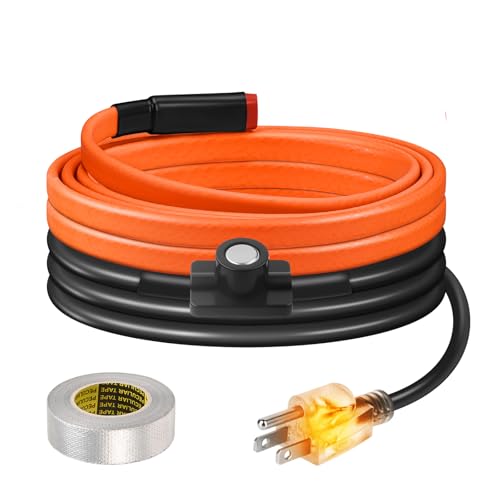 BDDFOTO OR-ParentBest for short pipes
The short version: one adds heat, one holds it
Pipe insulation is a passive layer. It slows how fast cold air pulls warmth out of a pipe, but it does not make any heat. If a pipe sits in freezing air long enough, insulated water will still freeze. The insulation just buys you extra hours.
Heat tape, also called heat cable, is active. It runs along the pipe and puts warmth back in, so the water stays above freezing even during a long cold snap. That is why the two are not really rivals. One replaces lost heat, and the other reduces how much heat is lost in the first place.
Which one you need depends on how cold the pipe location gets, how long the cold lasts, and how exposed the pipe is.
How each option works
Foam or fiberglass insulation wraps around the pipe and traps a thin layer of still air. It works well for pipes in crawl spaces, garages, and basements that stay a little above outdoor temperatures. It needs no power, has no moving parts, and lasts for years.
Heat tape is an electric cable. Self-regulating types, which we recommend for water pipes, raise their output as the pipe gets colder and ease off as it warms. Many self-regulating cables can also touch or cross themselves without overheating, though you should always check the maker's rules before overlapping one.
Some cables include a built-in thermostat so they only run when needed. For example, the HEATIT 40 ft cable on our spec sheet is rated at 3 W/ft and its thermostat turns on at 38°F and off at 50°F. That kind of control keeps the cable from running on mild days.
Side-by-side comparison
Here is how the main approaches stack up for a typical water pipe in a cold space.
| Approach | Adds heat? | Needs power? | Best for | Main weakness |
|---|---|---|---|---|
| Insulation only | No | No | Indoor or sheltered pipes in mild freezes | Can only delay freezing |
| Heat tape only | Yes | Yes | Short, brief cold spells | Loses heat fast to open air |
| Heat tape plus insulation | Yes | Yes | Exposed pipes, hard or long freezes | Needs correct installation |
| Heated hose | Yes | Yes | Garden or RV hoses, not fixed plumbing | Covers a hose, not your house pipes |
When insulation alone is enough
Insulation by itself can work if the pipe is inside a heated or semi-heated space, the cold is brief, and the pipe is not on an exterior wall. Think of a basement pipe near the furnace, or a utility room line that only gets cold during a short dip.
It also helps to seal drafts near pipes. Cold air blowing across a pipe does far more harm than still cold air, so closing gaps around where pipes enter the house is a cheap first step.
If you want to compare materials, thicknesses, and fit, see our best pipe insulation page.
When you need heat tape
Choose heat tape when a pipe is exposed to outdoor air, runs through an unheated space, or has frozen before. Pipes on exterior walls, hose bibs, well lines, and crawl space runs are common trouble spots.
Heat tape matters most when cold lasts for days. Insulation slows heat loss, but without any heat source the pipe will eventually match the outside temperature.
Our best heat tape for water pipes page lays out the specs side by side. A few examples from the data:
- JDZKOMKE 100 ft cable: 5 W/ft, rated to -40°F, IP67 waterproof, UL listed full cable, works on copper, PVC, PEX and stainless steel.
- BDDFOTO 3 ft cable: 8 W/ft with a built-in thermostat, a high output suited to a short pipe, though no safety certification is stated.
- HEATIT 40 ft cable: 3 W/ft self-regulating, ETL certified, with a built-in thermostat.
- Radiant Solutions HeatTapePro 37 ft: 6 W/ft self-regulating, UL listed full cable, safe to overlap.
Why combining both works best
Heat tape alone wastes energy because the heat it makes escapes into the air. Add insulation over it, and the same heat stays near the pipe, so the cable can do its job with less effort. On cold nights, that can be the difference between a pipe that stays clear and one that slushes up.
The pairing also protects the cable and the pipe from wind and moisture. Use an outdoor-rated cable for exposed runs, and keep the insulation dry, since wet insulation loses much of its value.
Follow this order for a safe install:
- Turn off and unplug the cable before you handle it, and check it for cuts or cracks.
- Run the cable along the pipe as the instructions say. Many makers want it straight along the pipe or spiraled, and only some allow overlapping.
- Secure it with the tape the maker recommends, not just any tape.
- Place the thermostat sensor where the instructions say, since it needs to read the right temperature.
- Cover the cable with insulation that is suitable for use with heating cable, then seal the seams.
- Plug into a GFCI outlet and test the setup before the first freeze.
Safety notes before you start
Electricity and water are a risky mix. Use only a cable with a UL or ETL listing on the whole cable, not just the plug, and plug it into a GFCI outlet. Never splice or cut a cable unless the maker clearly allows it.
Do not use a cable on pipes it was not made for. Some cables are for water-filled pipes only, and the JDZKOMKE listing, for instance, warns against fuel lines and gutters. Check the pipe material too, since some cables suit metal and plastic and others do not.
If a cable looks damaged, smells hot, or trips the GFCI, stop using it and replace it. If you work on a ladder or in a crawl space, take your time, wear gloves, and use eye protection when cutting insulation or working overhead.
Frequently asked questions
Is heat tape better than a heated hose?
They solve different problems. A heated hose is built to carry water outdoors, such as for a garden or RV. Heat tape is for fixed plumbing like copper, PVC, or PEX pipes, and some tapes can also protect hoses if the maker says so.
Can I use heat tape on plastic pipes?
Often yes, but only if the cable says it suits plastic. Look for compatibility with PVC and PEX, and follow the maker's temperature and installation rules closely.
Do I leave heat tape plugged in all winter?
With a built-in thermostat, it only runs when the pipe is cold, so it can stay plugged in. Without one, you may need to plug it in by hand when a freeze is forecast and unplug it afterward.
Should I insulate over heat tape?
Usually yes, since insulation holds the heat in. Check the cable's instructions first, because some makers set rules on insulation type and thermostat placement.