Hammer vs Mallet: What Is the Difference and When to Use Each?
A hammer has a hard metal head built to drive and pull nails. A mallet has a softer head, usually rubber, wood or rawhide, built to tap parts together or strike another tool without denting or marring the work. If a nail is involved, grab a hammer. If you want to move something without damaging it, grab a mallet.
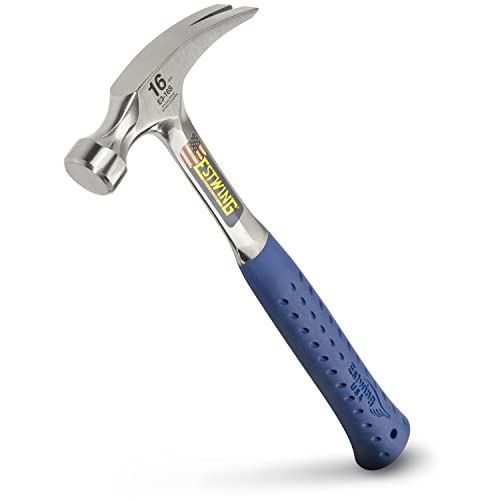 Estwing E3-16SBest overall
 Jorgensen 60102Magnetic starter, 20 oz head
 Estwing E3-16CCurved claw for prying
The core difference: hard face vs soft face
The main difference is what the head is made of and what it does to the surface it hits. A hammer usually has a forged steel head that transfers almost all of its energy into a small spot. That is exactly what you want when you are sinking a nail, but it will dent wood, scar metal and chip tile.
A mallet spreads the blow over a larger, softer face. Rubber, wood, rawhide and plastic all give a little on impact, so the force moves the part without crushing it. The trade-off is that a mallet cannot drive a nail, because a soft face has no way to focus the energy.
Here are the other differences you will notice right away:
- Head material: hardened steel on a hammer, softer materials on a mallet.
- Head shape: most hammers have a claw or peen opposite the face, while most mallets have two faces of equal size or a single large face.
- Purpose: hammers drive and pull fasteners, while mallets persuade parts, tap tools and form material.
- Surface damage: a hammer leaves marks, while a mallet usually leaves none.
When a hammer is the right tool
Use a hammer whenever you need to drive a nail, set a fastener, or pull one back out. Framing, trim work, deck repairs, hanging a shelf and light demolition all call for a steel face and, in most cases, a claw.
The claw matters as much as the head. A rip claw is straighter and suits pulling nails and tearing boards apart. A curved claw gives more leverage for prying, which is why the Estwing E3-16C lists extra torque for pulling and prying. Our best hammer comparison shows claw type next to head weight so you can match the tool to the work.
Head weight changes how the hammer feels. A 16 oz head suits general repairs and trim, as with the Estwing E3-16S, which has a total weight of 1 lb. Heavier heads, such as the 20 oz Jorgensen 60102 or the 22 oz Spec Ops SPEC-M22CF, add driving power for framing but tire your arm sooner over a long day.
When a mallet is the right tool
A mallet is for jobs where you want force without damage. The classic example is woodworking. Tapping a chisel with a steel hammer can mushroom the handle end and chip the hammer, while a wooden or rubber mallet gives a controlled, forgiving strike.
Mallets are also the better choice for assembly and fitting. Think of knocking together a dry joint, seating a drawer front, tapping a flat-pack furniture dowel into place or nudging a stubborn panel. A rubber face will not dent the surface or crush the edges of the part.
Outdoors, a mallet drives tent stakes and garden edging without splitting them. Here, the soft face is about protecting the stake, and the larger face is easier to land squarely than a small steel one.
Different mallet materials suit different jobs:
- Rubber: good for assembly, flooring and anything with a finished surface.
- Wood: the traditional choice for striking chisels and carving tools.
- Rawhide: firm yet non-marring, handy for fitting parts and light shaping.
- Dead blow (shot-filled): reduces rebound so the head stays put after the strike.
Quick comparison by job
This table matches common tasks to the better tool. It is a general guide, and there will always be edge cases.
| Job | Better tool | Why |
|---|---|---|
| Driving framing or finish nails | Hammer | Hard face focuses force on the nail head |
| Pulling nails | Hammer (claw) | Only a claw gives the leverage |
| Striking a wood chisel | Mallet | Protects the chisel handle and the tool |
| Assembling furniture | Rubber mallet | Moves parts without denting them |
| Driving tent stakes | Mallet | Soft face spares the stake |
| Demolition and prying | Hammer (rip claw) | Steel and a straight claw handle rough work |
| Tapping parts on finished surfaces | Mallet | Leaves fewer marks |
Can one tool do both jobs?
Sometimes. A few hammers are designed to cover light mallet work, and it is a useful option if you want to carry one tool instead of two. The Spec Ops SPEC-M16SF lists a removable engineered rubber mallet cap alongside its 16 oz head, a rip claw, a side nail puller and a magnetic nail starter. In our best hammer list, it is the pick for a removable mallet cap.
Another way to reduce marks is to choose a hammer with a smooth face. The Estwing E3-16S and the CRAFTSMAN CMHT51398 both list smooth faces, which leave fewer marks than milled faces. A milled face grips the nail head better, but it can print a waffle pattern into the wood if you miss.
A combination tool still has limits. A cap on a hammer head is small compared with a full-size mallet, so for heavy chisel work or big assembly jobs a dedicated mallet gives you better control. For occasional jobs, the cap is a reasonable compromise. You can compare these options side by side in our hammer comparison.
Safety notes
Both tools put a lot of force into a small area, so a few habits are worth adopting.
Wear safety glasses whenever you strike something. Nails can bend and fly, and steel faces can send out chips. Hearing protection is smart if you are hammering for a long time or working in an enclosed space.
Check the head before each use. A loose head on a wooden handle can fly off, and a cracked fiberglass or wood handle can fail. One-piece forged steel hammers avoid the joint problem, since the head and handle are a single piece, as with the Estwing and Jorgensen forged models.
Never strike one hardened steel tool with another unless the tool is made for it. Hitting a hammer against a chisel, a punch or another hammer can chip hardened steel and throw sharp fragments. Use a mallet or a tool designed for striking instead.
Keep your free hand clear. A magnetic nail starter, such as the one on the Jorgensen 60102, lets you set a nail one-handed so your fingers stay out of the strike zone.
How to choose
Start with the work you do most. If you mostly fix, build and hang things, a claw hammer is the tool you will reach for daily, and a mallet is a helpful second tool. If you mostly assemble furniture, work with chisels or handle finished surfaces, a mallet will earn its place first.
For most households, owning both makes sense. A 16 oz hammer handles general repairs, and a rubber mallet covers the jobs where you cannot afford a mark. Add a wooden mallet later if you take up woodworking.
When you pick a hammer, check head weight, handle material and grip. Steel handles are durable but pass shock to your hand, and a shock reduction grip helps if you hammer for long stretches. Estwing says its molded grip reduces impact vibration by 70%. Fiberglass handles absorb more vibration, as on the CRAFTSMAN model, though that listing does not mention shock reduction.
Frequently asked questions
Is a rubber mallet strong enough to drive nails?
No. A rubber face absorbs and spreads the blow, so it cannot focus enough force on a nail head. Use a steel hammer for nails.
Can I use a hammer to hit a chisel?
It is best to use a mallet. A steel hammer can damage the chisel handle and chip hardened steel, which is a hazard. Wood, rawhide or plastic mallets are the usual choices.
What is a dead blow mallet?
It is a mallet with a hollow head filled with shot or sand. The filling reduces rebound, so the head stays on the target and delivers more of its energy in one strike.
Which is better for assembling flat-pack furniture?
A rubber mallet. It seats dowels and panels without denting the finish. If you use a hammer, place a scrap of wood between the head and the part.