Hammer Drill Mode vs Drill Mode: Which Setting to Use
Use drill mode (the plain drill icon) for wood, metal, plastic and drywall. Switch to hammer mode (the hammer icon) only when you drill into masonry such as concrete, brick or block, and pair it with a carbide-tipped masonry bit. Hammer mode on soft materials can chew up the hole and wear out your bit.
 Hammerhead HAHD075Best overall on specs
 DEWALT DCD806BLightest in the lineup
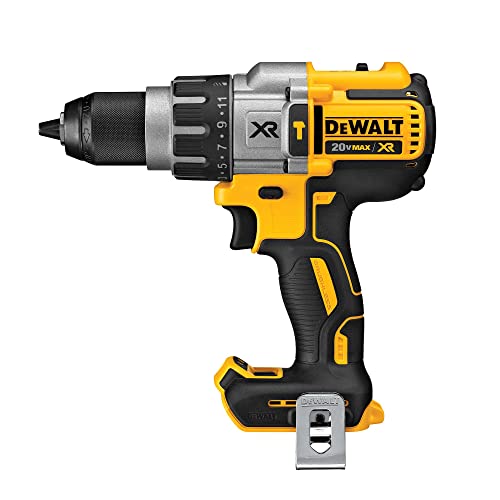 DEWALT DCD996BCordless with BPM listed
What each mode actually does
In drill mode, the chuck only spins. The bit cuts by rotating, which is exactly what you want in wood, metal and plastic, where the bit slices away material.
In hammer mode, the chuck still spins, but it also pulses forward and back in tiny, rapid strikes. The bit does not slice through masonry so much as crush and chip it while it turns. The spinning clears the dust out of the hole, and the strikes keep the tip moving into hard material.
Most hammer drills use a simple selector with two positions, usually a drill icon and a hammer icon. Some listings call this a 2-in-1 or 2-mode design. For example, the Bosch 1191VSRK listing describes a selector that switches from rotation only to hammer drill, and the BLACK+DECKER BEHD201 listing describes a 2-position switch for wood versus masonry.
How a hammer drill works inside
Inside the housing, two toothed or ridged discs sit on the drive shaft. In drill mode they are kept apart, so the shaft just spins. In hammer mode, the discs engage. As one disc turns against the other, the teeth ride up and over each other, and that pushes the spindle forward and back many times each second.
That rate is the blows per minute, or BPM. A higher BPM means more strikes each minute. Among the products on our best hammer drill cordless page, the listed BPM runs from 25500 to 52700, so the numbers vary a lot from tool to tool.
This is a light, fast tapping action. It is not the same as a rotary hammer, which uses a piston mechanism and hits much harder. A standard hammer drill is a good fit for brick, block and lighter concrete work, but it is not built for heavy chiseling or lots of large holes.
Which setting for which material
Match the mode to what is behind the surface of the material. The table below gives a simple starting point.
If you are unsure, start in drill mode with the right bit. You can always switch to hammer mode if a masonry bit stops making progress.
| Material | Mode | Bit type | Notes |
|---|---|---|---|
| Wood | Drill | Twist or brad point | Hammer mode tears the fibers and can wander off line |
| Metal | Drill | Metal-rated twist bit | Go slower and use a punch mark to start the hole |
| Drywall and plastic | Drill | Standard twist bit | Hammer mode can crack or shatter thin material |
| Brick and block | Hammer | Carbide-tipped masonry bit | Good match for the hammer action |
| Concrete | Hammer | Carbide-tipped masonry bit | Check the tool limits for reinforced concrete |
| Tile | Drill first | Tile or glass bit | Use hammer mode only for the masonry behind it, if at all |
What setting to use on concrete
For concrete, choose hammer mode and use a masonry bit with a carbide tip. A plain twist bit will overheat and dull quickly, because it is made to cut, not to crush.
Use the higher speed range only if the bit and the job call for it, and let the hammer action do the work. Pushing harder rarely helps. It tends to stall the tool and heat the bit.
Pay attention to what the maker says about reinforced concrete. The Hammerhead HAHD075 listing, for example, notes that the drill can not be used in reinforced concrete walls. If your hole may hit rebar, a tool of this type is the wrong choice, and you should look at a heavier tool instead.
How to use a cordless hammer drill on concrete
Cordless models give you freedom to move, but the same technique applies. Here is a simple routine.
First, confirm your tool really runs on a battery. Several top-ranked listings on our cordless page are corded, so check before you buy. If you prefer a plug-in tool, see our best hammer drill corded page.
- Mark the spot and put on safety glasses, hearing protection and a dust mask.
- Fit a carbide-tipped masonry bit and tighten the chuck fully. Keyless chucks tighten by hand, and keyed chucks need the key.
- Set the selector to the hammer icon and attach the side handle if your tool has one.
- Set a depth stop or depth rod if your tool has one, or wrap a piece of tape around the bit as a marker.
- Start slowly to seat the bit, then increase speed with the trigger. Keep the bit straight.
- Pull the bit out partway every so often to clear dust and let it cool.
- Stop when you reach the depth mark, switch off, and wait for the bit to stop before setting the tool down.
Specs worth checking before you buy
If you will use hammer mode often, look at the published specs, not only the name. BPM matters for masonry, but weight and length matter too, especially for overhead holes. Listed weights on our cordless page run from 3.49 lb to 8.15 lb, among the nine models that list weight.
As examples, the DEWALT DCD996B lists 38250 BPM and 2250 RPM in a 20V MAX XR brushless drill, while the Craftsman V20 kit lists 25500 BPM and 1500 RPM. The DEWALT DCD806B lists 3.49 lb, the lowest weight in that lineup.
If you mainly drill wood and metal and only need hammer mode now and then, a standard model may serve you well. Our best drill page covers general-purpose options.
Safety notes
Hammer drilling throws dust and chips, and it is loud. Treat it like a job that needs full protection, not a quick poke at a wall.
- Wear safety glasses, hearing protection and a dust mask rated for fine dust. Masonry dust can irritate your lungs.
- Check for hidden electrical wires, gas lines and water pipes before you drill into a wall or floor.
- Use the side handle when one is provided. A bit that jams can twist the tool hard in your hands.
- Keep cords clear of the bit on a corded tool, and do not use damaged cords.
- Use a stable ladder or platform for overhead work, and do not overreach.
- Let the bit cool before you touch it, since it can get hot.
Frequently asked questions
Can I use hammer mode on wood or metal?
It is not recommended. The striking action can splinter wood and wander on metal. Use drill mode with the right twist bit.
Do I need a special bit for hammer mode?
Yes. Use a carbide-tipped masonry bit for brick, block and concrete. Ordinary twist bits are not made for that kind of impact.
Why does my drill feel the same with hammer mode on?
The hammer action is a fast, light tapping. You often feel it more as a buzz and hear it as a rattling sound. It only works well when you press the bit against the material.
Is a hammer drill the same as an impact driver?
No. An impact driver delivers rotational blows for driving screws. A hammer drill delivers forward and back blows for drilling into masonry.
When do I need a rotary hammer instead?
Consider one for many large holes, reinforced concrete or chiseling. A standard hammer drill is better suited to lighter masonry work.