Garden Shears vs Pruners: What Is the Difference?
Pruners (also called pruning shears or secateurs) are compact, one-hand tools for cutting individual stems and small branches. Garden shears, usually meaning hedge shears, have long blades and two handles for trimming many thin shoots at once. Choose pruners for precise cuts on plants, and shears for shaping hedges and shrubs.
 FELCO F-2Best overall
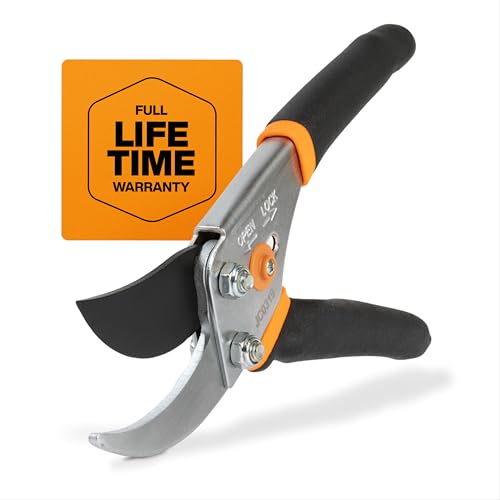 Fiskars 91095935JSap groove and coating
 Kynup V11 RedLight with 1 in capacity
The short version: one cuts single stems, the other shapes surfaces
The confusion starts with names. "Garden shears" is a loose term. Most often it means hedge shears: two long blades on two long handles, used with both hands. Sometimes it means small snips for herbs and flowers.
"Pruners" is clearer. It means a hand-held tool, about the size of your palm, that cuts one stem or branch at a time. You will also see it called pruning shears, hand pruners or secateurs. They are all the same kind of tool.
So the real question is whether you need a precise cutting tool or a surface-trimming tool. The rest of this guide helps you decide.
Names you will see for the same tools
Gardening words differ by region and by brand, which is why searches turn up mixed answers. This table sorts out the common ones.
| Name | What it usually means | Typical use |
|---|---|---|
| Pruners / hand pruners | One-hand cutting tool with a spring | Stems, roses, fruit trees, small branches |
| Pruning shears | Another name for hand pruners | Same as above |
| Secateurs | The UK and Commonwealth word for hand pruners | Same as above |
| Bypass pruners | Pruners whose blades pass like scissors | Live stems and green wood |
| Anvil pruners | Pruners with a blade that closes on a flat surface | Dead, dry wood |
| Hedge shears (often called garden shears) | Long blades, two long handles, two hands | Trimming hedges, shaping shrubs, edging |
| Garden snips | Small, light, scissor-like tool | Herbs, flowers, soft growth |
How pruners and hedge shears work differently
A pruner concentrates your hand strength into a short blade near the pivot. That is why it can cut a woody stem cleanly. You choose each cut: just above a bud, at a branch collar, or flush with a main stem.
Hedge shears spread the cutting over long blades. They are good at taking off a thin layer of soft new growth across a wide area. They are not meant for thick, woody stems. Forcing them through a branch can bend the blades or loosen the pivot.
Think of it this way:
- Pruners are for selecting. You decide exactly which stem goes.
- Hedge shears are for shaping. You trim an outline and accept a lot of small cuts.
- Neither one replaces loppers, which have long handles for branches too thick for hand pruners.
Bypass or anvil: the blade type matters most
If you are buying pruners, the blade type affects cut quality more than almost any other feature. A bypass blade passes by a hooked or flat lower blade, much like scissors. It makes clean cuts on live stems, so the plant heals better. An anvil blade presses down onto a flat surface. It can crush living tissue, so it suits dead wood better.
For most garden jobs, bypass is the safer choice. All ten models on our best pruning shears page use a bypass blade, so you are comparing like with like there.
The same idea applies to the shears debate. Hedge shears also work like scissors, which is why they leave a fairly tidy edge on soft growth. They simply lack the leverage for thick wood.
Cut capacity, weight and features for pruners
Once you know you want pruners, check three numbers on the spec sheet. Cut capacity is the thickest branch the tool can handle. Weight and length affect comfort over a long session. Extras like sap grooves, coatings and safety locks make care and storage easier.
On our page, cut capacity runs from 0.625 in to 1 in, and six models reach 1 in. Weight runs from 0.331 lb to 0.85 lb, and length from 8 in to 9.25 in. For example, the Felco F2 is listed at 1 in capacity, 0.55 lb and 9.25 in long, with replaceable parts. The Fiskars bypass model is listed at 0.625 in and adds a sap groove and a safety lock, which suits flower stems and green growth.
Staying under the stated capacity protects both the blade and your wrist. If a branch will not cut with light effort, switch to loppers or a saw instead of squeezing harder.
See the full side-by-side specs on our pruning shears comparison to match capacity and weight to your own plants.
Which one should you use for which job?
Use this checklist to pick the right tool for the task in front of you:
- Deadheading roses and cutting flower stems: bypass pruners or snips.
- Thinning shrubs and cutting back small branches: bypass pruners.
- Fruit tree pruning of small branches: bypass pruners with a higher capacity.
- Shaping a boxwood or privet hedge: hedge shears.
- Edging soft, overgrown growth across a wide area: hedge shears.
- Thick branches beyond pruner capacity: loppers or a pruning saw.
- Dead, dry stems: anvil pruners can work, though a bypass pair is fine if you keep it sharp.
Safety and care
Both tool types have sharp edges and sudden movement, so treat them with respect. Wear safety glasses, because cut stems can snap back toward your face. Gloves protect against thorns and blisters. Keep your free hand well clear of the blade path.
Lock pruners closed when you carry or store them. Many models list a safety lock, though not every maker does, so check the spec row. If you trim a tall hedge, use a stable ladder on level ground and avoid overreaching. Do not cut near power lines or while standing on a wobbly surface. Electric hedge trimmers are a different tool and need their own safety steps, including keeping the cable behind you.
To keep blades working well, wipe sap off after use and lightly oil the metal. A sap groove and low-friction coating help with sticky stems, but they do not replace cleaning.
Frequently asked questions
Can I use hedge shears instead of pruners on roses?
It is not a good idea. Hedge shears cut many stems in a rough line and cannot place a precise cut above a bud. Bypass pruners give a cleaner, more controlled cut.
What is the difference between secateurs and pruning shears?
Nothing in practice. Secateurs is the term used in the UK and some other regions, while pruning shears and hand pruners are common in the US.
Are bypass pruners good for left-handed users?
Many bypass pruners are symmetrical enough to work in either hand, and some makers state this in their listings. Check the product details, since handle shape and lock position vary.
What should I do when a branch is too thick for my pruners?
Switch to loppers or a pruning saw. Forcing the cut can damage the blade and strain your hand.
Do I need to sharpen pruners?
Yes, dull blades crush stems and make you squeeze harder. Models with replaceable parts let you swap worn pieces instead of replacing the whole tool.