Fire Extinguisher for a Garage vs a House: What Changes?
A garage needs an extinguisher that covers Class A, B and C fires, with more agent and a wider temperature range than a typical indoor unit. A house can use a lighter, easier-to-handle unit placed near the kitchen and bedrooms. The rating you want is mostly the same, but size, temperature limits and mounting spots change.
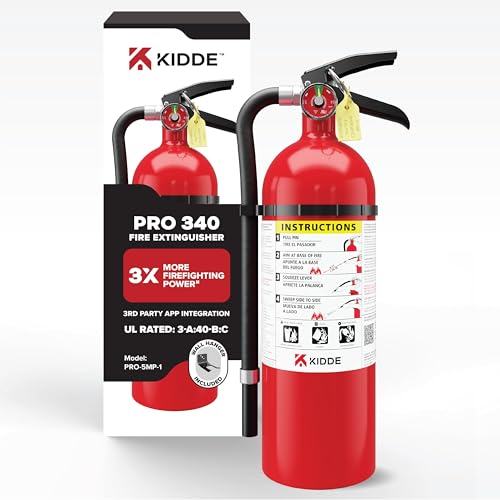 Kidde PRO-5MP-1Best overall
 Kidde FA110GLightest in the lineup
 Kidde KD143-210ABC12-year life with mount
The short version: what changes between garage and house
Most of what changes comes down to the fuels, the temperature and the room itself. A garage often holds gasoline, oil, paint, wood, paper and live outlets or tools. A house is mostly furniture, fabric, cooking grease and household wiring.
That is why an ABC rating suits both spaces. The differences show up in how much agent you want, whether the unit can handle heat and cold, and where you hang it. The table below sums it up.
Our best fire extinguisher for garage page puts several models on one spec sheet if you want to compare ratings and sizes as you read.
| Factor | Garage | House living areas |
|---|---|---|
| Main fire risks | Gasoline, oil, wood, paper, live outlets and tools | Cooking grease, fabric, furniture, electrical devices |
| Rating to look for | Class A, B and C | Class A, B and C |
| Agent amount | Larger is better if you can lift and aim it | Moderate, easy for anyone in the home to handle |
| Temperature | Swings from cold to hot, so check the listed range | Stable indoor temperature |
| Best spot | Near the exit door, plus one near the workbench in a big garage | Kitchen, hallway near bedrooms, exit paths |
| Mount | Wall bracket, off the floor and away from spills | Wall bracket or a cabinet that is easy to reach |
Match the rating to what can burn
Fires are grouped by fuel. Class A covers wood, paper and cloth. Class B covers flammable liquids like gasoline and oil. Class C covers live electrical equipment. A garage can have all three in one corner, so an ABC unit is the safe starting point.
Watch out for models that skip Class A. The First Alert Garage is rated 10-B:C with no Class A, so wood and paper fires are not covered. It suits liquid and electrical risks, but a garage with shelves of cardboard and lumber needs more.
In a house, the same ABC logic applies. A kitchen unit still needs to handle grease and electrical sources, so a plain Class A water-type unit is not the right fit there.
Pick the size that suits the space and the person
More agent means a longer discharge and more fire knocked down. The trade-off is weight. Among the models on our garage page that list agent weight, it runs from 2.5 lb to 10 lb. The Kidde Basic 110 holds 2.5 lb of agent and weighs 3.9 lb, with a 1-A:10-B:C rating. The Kidde Pro 340 holds 5.5 lb, weighs 8.95 lb, and is rated 3-A:40-B:C with an 18 ft discharge range.
A garage is usually a bigger, more open space where a fire can grow before anyone notices it. That favors a larger unit with a higher rating, as long as the person using it can lift it and aim it with one hand.
In a house, a smaller unit is often the better call. The Kidde Living Area model has 4 lb of agent and a 2-A:10-B:C rating. A unit that everyone in the home can pick up quickly is worth more than a heavier one that stays on the wall.
Check the temperature range and mounting
Garages are often unheated. They can run cold in winter and hot in summer. Check the label for an operating temperature range. The OYEEICE 5 lb unit lists -22°F to 140°F, and the Ougist 5 lb unit lists storage temperatures from -40°F to 120°F. Those are different measures, so read the label closely before you buy.
Mounting matters too. Hang the unit on a wall bracket, near the door you would use to leave, so a fire never sits between you and the exit. Keep it off the floor where it can get kicked, rusty or buried under stored items.
A few simple placement rules help in either space:
- Mount it where you can reach it on the way out, not behind a fire.
- Keep the gauge visible so you can check it at a glance.
- Avoid hanging it right above a heater, stove or water heater.
- In a large garage, add a second unit near the workbench.
- Make sure the mount is included, and check whether it is metal or plastic.
Apartments and larger buildings
An apartment is closer to a house than a garage. A compact ABC unit near the kitchen and one by the exit is the usual idea. Check your lease and any building rules first. Some landlords supply units or have rules about what you can keep, and the building may have its own fire plan.
If you mean a larger or commercial building, the rules are stricter. Local fire codes often set the type, number, placement and inspection schedule. Ask your local fire authority or building manager what applies before you buy, because those requirements can override general home advice.
If you rent a garage space in a building, treat it like any garage for the fuel risks, but follow the building's rules on mounting and what you can store.
Safety notes before you buy and use
An extinguisher is for small, early fires. If a fire is spreading, the room fills with smoke or you are unsure, get everyone out and call 911.
These habits keep you safer:
- Stand with your back to an exit and keep it clear.
- Use the PASS steps: pull the pin, aim at the base, squeeze, sweep.
- Keep a safe distance and stop if the fire grows.
- Never fight a fire you cannot see the edges of.
- Store gasoline and solvents in approved containers, away from ignition sources.
- Check the pressure gauge regularly, and have rechargeable units serviced by a professional after any use.
- Wear hearing protection when working with loud tools, and keep the extinguisher away from the noisy side of the shop so you can reach it quickly.
Frequently asked questions
Can I use the same extinguisher in the garage and the kitchen?
An ABC unit works in both, but one unit cannot be in two places. Put one near each exit or risk area so you never have to run through a fire to reach it.
Does a garage extinguisher need to be rechargeable?
Not required, but it can be handy. The Kidde Pro 340 and Amerex B500 are rechargeable, so a technician can refill them after use. Others are disposable and list a service life instead, such as 12 years for the Kidde Living Area.
Is a smaller extinguisher bad for a garage?
Not always, but it gives you less time. If a garage holds fuel and a lot of stored items, a larger agent amount gives you more margin, provided you can handle the weight.
Where should I not mount an extinguisher?
Avoid spots blocked by stored items, right beside a fire source, or somewhere you can only reach by crossing the hazard.