Earmuffs or Earplugs for Shooting: Which Should You Use?
For most shooters, earmuffs are the easier choice. They are simple to fit, easy to put on and take off, and they work well with glasses and range gear. Earplugs are smaller and can fit under helmets or hats, and wearing both together gives the most protection at loud indoor ranges.
 Walker's GWP-RSEMBest overall
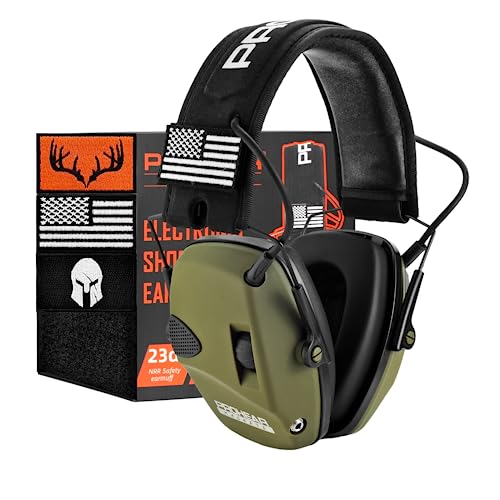 PROHEAR PROHEAR 066Light with long battery life
 Howard Leight R-02529Tied for longest battery
The short version
Both earmuffs and properly rated earplugs can protect your hearing from gunfire. The better choice depends on where you shoot, what else you wear on your head, and how much you value comfort and convenience.
Earmuffs suit most range sessions. They are quick to put on, they seal the same way every time, and it is easy to see whether someone is wearing them. Earplugs are the better pick when a helmet, hat or cheek-weld gear gets in the way of cups. If you are shooting somewhere very loud, you can use both.
How earmuffs and earplugs work
Earmuffs are two sound-blocking cups joined by a headband. The cups press against the side of your head and form a seal around each ear. Passive muffs block sound with dense material and nothing else. Electronic muffs add microphones that let quiet sounds through, such as range commands, and shut off the loud blast of a shot.
Earplugs sit in the ear canal. Foam plugs are rolled, inserted and left to expand. Reusable plugs are molded or flanged and slide in. Some have filters that let conversation through while reducing impulse noise.
Either type can carry a noise reduction rating, or NRR, in dB. A higher number blocks more sound. Our best earmuffs for shooting page lists models from 22 dB to 37 dB among those that publish an NRR, so you can see how much the range varies even within one product type.
Earmuffs vs earplugs side by side
This table covers the practical differences. It is general guidance, not a ranking of specific products.
| Factor | Earmuffs | Earplugs |
|---|---|---|
| Getting a good fit | Easy. Adjust the headband and check the seal | Depends on insertion technique and ear canal shape |
| Speed on and off | Seconds | Slower, especially with foam |
| Works with a helmet or hat | Often awkward | Usually fine |
| Works with glasses | Can break the seal, unless the cups are glasses-friendly | No conflict |
| Rifle or shotgun stock | Low-profile cups help | No conflict |
| Comfort in heat | Cups can get warm and sweaty | Cooler, though some people dislike the pressure in the ear |
| Hearing range commands | Electronic models amplify quiet sounds | Filtered plugs help a little, foam plugs muffle everything |
| Easy to check that it is on | Yes, visible at a glance | Harder to tell |
| Portability | Bulkier, though many fold | Fits in a pocket |
When earmuffs make more sense
Earmuffs are a good default if you shoot at a stationary bench or lane and do not wear a hat or helmet. The fit is forgiving, and you can slip them off between strings of fire to talk or check a target.
They also help if you are new to shooting or bring guests. Getting a foam plug seated deeply enough is a skill, and an under-inserted plug blocks far less than its label suggests. Muffs remove most of that guesswork.
If you want to hear range commands, look at electronic muffs. On our comparison page, models such as the Walker's Razor Slim Electronic Earmuffs and the PROHEAR 066 list an NRR of 23 dB with sound amplification, while the Howard Leight Impact Sport lists 22 dB. The Howard Leight listing says it shuts off loud impulse noise to a safe 82 dB. Passive models on the same page list higher NRRs, so you trade some awareness for more blocking.
When earplugs make more sense
Earplugs work better when something is already on your head. Helmets, hats, headsets and some shooting glasses can stop cups from sealing properly. A cup that does not seal protects less, so a well-seated plug can beat a poorly fitted muff.
They are also easier to carry. A pair of plugs in your range bag takes almost no room, which makes them a good backup if you forget your muffs or a guest needs protection.
Plugs are also the better fit if you move around a lot, such as in drills or hunting situations where bulky cups would snag. Just remember that very quiet foam plugs can make it hard to hear commands, so check for filtered options if that matters to you.
When to wear both
Wearing plugs under muffs adds protection. It is a sensible habit at indoor ranges, where blast and echo are intense, and when you are next to someone shooting a large caliber or a rifle with a brake.
Doubling up has a cost: you will hear less, and talking gets harder. Keep that in mind if you are coaching someone or need to hear range commands. Many shooters wear both only in the loudest settings and use a single protector elsewhere.
What to check before you buy
If you decide on muffs, these points matter most. They follow the same logic as our earmuff comparison, where you can line up the specs.
- NRR: higher blocks more. The Pro For Sho passive muffs list 34 dB at 7.2 oz, and the passive pick at the top of our NRR range lists 37 dB at 12 oz.
- Passive or electronic: passive muffs never need batteries. Electronic muffs need them, with listed life of 300 to 350 hours on the models that publish it.
- Cup profile: low-profile cups leave room for a stock against your cheek.
- Weight: the PROHEAR 066 lists 9.6 oz, while the Walker's Razor Slim lists 15.52 oz. Heavier muffs can wear on you during a long session.
- Headband and cushions: look for an adjustable, padded headband and cups that work with glasses.
- Missing specs: some makers do not publish every number, so treat a blank NRR as a reason to look closer.
Safety notes
Put your hearing protection on before you enter the shooting area and keep it on until you leave. A single unprotected shot can cause lasting damage.
Check the fit each time. Earmuff cups should rest flat against your head with no gaps from glasses arms or hair. Plugs should be inserted according to the maker's instructions.
Regular music earbuds and headphones are not hearing protection. Noise-canceling headphones are not either, unless they are rated for gunfire.
Wear eye protection as well. Hearing and eye protection work together, and neither replaces the other.
Treat the NRR as the best case from lab conditions. Real-world results depend on fit, so a good seal matters more than chasing a few extra decibels.
Frequently asked questions
Can I use earbuds instead of earmuffs for shooting?
No, unless they are specifically made and rated as hearing protection. Ordinary earbuds do not block gunfire, and playing music through them can tempt you to turn the volume up, which adds to the noise.
Do electronic earmuffs protect as well as passive ones?
Both can protect well. On our comparison page, the passive models list higher NRRs than the electronic ones, while electronic muffs help you hear range commands. Choose based on what matters more to you.
Is it worth wearing earplugs and earmuffs together?
It is worth it at indoor ranges and around loud firearms. The combination blocks more sound than either alone, but it makes conversation harder.
Do earmuffs work with safety glasses?
Yes, but glasses arms can break the seal. Look for cups described as glasses-friendly, and check for gaps after you put them on.